






Definition & Meaning
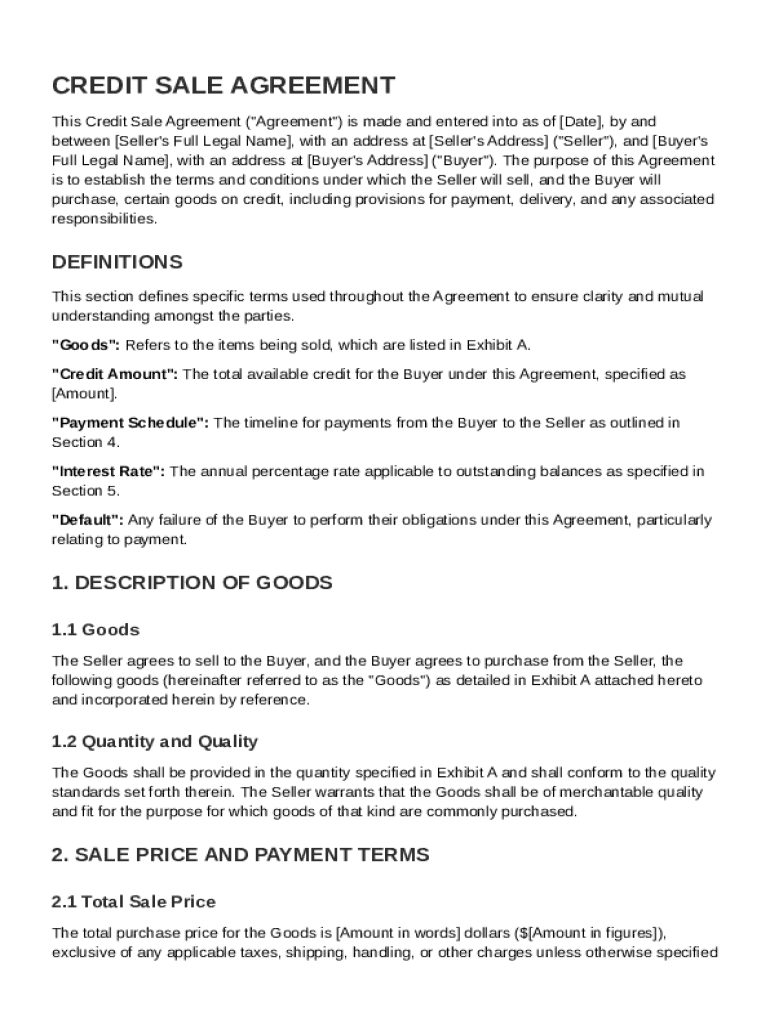
A Credit Sale Agreement Template is a documented contract used to facilitate the sale of goods where the buyer receives the item immediately but pays the seller at a later date. This template outlines crucial terms such as payment schedules, interest rates on outstanding amounts, and specifications regarding the goods sold. Its main purpose is to ensure both parties clearly understand their obligations, thus minimizing the potential for disputes. By using the template, sellers and buyers can avoid miscommunication and foster trust in their business transactions.
How to Use the Credit Sale Agreement Template
To effectively use the Credit Sale Agreement Template, start by assessing your transaction requirements and identifying the key terms relevant to your credit sale. Follow these steps:
- Open the template in a compatible document editor, such as DocHub, to ensure smooth interaction with fields and features.
- Input accurate buyer and seller information, including names, contacts, and addresses, ensuring all parties involved are correctly identified.
- Detail the goods or services involved in the transaction, and specify quantities, descriptions, and price per unit.
- Define the payment terms, including the total sale amount, payment due dates, and any applicable interest or penalties for late payments.
- Clearly articulate any warranties provided by the seller and conditions under which they apply.
- Add terms for dispute resolution and any additional clauses specific to your transaction.
- Review and ensure both parties understand and agree to the terms outlined before signing.
Steps to Complete the Credit Sale Agreement Template
Completing a Credit Sale Agreement Template involves several critical steps to ensure all necessary information is included and correctly formatted:
-
Gather Required Information: Collect all pertinent data for the agreement, including buyer and seller details, description of goods, and payment terms.
-
Open and Edit Template: Use a platform like DocHub to open and edit the template, utilizing tools that let you add fields, text, and signatures as needed.
-
Fill Out Buyer and Seller Details: Accurately enter the identities and contact information of both parties.
-
Specify Goods and Terms: Include detailed descriptions of goods or services, and outline payment conditions clearly.
-
Review Legal Clauses: Ensure all necessary legal terms, like indemnification and dispute resolution, are clearly defined.
-
Confirmation and Signing: Once both parties concur with the agreement, apply electronic signatures using a solution compliant with the ESIGN Act to validate the document legally.
Key Elements of the Credit Sale Agreement Template
Several crucial components must be integrated into a Credit Sale Agreement Template to make it effective:
- Parties Involved: Clear identification of the buyer and seller, including names and addresses.
- Description of Goods: Exact details about what is being sold, ensuring clarity on the specific items or services.
- Payment Details: Comprehensive explanation of how and when the payment will be made, including installment plans if applicable.
- Interest and Penalties: Define any interest applicable to unpaid balances and penalties for late payments.
- Warranties and Indemnifications: Specify warranties on the goods and any indemnification clauses to protect against potential liabilities.
- Terms and Conditions: General terms governing the transaction, delivery conditions, and what happens under breaches of the agreement.
Legal Use of the Credit Sale Agreement Template
The legal use of the Credit Sale Agreement Template involves ensuring that the document adheres to relevant laws and regulations, thus validating its enforceability. In the U.S., such agreements must conform to the Uniform Commercial Code (UCC), which standardizes sales transactions. It’s crucial to:
- Verify that the terms abide by state-specific statutes that might alter or supplement UCC regulations.
- Use writing that is clear and understandable, avoiding ambiguity that could invalidate the contract.
- Ensure both parties understand the document and willingly enter the agreement, establishing its validity under contract law.
- Include clauses for amendments, enabling mutual modifications to the agreement if required in the future.
Important Terms Related to Credit Sale Agreement Template
Understanding key terminology is vital for effectively managing and negotiating a Credit Sale Agreement Template:
- Principal Amount: The original sum of money payable for the goods or services offered.
- Installment Plan: A structured plan for periodic payment of the debt over time.
- Late Fee: An additional charge incurred as a penalty for failing to pay on time.
- Default: The failure to meet the legal obligations outlined in the agreement.
- Collateral: An asset pledged as security for the repayment of a loan or credit agreement.
These terms ensure clear communication between parties and help structure the agreement to prevent future disputes.
State-Specific Rules for the Credit Sale Agreement Template
Credit sale agreements can be subject to varying state regulations in the United States. For example:
- Consumer Protection Laws: States may impose additional protections for consumers, requiring clearer disclosures or preventing certain unfair practices.
- Interest Rate Regulations: Some states have caps on allowable interest rates for credit sales to protect buyers from exorbitant charges.
- State-Specific UCC Provisions: Even though the UCC is a standardized code, states can have variations, requiring familiarity with local laws.
Sellers must be aware of such differences to ensure compliance and maintain the legality of their credit sale agreements across different jurisdictions.
Examples of Using the Credit Sale Agreement Template
Understanding practical applications of a Credit Sale Agreement Template can provide valuable insights:
- Retail Installment Sales: A common use is in retail sectors where customers can buy products like furniture or electronics and pay over time, making these agreements critical for outlining payment specifics.
- Automobile Sales: Dealers often use these agreements to sell cars, allowing buyers to drive away with the car while making payments over a specified period.
- Business Equipment Purchase: Companies acquiring large machinery or office equipment on a credit sale basis will detail repayment in such agreements.
These examples illustrate the flexibility of the template in various industries and transaction types, showing its utility beyond simple sales scenarios.