






Definition and Meaning
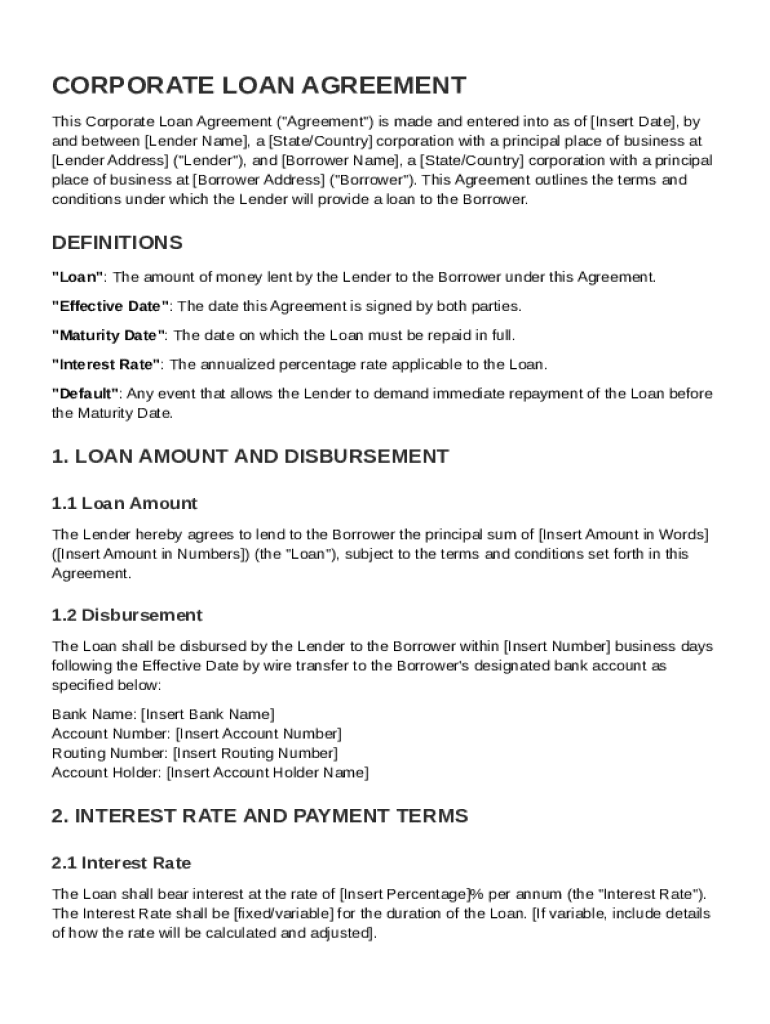
The Corporate Loan Agreement Template is a crucial document that outlines the agreement between a lender and a corporate borrower. This agreement governs the terms and conditions under which the lender provides a loan. It contains important sections like the loan amount, interest rate, and payment schedule. This document also defines key terms, representations, warranties, covenants, events of default, governing law, and miscellaneous provisions involved in a corporate loan transaction.
Key Components of the Agreement
- Loan Amount and Interest Rate: Specifies the principal amount loaned to the borrower and the interest rate applied.
- Payment Schedule: Outlines how and when payments should be made, including frequency and total installments.
- Representations and Warranties: Details the assurances both parties provide concerning their respective rights and capabilities.
- Covenants: Lists affirmative or negative covenants the borrower must adhere to during the loan term.
- Events of Default: Describes circumstances under which the loan could be considered in default, including any penalties or actions the lender may take.
- Governing Law: Establishes which jurisdiction’s law governs the agreement and any disputes arising under it.
How to Use the Corporate Loan Agreement Template
Using the template effectively requires an understanding of how each section corresponds to your specific loan conditions.
- Customize Terms and Conditions: Replace placeholders with specific information like the parties’ names, loan amount, interest rate, and collateral involved.
- Review Key Clauses: Pay close attention to covenants, events of default, and governing law to ensure alignment with your regulatory and business environment.
- Seek Legal Advice: Consult with a legal professional to ensure that all legal standards are met and to understand potential implications.
- Finalize and Sign: Once the document is customized to reflect the transaction, parties should review, sign, and keep a copy for their records.
Steps to Complete the Corporate Loan Agreement Template
- Identify Parties Involved: Clearly specify the lender and borrower details, including their legal names and contact information.
- Define Loan Terms: Input the loan amount, interest rate, payment plan, and duration of the loan into the template.
- Set Specific Conditions: Outline any specific terms such as financial covenants or security interests.
- Review Representations: Ensure all warranties and representations are accurate and reflect the current status of both parties.
- Complete and Review: Fill in any additional fields, thoroughly review for accuracy, and address any missing sections.
- Execute the Agreement: After all terms are agreed upon, each party should sign the document, making it legally binding.
Key Elements of the Corporate Loan Agreement Template
The template is designed to cover various critical elements that ensure a comprehensive agreement:
- Principal and Collateral Details: Clear description of the principal loaned and any collateral or security provided.
- Interest and Fee Structure: Include all applicable fees and outline how the interest accumulates.
- Amendment Procedures: Provide guidelines on how the agreement can be modified.
- Confidentiality Clauses: Protects sensitive information from being disclosed without consent.
- Dispute Resolution: Outlines the process for resolving any potential disputes between parties.
Who Typically Uses the Corporate Loan Agreement Template
This template is employed by various businesses and financial institutions involved in corporate borrowing, including:
- Large Corporations: Require significant capital to fund projects or operations and often engage in such agreements for structured debt financing.
- Banks and Financial Institutions: Provide loans to corporate clients requiring detailed agreements to safeguard their interests.
- Law Firms: Assist in drafting and reviewing agreements to provide their clients with legally sound documents.
Understanding these use cases ensures that those involved are well-equipped to engage with or manage corporate loans effectively.


State-Specific Rules for the Corporate Loan Agreement Template
When using this template, it is essential to consider state-specific rules that dictate certain elements of a loan contract. Each state may have different regulations regarding:
- Interest Rate Caps: Legal maximum interest rates that can be applied to loans.
- Usury Laws: Regulations that protect against excessively high-interest rates and unethical lending practices.
- Security Interest Requirements: Specific rules about how collateral agreements are handled.
- Mandatory Disclosures: Information that must be provided to borrowers upfront.
Familiarity with these variations ensures that the agreement is legally compliant in the relevant jurisdiction.
Legal Use of the Corporate Loan Agreement Template
Legal compliance is critical in creating and using this template, which includes:
- Adherence to Financial Regulations: Ensure the agreement aligns with applicable federal and state lending regulations, including Dodd-Frank and other financial oversight laws.
- Compliance with Corporate Law: Confirm the document reflects corporate law requirements, particularly for borrowers and institutions operating under customized corporate structures.
- Electronic and Digital Signatures: Verify that electronic signatures meet federal standards like the ESIGN Act for valid enforceability.
Proper legal use of this template aids in mitigating risks and ensuring enforceable loans.
Examples of Using the Corporate Loan Agreement Template
Businesses have successfully utilized this template for various financing purposes:
- Expansion Projects: A manufacturing company received financing to expand production facilities, using equipment as collateral for the loan.
- Mergers and Acquisitions: A tech firm secured funds to acquire a competitor and included specific covenants related to acquisition financing.
- Working Capital: A retail chain negotiated a loan to enhance liquidity and support day-to-day operations, structured with periodic repayment schedules.
These examples illustrate the flexibility and applicability of the corporate loan agreement across different business scenarios.