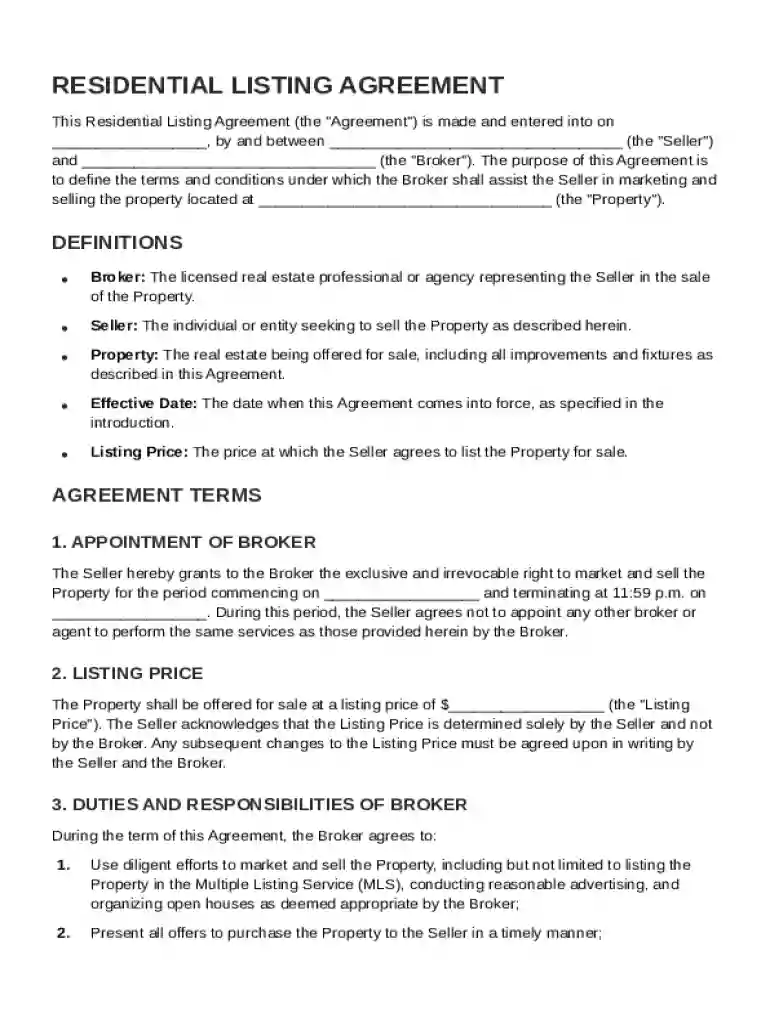
Definition and Meaning
A Listing Agreement Template is a legal document used between a property owner (the seller) and a real estate broker. It establishes the terms under which the broker will market and attempt to sell the property. The template serves as a foundational document outlining the roles, responsibilities, and expectations of each party throughout the property sale process. It ensures clarity and alignment in the seller-broker relationship, providing a structured framework for cooperation. This document is crucial for setting parameters such as listing price, commission rates, and other critical transaction details.
Key Elements of the Listing Agreement Template
A Listing Agreement Template typically consists of several key elements that govern the relationship between the seller and the broker:
- Parties Involved: Clearly identifies the property owner and the real estate broker.
- Property Description: Includes details about the property being sold, such as the address and legal description.
- Listing Price: Specifies the initial sale price of the property agreed upon by both parties.
- Broker’s Commission: Outlines the commission structure, often as a percentage of the final sale price.
- Duration of the Agreement: Defines how long the agreement remains in effect, typically ranging from a few months to a year.
- Termination Conditions: Details under which circumstances the agreement may be terminated, such as time expiration or mutual consent.
- Indemnification Clause: Offers protection against potential legal claims arising from the process.
- Dispute Resolution: Specifies how disagreements between the seller and broker will be handled, often requiring mediation or arbitration.
How to Use the Listing Agreement Template
Using a Listing Agreement Template involves several critical steps to ensure a mutually beneficial transaction between the seller and broker:
- Personalize the Template: Tailor the template to include specific details relevant to the property and parties involved.
- Clarify Terms and Conditions: Ensure that all terms, including commission rates and listing prices, are clearly stated and agreeable to both parties.
- Seek Legal Counsel: It is beneficial to consult with a legal professional to review the agreement for compliance with local real estate laws.
- Mutual Agreement: Both parties should read and understand all clauses before signing.
- Obtain Signatures: Ensure that both the seller and broker sign the document, making it legally binding.
Important Terms Related to Listing Agreement Template
When dealing with a Listing Agreement Template, understanding specific terms is essential:
- Exclusive Right to Sell: Grants the broker sole authorization to sell a property.
- Open Listing: Allows more than one broker to market the property, with commission payable to the one who successfully sells it.
- Net Listing: The broker earns excess from the agreed sale price, but this is less common due to potential conflicts.
- Exclusive Agency: The broker earns commission if they sell the property, but not if the owner finds a buyer independently.
Legal Use of the Listing Agreement Template
Using the Listing Agreement Template legally requires adherence to several guidelines:
- Compliance with Local Laws: Ensure the template aligns with real estate laws and regulations in your state.
- Fair Representation: Both parties must be truthful and transparent in all dealings related to the agreement.
- Full Disclosure: The broker should disclose any potential conflicts of interest or other relevant information that could impact the sale.
- Fiduciary Duty: Brokers are obligated to act in the best interest of the seller throughout the process.
Steps to Complete the Listing Agreement Template
Completing a Listing Agreement Template involves a few straightforward steps:
- Introduction and Identification: Fill out the details of the seller and broker, including contact information.
- Property Details: Accurately describe the property, including any specific characteristics.
- Define Terms: Clearly state the listing price, commission rate, and duration of the agreement.
- Review and Adjust: Examine all clauses for accuracy, ensuring they reflect current legal standards.
- Sign and Date: Both parties should sign and date the agreement, officially executing the contract.
State-Specific Rules for the Listing Agreement Template
Since real estate practices can vary significantly across different jurisdictions, being aware of state-specific rules is crucial:
- Licensing Requirements: Ensure the broker holds a valid real estate license in the state of the property.
- Disclosure Obligations: Different states have varying requirements for what must be disclosed by sellers and brokers, like property condition or past inspection results.
- Commission Limits: Some states may impose caps on commission rates or require particular documentation to justify those rates.
- Templates and Forms: Depending on the state, specialized templates may be needed to capture all required information and adhere to local law.