Asset Agreement Template 2026

Get Form
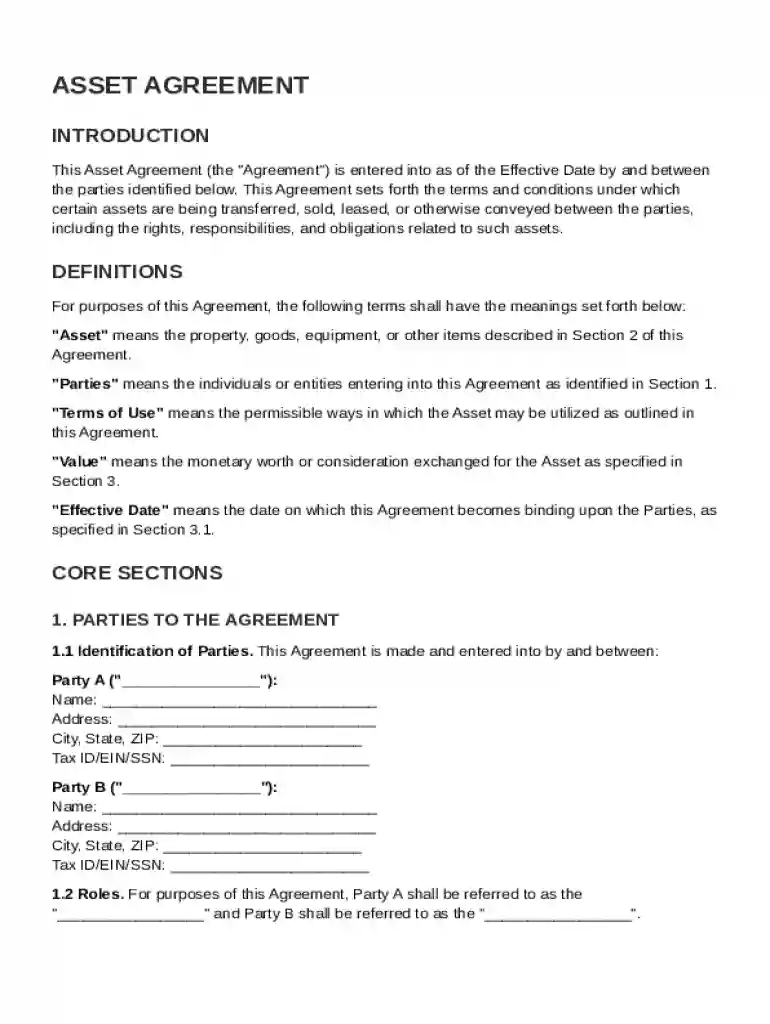
Asset Agreement Template Preview on Page 1

Here's how it works

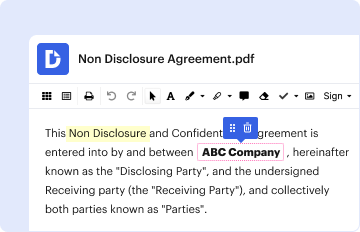
01. Edit your form online
Type text, add images, blackout confidential details, add comments, highlights and more.

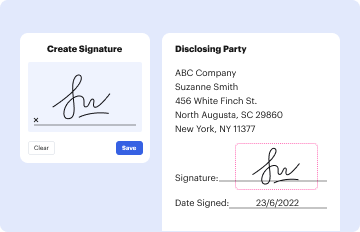
02. Sign it in a few clicks
Draw your signature, type it, upload its image, or use your mobile device as a signature pad.
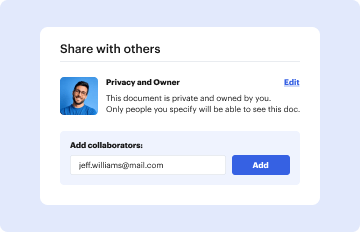
03. Share your form with others
Send it via email, link, or fax. You can also download it, export it or print it out.

Definition and Purpose of the Asset Agreement Template

An Asset Agreement Template is a structured document that outlines the terms and conditions related to the transfer, sale, lease, or conveyance of specific assets between two parties. It provides detailed descriptions, including the identification of the parties involved, specific assets, payment arrangements, and the rights and duties of each party. This template is crucial for ensuring legal protection and clarity regarding asset management and usage, minimizing potential disputes or misunderstandings.

Steps to Complete the Asset Agreement Template

Completing an Asset Agreement Template requires precision and attention to detail. Follow these steps to ensure thoroughness:

  1. Identify the Parties:

    • Clearly state the names and contact information of both the asset supplier and the recipient.
    • Ensure both parties' roles are defined to prevent ambiguity.
  2. Detail the Assets:

    • Provide a comprehensive description of the assets, including their current condition.
    • Include serial numbers, quantities, and any other identifying information.
  3. Outline Payment Terms:

    • Specify the agreed payment method, schedule, and any penalties for delayed payments.
    • Include currency details and any taxes applicable to the transaction.
  4. Define Rights and Responsibilities:

    • Clearly articulate both parties' obligations and rights related to the use and maintenance of the assets.
    • Highlight liability aspects and insurance requirements.
  5. Include Legal and Miscellaneous Provisions:

    • Insert indemnification clauses to safeguard against potential disputes.
    • State termination conditions, governing law, and other legal provisions needed.

Key Elements of the Asset Agreement Template

The Asset Agreement Template is built around several critical components that serve its primary function:

  • Asset Description:

    • Detailed specification and valuation of the assets involved.
  • Payment Terms:

    • Comprehensive listing of payment conditions, including payment dates and methods.
  • Rights and Duties:

    • Responsibilities and entitlements of each party concerning the assets.
  • Indemnification Clause:

    • Provisions that protect each party against financial loss or liability.
  • Termination Conditions:

    • Conditions under which the agreement can be dissolved or amended.

How to Use the Asset Agreement Template

Using the Asset Agreement Template efficiently involves understanding its structure and purpose:

  • Customization:

    • Tailor the template to fit the specific transaction requirements.
    • Modify the document to account for unique asset types or transaction conditions specific to your scenario.
  • Collaboration:

    • Use digital tools like DocHub to share the document with relevant parties.
    • Utilize annotation tools to discuss modifications or objections in real time.
  • Reviewing:

    • Consult legal professionals to ensure compliance with applicable laws.
    • Conduct thorough reviews to confirm all details align with the agreed terms.

Legal Use and Compliance

Ensuring the legal use of the Asset Agreement involves:

  • Adhering to Governing Laws:

    • Confirm the agreement is structured under the relevant jurisdiction's laws.
    • Utilize clauses that preemptively address possible legal disputes or issues.
  • Legally Binding Signatures:

    • Ensure signatures are collected via a compliant electronic system.
    • Maintain records of audit trails to verify the signing history of all parties involved.
  • Consulting Legal Experts:

    • Seek advice from attorneys specializing in asset transactions to verify document accuracy and legal standing.
    • Update the template to align with current legal standards and regulations.

Who Typically Uses the Asset Agreement Template

This template is commonly utilized by:

  • Businesses and Corporations:

    • Entities involved in the regular transfer or leasing of assets.
  • Legal Advisors and Lawyers:

    • Legal professionals who draft or review asset-related agreements for clients.
  • Real Estate and Equipment Leasing Firms:

    • Companies that manage or lease property or equipment requiring formal transactional agreements.
decoration image ratings of Dochub

Examples of Using the Asset Agreement Template

Practical examples of how this template can be used include:

  • Real Estate Transactions:

    • Leasing office space where terms and payment specifics are crucial.
  • Equipment Leasing:

    • Facilitating agreements between construction firms and machinery suppliers.
  • Transfer of Business Assets:

    • Agreements for the sale of business assets during mergers or acquisitions.

State-Specific Rules for the Asset Agreement Template

Understanding how different states influence asset agreements is vital:

  • Governing Law Clauses:

    • Adapt clause languages to cater to jurisdiction-specific legal nuances.
  • Execution Requirements:

    • Meet state-mandated requirements for executing legal documents, such as notarization standards or witness requirements.

By paying attention to these key components and examples, users can effectively leverage the Asset Agreement Template. This structured approach offers clarity and legal coverage while streamlining asset management operations.

be ready to get more

Complete this form in 5 minutes or less

Get form

Security and compliance

At DocHub, your data security is our priority. We follow HIPAA, SOC2, GDPR, and other standards, so you can work on your documents with confidence.

Learn more
ccpa2
pci-dss
gdpr-compliance
hipaa
soc-compliance