






Definition & Meaning
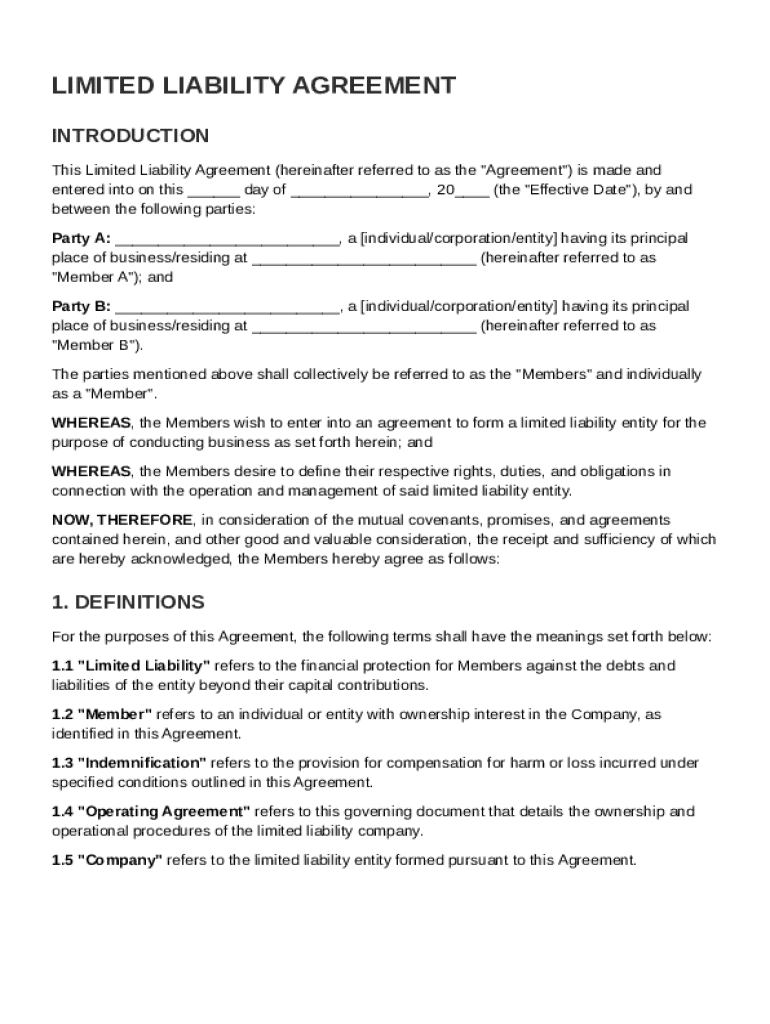
A Limited Liability Agreement Template provides a structured framework for establishing and managing a limited liability company (LLC). This legal document outlines the rights and responsibilities of each member involved, specifying arrangements regarding management structure, ownership percentages, capital contributions, and profit distribution. By detailing these elements, the agreement protects members from personal liability, ensuring their risk is limited to their investment in the company. The template serves as an essential guide for drafting an agreement that complies with state-specific regulations, tailoring the company’s operational and financial decisions accordingly.
Key Elements of the Limited Liability Agreement Template
The core components within a Limited Liability Agreement Template include:
-
Capital Contributions: Specifies each member's initial financial input or other assets contributed when forming the LLC. This section helps delineate ownership percentages and guides future financial responsibilities.
-
Management Structure: Describes whether the LLC is member-managed or manager-managed, defining roles, decision-making authority, and management responsibilities for each party involved.
-
Profit Allocation: Details how profits and losses are distributed among members, often reflecting their ownership percentages or any special arrangements agreed upon.
-
Limited Liability Protection: Establishes the legal boundaries protecting members from personal liability beyond their contribution, securing their personal assets from the company's debts and obligations.
-
Indemnification and Dissolution: Defines processes for indemnifying members against any debts incurred by the LLC and outlines procedures for dissolving the company should it become necessary.
How to Use the Limited Liability Agreement Template
Using the Limited Liability Agreement Template involves several crucial steps:
-
Customization: Tailor the template to reflect specific terms agreed upon by the members, addressing unique business goals and state regulations.
-
Review: Ensure all members thoroughly review the template, understanding individual rights, obligations, and the scope of liability protection offered.
-
Legal Consultation: Engage a legal professional to review the customized agreement, ensuring compliance with current laws and identifying any potential legal issues.
-
Execution: Once finalized, have all members sign the agreement, formally adopting it as the governing document for the LLC.
-
Storage and Maintenance: Safeguard the executed agreement with other essential company documents, regularly reviewing it to incorporate any amendments or updates necessary for compliance or strategic shifts.
Who Typically Uses the Limited Liability Agreement Template
The Limited Liability Agreement Template is predominantly utilized by:
-
Entrepreneurs and Startups: To establish a legally sound foundation for new business ventures, protecting personal assets while defining operational frameworks.
-
Business Partners: Who aim to clearly outline each party’s contributions, roles, and profit-sharing arrangements, essential for eliminating potential disputes.
-
Small to Medium Business Owners: Seeking structured governance, especially when transitioning to an LLC to benefit from limited liability advantages.
-
Legal Professionals: Advising clients on forming LLCs, using the template as a starting point for drafting customized agreements fitting specific circumstances and state laws.


Steps to Complete the Limited Liability Agreement Template
Completing the Limited Liability Agreement Template involves a sequence of detailed steps:
-
Gather Member Details: Collect comprehensive information on each member, including names, addresses, and roles within the LLC.
-
Determine Ownership and Contributions: Clearly document each member's ownership percentage and initial contributions, forming the basis for profit allocation.
-
Outline Management and Decision-Making Structures: Decide on the management model (member-managed or manager-managed) and specify responsibilities and powers.
-
Define Profit and Loss Allocation: Establish criteria for distributing profits and losses, ensuring all members are aligned on financial expectations.
-
Include Indemnification and Liability Clauses: Incorporate necessary protections for members from personal liability for company debts, alongside procedures for indemnification.
-
Finalize and Execute: Once drafted, review the agreement with all members, make any required adjustments, and proceed to have it signed and notarized if needed.
State-Specific Rules for the Limited Liability Agreement Template
Each U.S. state may have unique requirements and variations affecting the content and legality of a Limited Liability Agreement:
-
Formation Requirements: Varying state statutes govern the formation and registration process of an LLC, necessitating adherence to local rules.
-
Publication Mandates: Some states require public notice of LLC formation, affecting when and how members can execute their agreement.
-
Filing Fees and Documents: While some states mandate filing the agreement or related documents with government agencies, others do not.
-
Compliance and Reporting: Ongoing compliance obligations, such as annual reports or specific governance structures, need incorporating into the agreement.
Important Terms Related to Limited Liability Agreement Template
Understanding key terminology enhances the comprehension and utility of the Limited Liability Agreement Template:
-
Members: Individuals or entities that hold ownership interests within the LLC.
-
Operating Agreement: Often used interchangeably with the Limited Liability Agreement, it serves as the primary document governing the LLC's operations.
-
Fiduciary Duty: Legal obligation of members or managers to act in the LLC's best interest, including duties of loyalty and care.
-
Dissolution: The formal process of closing and liquidating the LLC’s affairs in compliance with state laws and the agreement's terms.
Legal Use of the Limited Liability Agreement Template
The Limited Liability Agreement template must align with legal standards, providing:
-
Legal Framework: It acts as a binding legal document that members and the LLC must adhere to in disputes or operational guidance.
-
Enforcement: Courts may rely on the agreement during litigations involving disagreements among members.
-
Compliance Verification: The agreement ensures that the LLC meets all required statutory compliance, reducing risks of legal issues.
-
Amendment Procedures: Legal protocols for modifying the agreement offering flexibility in adapting to new regulations or business directions.
By following these structured content guidelines, these sections provide an exhaustive exploration of the Limited Liability Agreement Template, comprehensively covering every critical aspect for users looking to effectively utilize this document in a U.S.-centric legal and business landscape.