
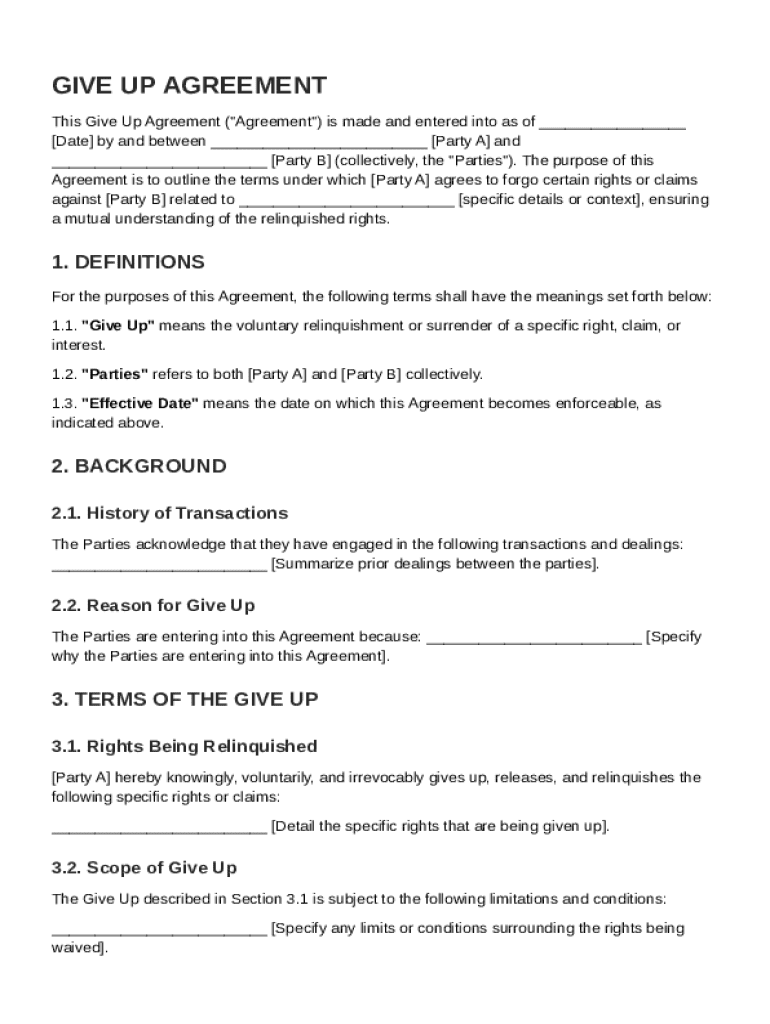







Definition & Meaning
A Give Up Agreement is a legally binding document used to specify the terms under which one party agrees to relinquish certain rights or claims against another party. This agreement is essential for ensuring clarity and mutual understanding between the parties involved. It typically includes definitions of the rights being relinquished, background on any prior dealings, indemnification clauses, confidentiality obligations, and specifications of the governing law.
Key Components of a Give Up Agreement
- Definitions: Clearly defines the terms and conditions under which rights are waived.
- Background Information: Provides context on the relationship and past dealings between the parties.
- Indemnification: Protects one party from liabilities or claims by the other.
- Confidentiality: Ensures the protection of sensitive information disclosed during the agreement.
- Governing Law: Specifies the legal jurisdiction applicable to the agreement.
Key Elements of the Give Up Agreement Template
A Give Up Agreement Template includes essential sections that ensure comprehensive documentation of the agreement and protect both parties' interests. These elements ensure that the relinquished rights are recognized and enforceable.
Primary Sections of the Template
- Party Details: Identifies the parties involved, including names and contact information.
- Description of Rights: Clearly outlines the specific rights or claims being relinquished.
- Agreement Terms: Details the conditions under which the agreement is valid and enforceable.
- Signatures: Legalizes the agreement with the signatures of all involved parties.
- Date of Agreement: Indicates when the agreement was executed.
How to Use the Give Up Agreement Template
Using a Give Up Agreement Template simplifies the process of drafting this legal document. It ensures that all necessary elements are included for a valid and enforceable agreement.
Steps to Utilize the Template
- Download the Template: Obtain the template from a reputable source, ensuring it aligns with US-specific legal standards.
- Customize Party Information: Input detailed information about each party involved in the agreement.
- Clearly Define Rights and Terms: Populate sections with precise descriptions of the rights being given up and under what conditions.
- Add Signatures: Ensure all parties involved sign the agreement, validating its legal standing.
- Review and Finalize: Thoroughly review the completed agreement for accuracy before finalizing and executing it.
Steps to Complete the Give Up Agreement Template
Completion of a Give Up Agreement Template involves attention to detail to protect against future legal disputes. The process includes filling out and reviewing essential information for clarity and accuracy.
Detailed Completion Process
- Gather Required Information: Collect all relevant details about the parties and the rights to be relinquished.
- Fill Out the Template: Input the information into the respective sections of the template.
- Legal Review: Consult with a legal professional to ensure compliance with applicable laws and regulations.
- Signatures and Dating: Obtain signatures from all parties and note the date of agreement execution.
- Secure Document Storage: Store the completed document in a secure place for future reference.
Legal Use of the Give Up Agreement Template
Legal use of a Give Up Agreement Template is crucial to prevent potential disputes and ensure a mutual understanding is documented effectively. Compliance with legal standards ensures enforceability.
Compliance with Legal Standards
- Adherence to State Laws: Ensure the agreement meets specific legal requirements of the state where it is executed.
- Statutory Compliance: Check for any statutory provisions that may affect the validity of the agreement.
- Binding Provisions: Verify that the agreement includes essential binding legal provisions.
State-Specific Rules for the Give Up Agreement Template
Understanding state-specific rules is vital when drafting a Give Up Agreement. Different states might have varying regulations regarding the enforceability of such agreements.
Considerations for State Variation
- Jurisdictional Requirements: Research specific requirements in your state that affect give up agreements.
- Governing Law Clauses: Include a governing law clause to specify which state laws apply.
- Legal Consultation: Seek a local attorney's advice to address any unique state-specific legal nuances.
Who Typically Uses the Give Up Agreement Template
Various individuals and business entities use the Give Up Agreement Template to manage and formalize the relinquishment of rights.


Common Users
- Individuals: People involved in disputes may use this template to resolve issues amicably by waiving certain rights.
- Businesses: Companies often use these agreements during mergers or partnerships to relinquish claims or intellectual rights.
- Legal Professionals: Attorneys and legal consultants facilitate the drafting and execution of these agreements for clients.

Important Terms Related to Give Up Agreement Template
Familiarity with key terms used within the Give Up Agreement Template is essential for understanding its implications fully.
Key Terms Explained
- Waiver: The act of voluntarily relinquishing a known right or claim.
- Indemnity: Security against potential financial liability or loss.
- Confidentiality: An agreement to keep certain information private and not disclose it to unauthorized parties.




