






Definition and Purpose of the Joint Product Development Agreement
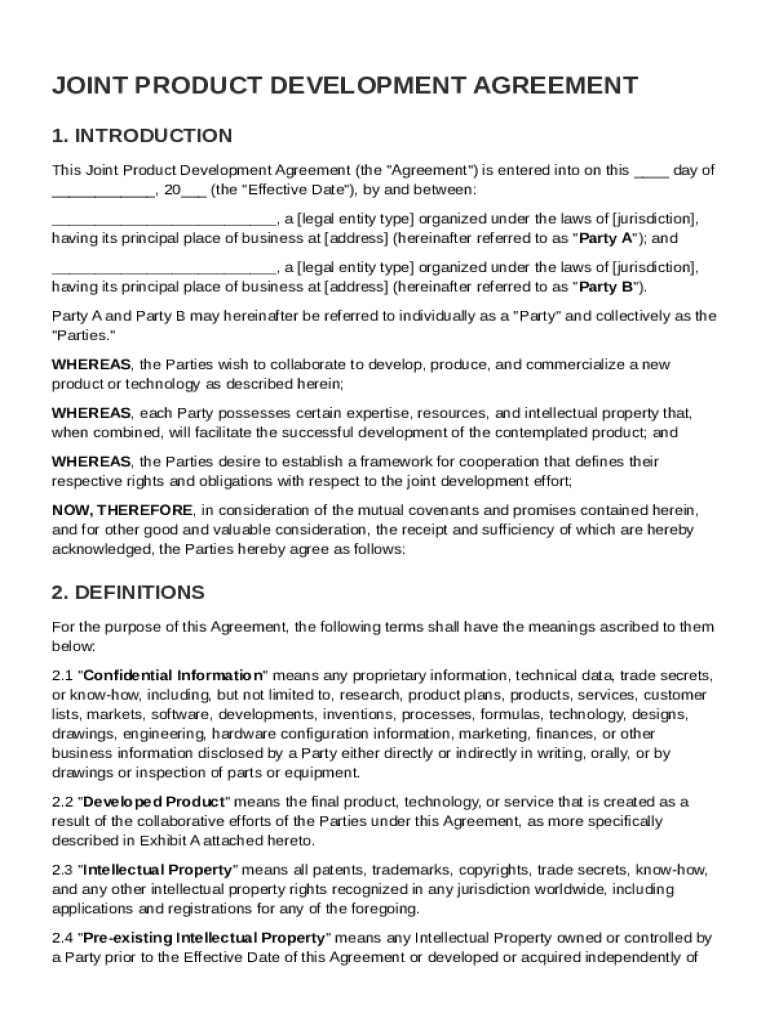
The Joint Product Development Agreement (JPDA) is a legal document that outlines the collaboration between two entities, referred to as Party A and Party B, in the creation, production, and commercialization of a new product or technology. Its primary purpose is to provide a structured framework that delineates each party's roles and responsibilities, establishes guidelines for intellectual property rights, and sets forth confidentiality obligations. The JPDA also includes provisions for sharing costs and addresses dispute resolution mechanisms to protect both parties' interests throughout the joint development process.
- Collaborative Roles: The agreement specifies each party's duties, ensuring clarity and accountability in the partnership.
- Intellectual Property Rights: It defines how any developed intellectual property will be shared or owned, which is crucial for protecting proprietary innovations.
- Confidentiality Obligations: Outlines the necessity to maintain secrecy over shared information to safeguard competitive advantages.
Utilizing the Joint Product Development Agreement Template
The Joint Product Development Agreement Template provides a comprehensive outline to facilitate the drafting process of a JPDA. This template is designed to ensure efficiency and thoroughness by including all necessary sections that should be considered during the collaboration.
- Customization Flexibility: The template can be tailored to suit the specific needs and circumstances of the involved parties, allowing adjustments in areas such as timelines, budget allocations, and technological specifications.
- Guidelines for Modifications: Users can add, remove, or modify sections within the template to better fit the particular attributes of their joint venture.
- Consistency in Structure: Ensures all critical components are addressed, reducing the risk of overlooking important legal or operational considerations.
Steps to Complete the Joint Product Development Agreement
Completing the Joint Product Development Agreement involves several key steps, each of which requires careful attention to detail to ensure a well-defined and enforceable agreement.
- Identify the Objectives: Clearly outline the goals and expected outcomes of the collaboration, defining the product or technology to be developed.
- Assign Roles and Responsibilities: Detail the contributions, obligations, and duties of each party involved in the partnership.
- Establish Financial Terms: Include cost-sharing arrangements, compensation mechanisms, and funding obligations.
- Outline Intellectual Property Guidelines: Set the terms for ownership, licensing, and rights associated with any newly developed intellectual property.
- Draft Confidentiality Clauses: Protect sensitive information by stipulating confidentiality terms and conditions.
- Settle Dispute Resolution Processes: Define the methods for resolving conflicts or disagreements that may arise during the partnership.
- Review and Finalize: Ensure both parties agree on all terms before finalizing and signing the agreement.
Key Elements of the Joint Product Development Agreement
The template covers several critical components that form the backbone of a successful JPDA.
- Scope of Work: Description of the project, including objectives and deliverables.
- Funding and Resource Allocation: Explanation of how costs will be managed and resources distributed.
- Risk Management: Provisions for handling risks and uncertainties that may impact the project.
- Timeframe and Milestones: Clear timeline with specific milestones to track progress.
- Exit Strategy: Terms for ending the partnership under various scenarios.
- Signatory Authority: Defines who within each organization has the authority to sign the agreement.
Legal Considerations in the Joint Product Development Agreement
Legal aspects of the JPDA are crucial to ensure compliance and protection for both parties. Key legal elements include the establishment of jurisdiction, adherence to applicable laws, and compliance with regulatory standards.
- Jurisdictional Provisions: Specify which state or federal laws govern the agreement to clarify the legal framework.
- Regulatory Compliance: Ensure the product or technology adheres to necessary regulatory requirements, which may involve industry-specific standards.
- Indemnification Clauses: Include terms for covering potential liabilities and damages that may arise from the collaboration.
Important Terms Related to the Joint Product Development Agreement
Understanding the terminology used within the JPDA is essential for both parties to ensure clarity and avoid misunderstandings.
- Confidential Information: Any non-public data shared between the parties with obligations of confidentiality.
- Force Majeure: Circumstances beyond the control of parties that may prevent fulfilling the agreement.
- Non-Disclosure Agreement (NDA): Legal contract establishing confidentiality between parties.
Who Typically Uses the Joint Product Development Agreement
Various entities across industries frequently utilize the JPDA to formalize collaborative efforts in developing new products or technologies.
- Technology Companies: Often enter JPDAs for co-developing innovative software or hardware solutions.
- Pharmaceutical Firms: Collaborate on research and development of new drugs or therapies.
- Manufacturers: Partner for advancements in product design or engineering processes.
- Startups with Established Corporations: Leverage resources and expertise to bring new concepts to market.


State-Specific Rules and Considerations
While the JPDA generally follows a universal structure, certain state laws in the United States may influence specific provisions. Ensuring compliance with local legal requirements is vital to enforceability.
- Intellectual Property Law Variations: Some states may have differing rules regarding the ownership and transfer of intellectual property.
- Business Registration Requirements: In some jurisdictions, registering the collaboration as a joint venture may be necessary.
- Tax Implications: State-specific tax regulations can affect cost-sharing and revenue distribution.