






Definition and Meaning of an Irrevocable Trust Agreement
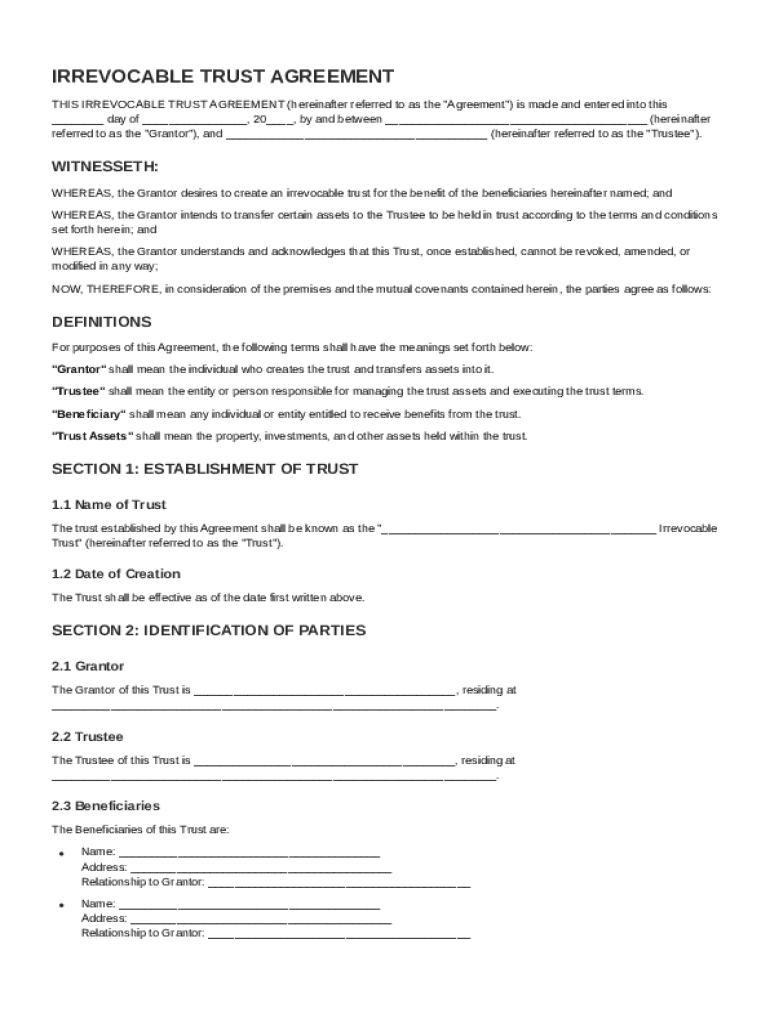
An irrevocable trust agreement is a legal document that establishes a trust arrangement between a grantor and a trustee, wherein the assets transferred into the trust become the property of the trust itself, and the grantor waives all rights to alter or withdraw the assets. This type of trust is significant for estate planning, as it can remove assets from the grantor's taxable estate, potentially providing tax benefits and asset protection. The trust's terms, once established, cannot be modified or terminated without the agreement of the trust's beneficiaries, ensuring the trust’s objectives are met as intended.
How to Use the Irrevocable Trust Agreement Template
Using the irrevocable trust agreement template involves a few strategic steps to ensure accuracy and legal compliance:
-
Personal Information: Begin by filling in your personal information, including the names and addresses of the grantor, trustee, and beneficiaries.
-
Asset Details: Clearly specify the assets to be transferred into the trust. This could include real estate, stocks, bonds, or other valuable items.
-
Trust Terms: Define the terms of the trust, such as distribution timelines, conditions for beneficiaries, and any special considerations or rules that govern the trust.
-
Legal Review: Before finalizing the document, review it with a legal professional to ensure compliance with state laws and that the document meets your estate planning needs.
-
Execution: Sign the document in the presence of a notary or witnesses as required by your jurisdiction, and make copies for your records and relevant parties.
Key Elements of the Irrevocable Trust Agreement Template
An effective irrevocable trust agreement template must include several key elements to ensure it fulfills its intended legal purpose:
-
Trust Purpose and Objectives: Clearly outline the purpose of the trust and what it aims to achieve for the grantor and the beneficiaries.
-
Identification of Parties: Include detailed information about the grantor, trustee, and beneficiaries, ensuring correct identification.
-
Assets Description: List all assets being transferred into the trust, including their current value and any relevant identifying information, such as account numbers or property deeds.
-
Trustee Powers and Duties: Define the trustee’s responsibilities over the management and distribution of trust assets, as well as any limitations of their authority.
-
Distribution Terms: Specify how and when the trust assets are to be distributed to beneficiaries, ensuring clarity and alignment with the grantor’s intentions.
Important Terms Related to Irrevocable Trusts
Understanding the terminology is crucial when dealing with irrevocable trusts:
-
Grantor: The person who creates the trust and transfers assets into it.
-
Trustee: The individual or institution responsible for managing the trust according to its terms and the best interests of the beneficiaries.
-
Beneficiaries: Those who are designated to receive benefits from the trust.
-
Fiduciary Duty: The obligation of the trustee to act in the best interests of the beneficiaries.
-
Corpus: The principal amount of the trust, consisting of all assets and property held within it.
Legal Use of the Irrevocable Trust Agreement Template
Legally utilizing an irrevocable trust agreement requires adherence to both federal and state regulations:
-
Compliance with State Laws: Each state has specific laws governing trusts. Ensuring that the trust complies with these is vital for its validity.
-
IRS Guidelines: Such trusts can offer tax benefits, but they must comply with IRS regulations regarding income distribution and taxation.
-
Estate Planning: When used for estate planning, the irrevocable trust must be structured to align with broader estate goals and avoid undesired tax implications.
Steps to Complete the Irrevocable Trust Agreement Template
Setting up an irrevocable trust involves several important steps:
-
Identify Goals: Determine what you want the trust to accomplish for your beneficiaries and your estate.
-
Select a Trustee: Choose a trustworthy and capable individual or institution to manage the trust.
-
Prepare the Trust Document: Use the template to draft the agreement, inputting all necessary details.
-
Transfer Assets: Legally transfer the ownership of listed assets to the trustee or trust entity.
-
Final Review and Execution: Conduct a legal review and sign the document, following state-specific formalities.
Examples of Using the Irrevocable Trust Agreement Template
Irrevocable trust agreements serve a variety of purposes in different scenarios:
-
Estate Tax Planning: Reduce an estate's taxable value by transferring high-value assets into a trust.
-
Medicaid Planning: Protect assets from being considered for Medicaid eligibility by transferring them into a trust well before care is needed.
-
Asset Protection: Shield assets from creditors by placing them into a trust that removes personal ownership.
State-Specific Rules for Irrevocable Trusts
Creating an irrevocable trust involves adherence to varying state regulations:
-
Notarization Requirements: Some states may require the agreement to be notarized, while others might not.
-
Property Transfer Regulations: Depending on the state, transfer rules for certain assets, especially real estate, can differ.
-
Trustee Qualifications: States often have different standards or requirements for who can legally serve as a trustee.
Being mindful of these regulations ensures the trust’s legality and efficiency in accomplishing its intended goals.