






Definition and Purpose of Invoice Discounting Agreement Template
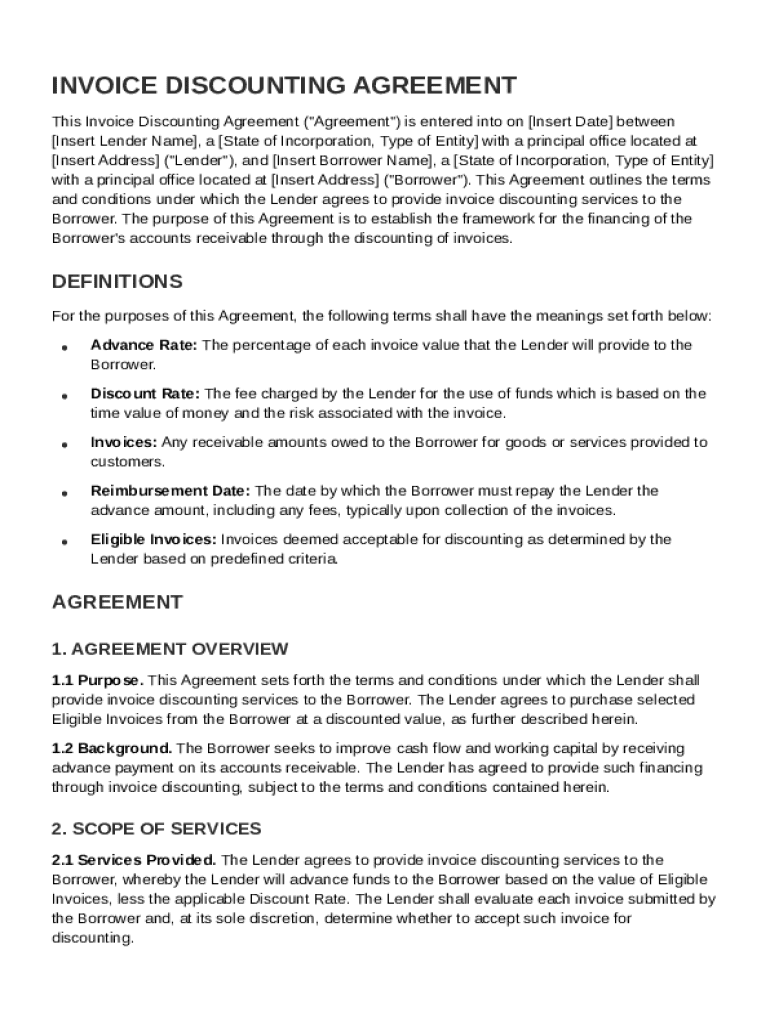
An Invoice Discounting Agreement Template is a structured document that sets forth the terms under which a lender offers invoice discounting services to a borrower. This agreement allows businesses to receive advance payments on invoices that have been issued to clients but not yet paid. The template defines critical components like the Advance Rate, which indicates the percentage of the invoice value that can be advanced, and the Discount Rate, representing the cost of borrowing against the invoices. This form is essential for both parties as it clearly outlines roles, expectations, and ensures legal protections.
Key Features
- Advance Rate: Defines the percentage of the invoice value the borrower can access upfront.
- Discount Rate: Indicates the interest or fees associated with borrowing against invoices.
- Eligible Invoices: Outlines which invoices qualify for discounting based on certain conditions.
Through these specified terms, the agreement ensures transparency and legal compliance, facilitating a smooth transaction process.
How to Obtain the Invoice Discounting Agreement Template
There are several ways to obtain an Invoice Discounting Agreement Template. It can be accessed through various online platforms specializing in legal and business documentation, such as document hubs, financial service providers, or directly from legal advisors. When selecting a template, ensure it matches specific business needs and complies with state laws where the business operates.
Steps to Obtain
- Identify Your Needs: Understand the requirements of your business and the specific terms needed in the agreement.
- Choose a Provider: Opt for a reputable platform that offers customizable templates.
- Download the Template: Access the document in a compatible format for editing.
Steps to Complete the Invoice Discounting Agreement Template
Completing the Invoice Discounting Agreement Template involves filling out several sections with accurate business and financial information. It’s crucial to review each clause and ensure all data is precise to avoid potential legal issues.
Detailed Steps
- Input Business Information: Enter the borrower and lender's full legal names and contact information.
- Specify Financial Terms: Fill out the Advance Rate, Discount Rate, and list Eligible Invoices.
- Set Payment Terms: Clearly define the payment schedule, fees, and conditions for repayment.
- Review Legal Clauses: Read through confidentiality obligations and dispute resolution methods to ensure compliance.
- Sign and Approve: Both parties should review the template before signing to finalize the agreement.
Key Elements of the Invoice Discounting Agreement Template
The Invoice Discounting Agreement Template comprises several key elements that provide structure and clarity to the agreement.
Components
- Advance and Discount Rates: Foundational elements that determine the financial framework of the agreement.
- Payment Terms: Specifies how and when payments are to be made, including any penalties for late payments.
- Termination Rights: Details conditions under which the agreement can be terminated by either party.
- Confidentiality Obligations: Assures both parties that financial and business information remains private.
- Dispute Resolution: Provides steps for resolving disagreements that may arise during the agreement term.
These elements help ensure that both parties have a mutual understanding and legal recourse if the agreement terms are breached.
Important Terms Related to Invoice Discounting Agreement Template
Familiarity with specific terms used in the Invoice Discounting Agreement Template can facilitate better understanding and application of the document.
Glossary
- Advance Rate: The percentage of the invoice payment that the borrower can receive upfront.
- Discount Rate: The interest or fee applied to the advance amount.
- Eligible Invoices: Invoices that meet specific criteria to qualify for discounting.
- Confidentiality Obligations: Duties to keep business information secure and private.
Knowledge of these terms ensures clarity in negotiations and compliance with the agreement’s provisions.
Who Typically Uses the Invoice Discounting Agreement Template
The Invoice Discounting Agreement Template is primarily used by businesses that need to improve cash flow without waiting for clients to settle their invoices. Small to medium-sized enterprises (SMEs), particularly those in the B2B sector, often utilize this method.


Beneficiaries
- Manufacturing Companies: With long production cycles, they benefit from the advanced cash to manage operational costs.
- Service Providers: Businesses that offer services on a credit basis find invoice discounting useful to cover immediate expenses.
- Retailers and Wholesalers: Companies in this sector use it to clear inventory quickly while maintaining liquidity.
By understanding who benefits most from this agreement, businesses can determine its suitability for their financial strategy.
Legal Use of the Invoice Discounting Agreement
The legal stature of the Invoice Discounting Agreement ensures that the transaction is compliant with relevant laws and provides a framework for resolving any disputes that arise. It involves adherence to financial regulations and contractual laws.
Legal Compliance
- Contractual Validity: Must align with the Uniform Commercial Code (UCC) for secure transactions.
- Data Protection: Ensure the agreement complies with data protection regulations, such as the California Consumer Privacy Act (CCPA).
- Dispute Resolution: The inclusion of arbitration or mediation clauses provides a clear path for dispute settlement.
Understanding the legal requirements ensures both parties’ interests are protected and minimizes risks of legal complications.
Examples of Using the Invoice Discounting Agreement Template
Various scenarios exemplify the use of the Invoice Discounting Agreement Template.
Case Study Scenarios
- SME Growth Support: A startup in the tech industry used invoice discounting to manage cash flow during a rapid growth phase, reducing pressure on equity.
- Seasonal Business Operations: A landscaping business utilized invoice discounting to cover upfront costs in the off-season, ensuring consistent operation without interruptions.
- Expanding Workforces: A manufacturing firm implemented invoice discounting to stabilize cash flow, allowing them to hire additional staff in alignment with increased demand.
These examples demonstrate the versatility and practicality of using the agreement to support business operations while maintaining financial health.