




01. Edit your form online
Type text, add images, blackout confidential details, add comments, highlights and more.

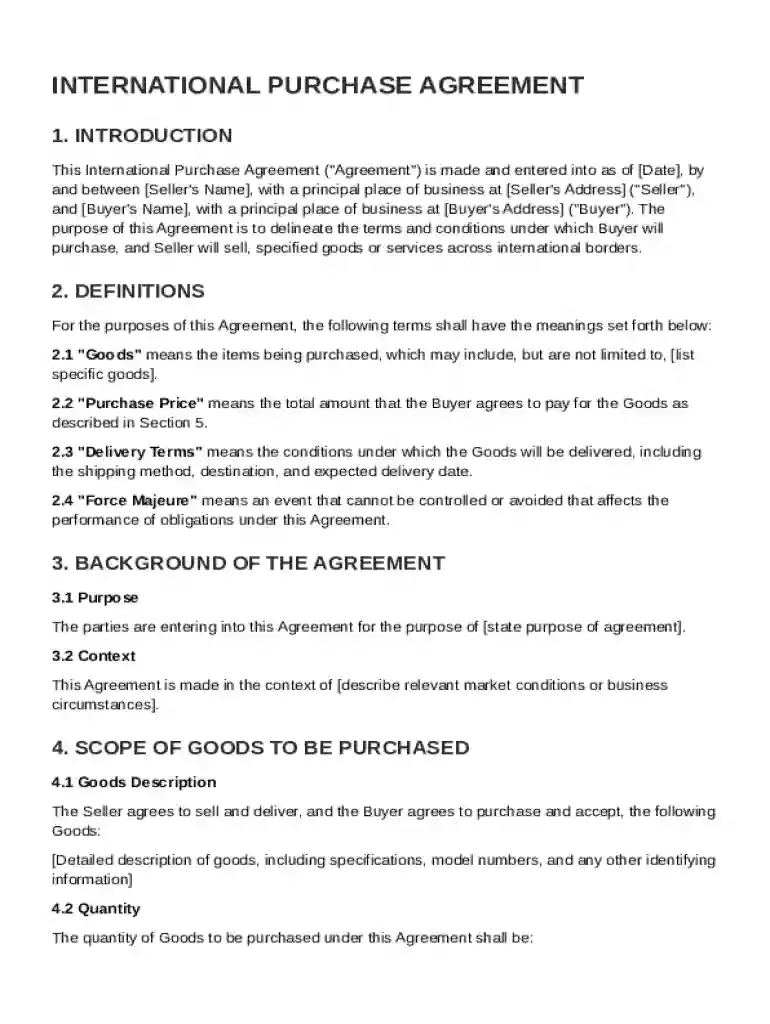
Type text, add images, blackout confidential details, add comments, highlights and more.

Draw your signature, type it, upload its image, or use your mobile device as a signature pad.

Send it via email, link, or fax. You can also download it, export it or print it out.
An International Purchase Agreement Template is a legal document designed to facilitate the cross-border sale of goods or services between a buyer and a seller. This template serves as a standardized framework to clearly outline the terms and conditions of the transaction, ensuring both parties have a mutual understanding of their rights and obligations. The document typically includes key elements such as the purchase price, delivery terms, and inspection rights. Additionally, it covers warranties, confidentiality obligations, dispute resolution mechanisms, and termination conditions. The ultimate goal of this agreement is to protect the interests of both parties and to provide legal clarity in the event of a dispute.
Using the International Purchase Agreement Template involves a series of steps to ensure the document accurately reflects the specifics of the transaction. Begin by filling in the details of the buyer and seller, including names, contact information, and business addresses. Next, define the scope of the goods or services being sold, along with a clear description to avoid any ambiguity. Set the purchase price and payment terms, ensuring these are clearly stated to prevent misunderstandings. Specify delivery terms such as dates and locations, and outline any inspection rights the buyer has. Establish any warranties or guarantees applicable to the goods. Finally, review the template to ensure all sections are completed and that both parties sign the document to formalize their agreement.
The International Purchase Agreement Template is legally binding and compliant with international business laws. It is structured to cater to the jurisdictional requirements of cross-border transactions while providing flexibility to address specific legal concerns pertinent to the countries involved. To ensure legal validity, it is crucial for both parties to carefully review the template in line with their respective legal advisors. Proper execution involves signing by authorized representatives from both parties, providing a basis for enforcement in a court of law if necessary.
There are various versions and alternatives to the International Purchase Agreement Template, based on the complexity and needs of specific transactions. For instance, you might choose a simple purchase order for smaller transactions or opt for a more detailed master purchase agreement if dealing with multiple deliveries over time. Specific industries may also have customized templates available to address unique requirements, such as those in technology, manufacturing, or pharmaceuticals. If negotiating terms often vary, using a bespoke contract drawn up by legal counsel might be the most effective approach to ensure all potential circumstances are covered.
While the International Purchase Agreement Template is used for cross-border transactions, it still needs to adhere to specific state laws where applicable, especially if the transaction touches on areas regulated at the state level in the United States. For example, some states have specific requirements related to the sale of goods or electronic transactions that must be integrated into the agreement. It is essential to consult a legal advisor familiar with the jurisdictional laws in the states involved to ensure compliance and to incorporate any necessary state-specific provisions into the template.
At DocHub, your data security is our priority. We follow HIPAA, SOC2, GDPR, and other standards, so you can work on your documents with confidence.


The following terms and conditions form the Master Agreement (Agreement) between SERVICE. PROVIDER NAME (Service Provider), an independent internationalRead more
For Agreements entered into on or after 1 November 2023, please see the relevant terms here. for the International Sale of Goods.


