Definition and Meaning
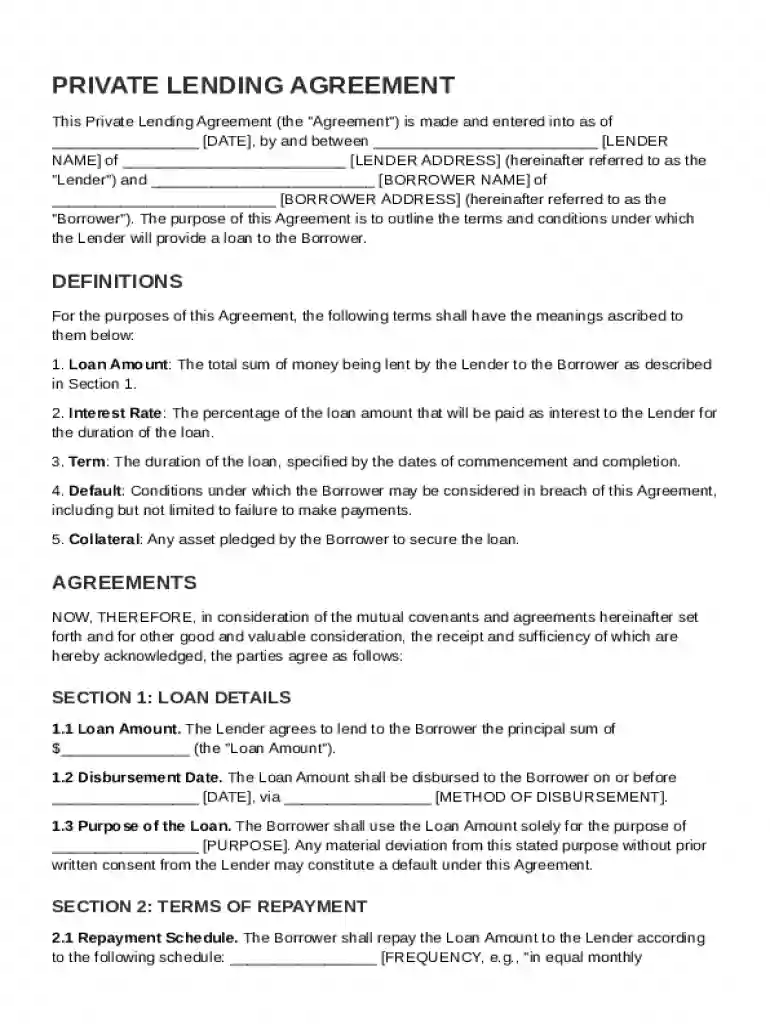
A Private Lending Agreement Template outlines the specific terms and conditions under which a lender provides a loan to a borrower. This legally binding document establishes a framework for how the loan is managed, ensuring both parties have a clear understanding of their rights and obligations. Key components of the agreement include definitions for important terms such as loan amount, interest rate, term duration, default conditions, and collateral requirements. By formalizing the lending arrangement, the document safeguards the interests of the lender and the borrower, providing a reliable reference point throughout the loan lifecycle.
Key Elements of the Private Lending Agreement Template
The Private Lending Agreement Template is composed of several essential sections, each addressing critical aspects of the lending process:
- Loan Details: Specifies the agreed-upon loan amount, repayment schedule, and interest terms.
- Repayment Schedule: Clearly delineates how and when payments are to be made, including the frequency and method of payment.
- Interest Rate: Outlines the interest rate type (fixed or variable) and how it will be applied over the loan term.
- Default Conditions and Remedies: Describes the consequences and corrective actions if the borrower fails to meet the agreement's terms.
- Collateral Provisions: Details any assets pledged as collateral, if applicable, and the conditions under which they may be claimed.
- Governing Law: Identifies which state or federal laws govern the agreement, crucial for legal compliance and dispute resolution.
- Miscellaneous Provisions: Includes clauses related to amendments, notices, and severability to address unforeseen circumstances.
How to Use the Private Lending Agreement Template
Utilizing the Private Lending Agreement Template involves several steps to ensure comprehensiveness and clarity:
- Customize the Document: Tailor the template to fit the specific lending transaction by filling in the necessary details, such as parties involved, loan amount, and interest rates.
- Review for Accuracy: Verify that all information entered is accurate and reflects the agreed terms to prevent future disputes.
- Include All Necessary Attachments: Attach any additional documents or signatures required by either party, ensuring they are included in the final agreement.
- Seek Legal Review: Consider having a legal professional review the completed agreement to guarantee it complies with applicable laws and adequately protects both parties' interests.
- Finalize and Sign: Once both parties are satisfied with the document, proceed to sign the agreement, making it legally binding.
Legal Use of the Private Lending Agreement Template
The Private Lending Agreement Template is a crucial legal tool, ensuring compliance with lending laws and protecting both lender and borrower:
- Enforceability: The agreement is structured to be legally enforceable, validating each party's obligations and rights.
- Compliance: Adheres to the legal statutes of the governing law specified in the document, providing clarity on applicable regulations.
- Dispute Resolution: Offers a clear framework for resolving disputes, relying on predefined terms and conditions to address grievances.
- Amendments: Allows for amendments in line with property transaction law, adapting to changes in the loan arrangement when both parties consent.
Important Terms Related to the Private Lending Agreement Template
Understanding the terminology used within the Private Lending Agreement Template is important for its proper application:
- Principal: The original sum of money borrowed before interest.
- Maturity Date: The date on which the loan balance must be paid in full.
- Interest Rate: The percentage charged on the loan amount for borrowing money.
- Default: A failure to meet the legal obligations of the loan agreement.
- Prepayment Penalty: A fee charged for paying off the loan before the scheduled maturity date.
- Lien: A legal right or interest a lender has in the borrower's property, granted until the debt obligation is satisfied.
Steps to Complete the Private Lending Agreement Template
Completing the Private Lending Agreement Template requires a thorough understanding of its components and careful attention to detail:
- Outline Basic Information:
- Include the names and contact information of both parties involved in the agreement.
- Detail the Loan Specifications:
- Fill in the loan amount, interest rate, and repayment terms.
- Define Repayment Terms:
- Specify payment frequency, due dates, and method of payment (e.g., bank transfer, check).
- Describe Default and Collateral Terms:
- Clearly state what constitutes a default and any associated collateral or security interests.
- Include Legal Provisions:
- List the governing law and any additional provisions regarding dispute resolution and amendments.
- Finalize and Secure Signatures:
- Once all details are confirmed, both parties should sign the agreement to make it binding.
State-Specific Rules for the Private Lending Agreement Template
The Private Lending Agreement Template must align with state-specific lending laws, which can affect various aspects of the agreement:
- Interest Rate Limitations: Certain states impose caps on interest rates, which must be adhered to in the agreement.
- Notification Requirements: Some states require public notice or additional filings for loans above a specific threshold.
- Security Interest Regulations: Variations in how collateral can be secured and repossessed exist between states.
- Consumer Protection Laws: State laws aimed at protecting borrowers may influence terms like prepayment penalties and disclosure requirements.