






Definition and Meaning
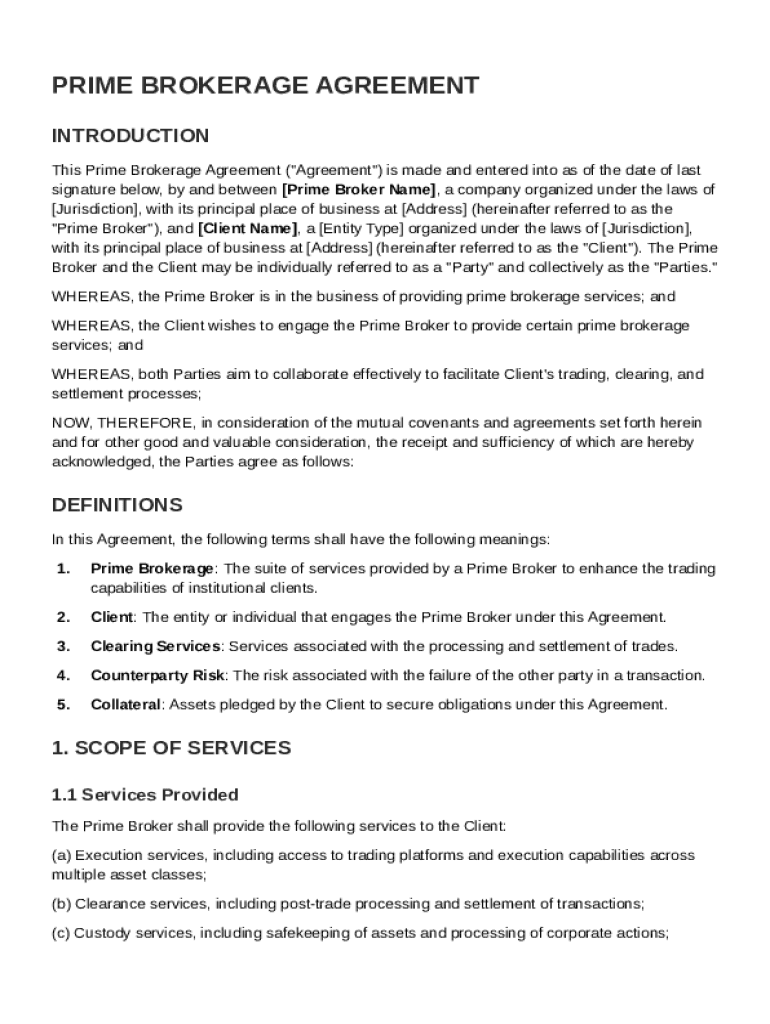
A Prime Brokerage Agreement is a legal document that outlines the relationship between a prime broker and their client. It defines the services the broker provides, such as trade execution, clearing, custody, and reporting. The agreement serves as a framework for collaboration and ensures both parties adhere to compliance, account maintenance, and risk management practices. This document is essential for facilitating complex trading activities and managing the relationships between the involved entities. Examples of the roles covered include the broker's commitment to safeguarding assets, providing timely transaction reports, and upholding confidentiality.
Key Elements of the Prime Brokerage Agreement Template
Prime Brokerage Agreements contain several vital components that ensure the agreement's effectiveness and clarity:
- Fee Structures: Detailed descriptions of the service fees and payment schedules are outlined to avoid future disputes.
- Collateral Management: Specifies how collateral is managed, including procedures for placing collateral and handling shortfalls.
- Indemnification Rights: Establishes circumstances under which parties will indemnify each other, protecting against potential claims or losses.
- Termination Rights: Defines conditions under which either party can terminate the agreement, alongside any penalties or notice periods.
- Dispute Resolution: Outlines mechanisms for resolving disagreements, which may include arbitration or mediation.
Each of these components informs how the parties will interact and respond to different situations throughout the partnership.
Steps to Complete the Prime Brokerage Agreement Template
Completing the Prime Brokerage Agreement involves several steps to ensure accuracy and compliance with legal standards:
- Gather Information: Collect necessary details concerning both the broker and client, including contact information and identification numbers.
- Define Services: Clearly state the services to be provided by the broker, such as trade execution, custody, and reporting.
- Agree on Fees: Outline the fee structures and payment schedules in detail, ensuring both parties are aware of financial obligations.
- Specify Collateral Terms: Clarify the terms regarding collateral, including acceptable types and valuation procedures.
- Review Legal Provisions: Carefully examine the legal terms, including indemnification rights and termination clauses, consulting legal counsel if necessary.
- Authorize the Agreement: Secure signatures from authorized representatives of both parties to formalize the contract.
Each step requires careful attention to detail to ensure that the agreement meets all operational and legal requirements.
Who Typically Uses the Prime Brokerage Agreement Template
The Prime Brokerage Agreement template is primarily utilized by:
- Hedge Funds: These investment vehicles often require the execution, clearing, and custody services offered by prime brokers.
- Institutional Investors: Large investment entities, such as pension funds, that need efficient trade execution and portfolio management.
- Financial Institutions: Banks and other financial entities seeking to expand their trading capabilities without directly handling all operations.
- Wealth Management Firms: Companies that manage portfolios for high-net-worth individuals benefit from the comprehensive service offerings of prime brokers.
These users rely on the agreement to streamline their trading activities and ensure all legal and operational aspects are covered.


Important Terms Related to Prime Brokerage Agreement Template
Understanding vital terms related to Prime Brokerage Agreements is crucial for all parties involved:
- Prime Broker: A financial institution that offers services such as trade execution and custody to clients.
- Custody Services: The safekeeping of assets as part of the broker’s offerings.
- Trading Desk: The location where securities transactions are executed on behalf of clients.
- Margin Accounts: Accounts that allow clients to purchase securities on margin, utilizing borrowed funds from the broker.
- Netting Agreements: Contracts that facilitate the settlement of mutual transactions between parties to minimize costs and risks.
These terms are fundamental to comprehending the roles and responsibilities within the agreement.
Legal Use of the Prime Brokerage Agreement Template
Legal use of the Prime Brokerage Agreement includes adhering to regulations such as:
- Compliance with SEC Rules: Ensuring alignment with rules set by the Securities and Exchange Commission regarding trade reporting and market conduct.
- Adherence to ESIGN Act: Utilizing electronic signatures in compliance with the Electronic Signatures in Global and National Commerce Act.
- Confidentiality Provisions: Implementing measures to protect sensitive client information under applicable data privacy laws.
Understanding these rules is essential for ensuring that the agreement is legally binding and enforceable.
Digital vs. Paper Version
Prime Brokerage Agreements can be prepared and executed in both digital and paper formats:
- Digital Version: Facilitates easy sharing and storage. Electronic signing is enabled through platforms like DocHub, offering a legally binding solution.
- Paper Version: Remains an option for traditional operations where digital technology is not feasible. Requires physical signatures and manual filing processes.
Both versions should be precisely structured to reflect all necessary terms and conditions, ensuring functionality and compliance in any format.
Software Compatibility
Prime Brokerage Agreement templates should be compatible with various software platforms to enhance efficiency:
- DocHub: Supports importing and editing various file formats, such as DOC and PDF, facilitating modifications on both desktop and mobile browsers.
- Google Workspace Integration: Enables direct import from Google Drive, allowing seamless editing and sharing within the Google ecosystem.
- Cloud Storage Compatibility: Works with services like Dropbox and OneDrive, ensuring secure and accessible document management.
Ensuring compatibility with these platforms can streamline the creation, review, and execution of agreements.