






Definition and Meaning of the Indemnity Real Estate Agreement Template
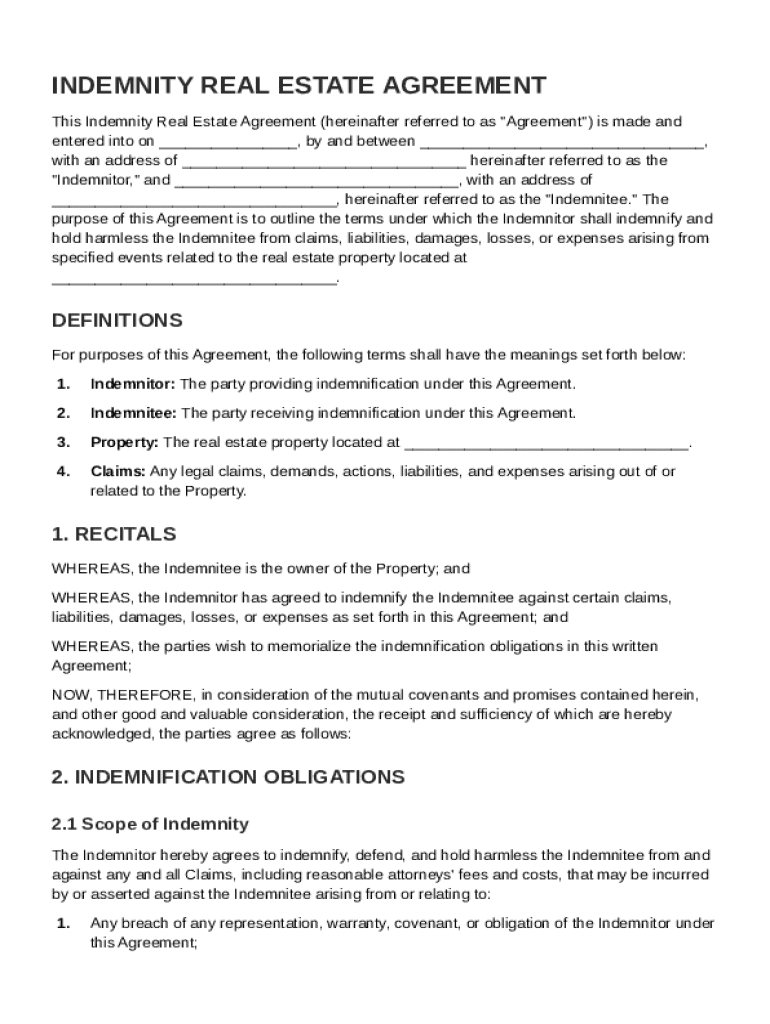
The Indemnity Real Estate Agreement Template is a legal document that delineates the obligations between two parties, the Indemnitor and the Indemnitee. Its primary purpose is to prevent the indemnitee from suffering loss, damage, or liability associated with a real estate property. This agreement specifies the conditions under which indemnification will occur and how it will be executed. It is an essential tool for managing risk in real estate transactions by ensuring that one party shoulders the financial responsibility for certain specified risks.
Key Components of the Agreement
- Indemnitor and Indemnitee: The agreement clearly identifies the two parties involved. The Indemnitor is the party that undertakes the responsibility to indemnify the other, while the Indemnitee is the one who receives the protection from liabilities.
- Scope of Indemnification: This section details what types of claims or liabilities are covered under the agreement, such as legal fees, property damage, or financial losses.
- Claims Procedure: It outlines the process by which the indemnitee must notify the indemnitor of any claims to seek indemnification, including time frames and required documentation.
How to Use the Indemnity Real Estate Agreement Template
Utilizing the Indemnity Real Estate Agreement Template involves careful preparation and understanding of its components. The template simplifies the process by providing a structured format that you can customize according to your transaction details.
Steps for Using the Template
- Review the Template: Begin by reading through the complete template to familiarize yourself with its sections and terminology.
- Customize the Information: Insert the specific details of your transaction, including the names and addresses of the parties involved, the subject property, and any unique terms.
- Define Terms Clearly: Ensure that all clauses, especially those concerning indemnification scope and procedures, are clearly defined to prevent future misunderstandings.
Practical Example
Suppose Party A sells a property to Party B, with Party A agreeing to indemnify Party B for past environmental liabilities. Party B uses the template to outline this indemnification obligation clearly, ensuring that the responsibility is legally binding and enforceable.
Important Terms Related to the Indemnity Real Estate Agreement Template
Understanding the lexicon within the template enhances clarity and compliance with the obligations set forth therein.
Essential Terminology
- Liability: Refers to the state of being responsible for something, especially by law. This could involve financial obligations or legal responsibilities.
- Hold Harmless Clause: A provision within the agreement where one party agrees not to hold the other liable for any losses or damages that may arise.
- Severability: A clause that ensures the remainder of the contract continues in effect even if one part is invalidated or unenforceable.
Contextual Application
For example, the agreement might contain a severability clause indicating that if any portion of the indemnification section is found invalid, the rest of the document remains in force. This is crucial for maintaining the overall integrity of the contractual obligations.
Key Elements of the Indemnity Real Estate Agreement Template
The effectiveness of the Indemnity Real Estate Agreement Template largely depends on how comprehensively it captures the necessary elements of indemnity agreements.
Detailed Breakdown
- Governing Law: Specifies the jurisdiction whose laws will govern the agreement, essential for conflict resolution.
- Amendments: Details the procedure for making changes to the agreement post-execution, typically requiring written consent from all parties.
- Notice Requirements: Defines how notifications between parties should be sent (e.g., via mail, email), which is vital for document validity in claim scenarios.
Example Scenarios
If the agreement specifies that New York law governs the contract and a dispute arises, parties will need to adhere to the state’s legal framework, which might affect the outcome of any litigation related to indemnification.
Examples of Using the Indemnity Real Estate Agreement Template
Practitioners across a variety of real estate contexts find the Indemnity Real Estate Agreement Template invaluable for managing risk.
Common Use Cases
- Property Development: Developers often use these agreements to protect themselves from claims related to pre-existing environmental hazards on the development site.
- Commercial Leasing: Landlords may indemnify tenants against losses due to building defects, shifting the liability for any repairs or litigation.
Real-World Application
A landlord uses the template to indemnify a tenant against any injury claims resulting from faulty construction. This allows the tenant to operate their business with reduced risk of financial liability.
Legal Use of the Indemnity Real Estate Agreement Template
Legal professionals rely on the Indemnity Real Estate Agreement Template to ensure that indemnification clauses comply with statutory requirements.
Ensuring Compliance
- Document Customization: Attorneys often adapt the template terms to align with specific state laws, ensuring seamless legal compliance.
- Risk Assessment: Legal advisors use it to evaluate potential risks and liabilities associated with real estate transactions, advising their clients accordingly.
Case Study
A legal team servicing a property transaction in California uses the template to draft a compliant agreement, considering the state-specific real estate laws to mitigate client risk.
Who Typically Uses the Indemnity Real Estate Agreement Template
Various stakeholders in real estate transactions utilize this template to facilitate transparent and legally sound agreements.


Primary Users
- Real Estate Agents and Brokers: They use it to simplify negotiations by providing clear terms of indemnification.
- Legal Counsel: Lawyers often draft or review these agreements to ensure clients’ interests are protected effectively.
- Property Management Companies: These firms deploy the template to manage and mitigate risks associated with their properties.
Example Usage
Real estate brokers incorporate indemnity agreements in agency contracts to protect themselves from liabilities arising from client actions, ensuring that agents focus on delivering services without undue legal hassles.
Steps to Complete the Indemnity Real Estate Agreement Template
Completing the Indemnity Real Estate Agreement Template systematically ensures its provisions are enforceable and benefits all parties.
Procedural Steps
- Initial Conferencing: Gather stakeholders to discuss the terms and intentions of the indemnity agreement, ensuring alignment.
- Template Completion: Fill out the template with specific terms and conditions, adjusting sections relevant to the transaction.
- Legal Review: Obtain a legal review to confirm that the document adheres to pertinent laws and reflects the agreement between parties.
- Finalize and Sign: Once all parties are satisfied, execute the agreement by having each sign to formalize the obligations.
Detailed Example
A property management firm prepares the template, adjusting clauses for the existing property insurance policies before securing sign-offs from tenants, thereby mitigating potential liabilities for both parties.