







Definition and Meaning
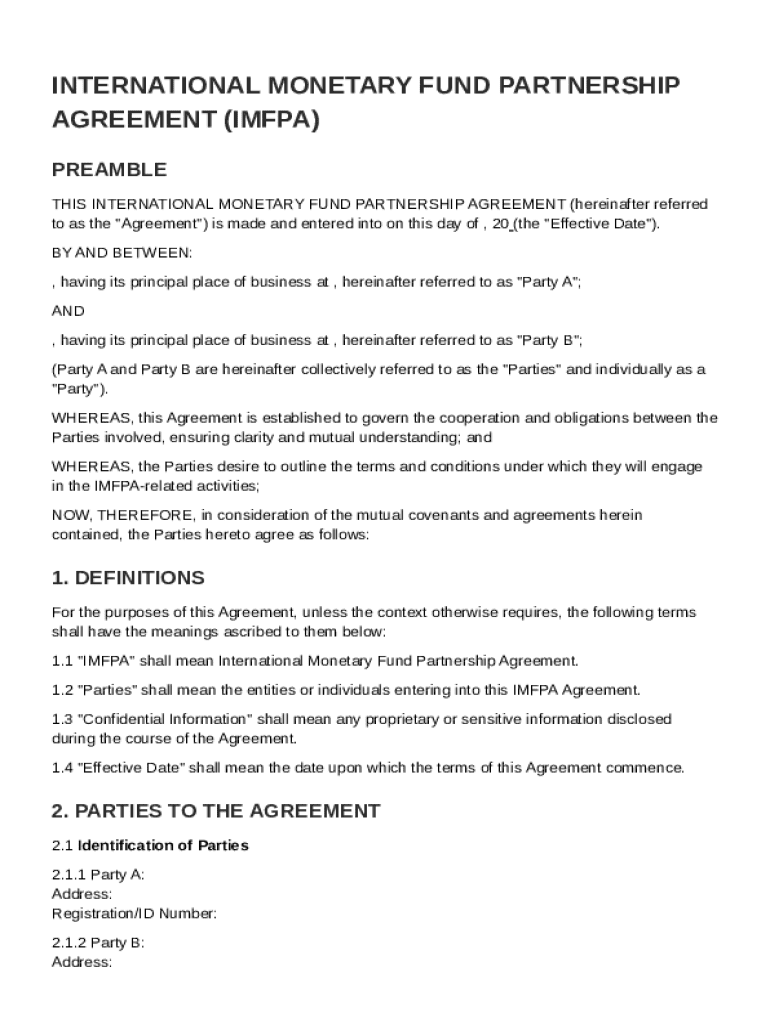
The International Monetary Fund Partnership Agreement (IMFPA) Template defines the legal framework for collaboration between two parties, known as Party A and Party B. This document establishes the terms, conditions, and guidelines for the cooperation, outlining roles, responsibilities, scope of work, compensation, confidentiality, duration, termination conditions, dispute resolution processes, and amendment procedures. By clearly delineating each party's expectations and duties, the agreement ensures mutual understanding and smooth collaboration in alignment with the international standards followed by the IMF.
Key Elements of the IMfPA Agreement Template
This template comprises several crucial elements that form the backbone of any partnership governed by it:
- Definitions and Interpretations: Clear definitions of terms used in the agreement to eliminate ambiguity.
- Roles and Responsibilities: Descriptions of what each party is expected to deliver and their respective duties.
- Compensation Terms: Details about how and when payments are to be made, covering any financial arrangements agreed upon by the parties.
- Confidentiality Obligations: Measures for ensuring sensitive information remains secure and undisclosed to unauthorized individuals.
- Duration and Termination: Specifies the time frame for which the agreement is valid and the conditions under which it can be terminated.
These sections ensure that both parties have a detailed understanding of the agreement's scope and guiding principles, enhancing legal clarity and operational efficiency.
How to Use the IMfPA Agreement Template
To effectively use the IMFPA Agreement Template, follow these steps:
- Review All Sections: Carefully read through each part to understand the obligations and expectations.
- Customize Key Sections: Tailor the roles, responsibilities, compensation, and other variable sections to fit the specific context of your partnership.
- Consult with Legal Advisors: Seek professional advice to ensure all legal aspects are covered and the agreement is enforceable under applicable laws.
- Secure Signatures from Both Parties: Make sure both parties sign the document to authenticate the agreement.
- Store the Agreement Safely: Keep digital and physical copies in secure locations for future reference.
These steps are vital for ensuring that the agreement is utilized properly and all parties are compliant with the stipulated terms.
Legal Use of the IMfPA Agreement Template
The IMFPA Agreement Template is designed for use in legal frameworks pertaining to partnership agreements. It adheres to the legal standards and requirements that ensure the enforceability of the contract in case of disputes. Legal professionals typically recommend reviewing it in accordance with U.S. laws to guarantee compliance, especially when it involves international collaborations, given the cross-border nature of activities usually covered by such agreements.
Important Terms Related to the IMfPA Agreement Template
Some terminologies frequently associated with the IMFPA Agreement Template include:
- Scope of Work: Defines detailed tasks and obligations each party agrees to perform.
- Amendment Procedures: The process for making changes to the agreement once signed.
- Dispute Resolution: Methods and processes for resolving conflicts that may arise between the parties.
- Confidentiality Clauses: Provisions to protect shared sensitive data from unauthorized access or exposure.
Understanding these terms is critical to effectively leveraging the agreement to maintain harmonious and productive partnerships.
Who Typically Uses the IMfPA Agreement Template
The IMFPA Agreement Template is predominantly used by:
- International Business Partners: Companies entering into partnerships that involve cross-border dealings.
- Financial Institutions: Banks and other financial entities engaging in global financial agreements and investments.
- Legal Departments: Corporate legal teams tasked with drafting and managing partnership agreements for multinational operations.
- Consultants and Advisors: Professionals advising on or mediating partnerships on an international stage.
These groups rely on the template to ensure their agreements are comprehensive, clear, and legally sound.


Steps to Complete the IMfPA Agreement Template
Completing the IMFPA Agreement Template involves several deliberate actions:
- Identify Parties Involved: Clearly outline Party A and Party B, including their full names and contact information.
- Define Objectives and Scope: Set out what each party aims to achieve through the partnership.
- Detail Roles and Responsibilities: Allocate tasks specific to each party to avoid overlaps or gaps.
- Set Compensation Terms: Establish how compensation will be distributed, including schedules and methods.
- Incorporate Dispute Resolution Clauses: Define processes for addressing disagreements that may arise.
- Review and Amend: Go through the full agreement for consistency and applicability, making necessary amendments.
- Finalize and Sign: Have both parties sign the agreement to make it official and binding.
These steps ensure that the agreement is tailored to the specific needs of the parties involved, reducing misunderstandings.
Examples of Using the IMfPA Agreement Template
Real-world applications of the IMFPA Agreement Template demonstrate its versatility and utility across various scenarios:
- Cross-Border Joint Ventures: Used to establish terms between companies launching joint ventures in multiple countries.
- Financial Service Agreements: Provides clear guidelines for banks collaborating on international finance products.
- Consulting Contracts: Guides consultants and companies in formalizing their professional relationships with international reach.
- Collaborative Research Projects: Facilitates partnerships between academic or research institutions working across borders.
These examples highlight the template's adaptability to different partnership contexts, ensuring comprehensive contractual foundations in both business and non-profit sectors.




