






Definition and Meaning of the Vested Equity Agreement Template
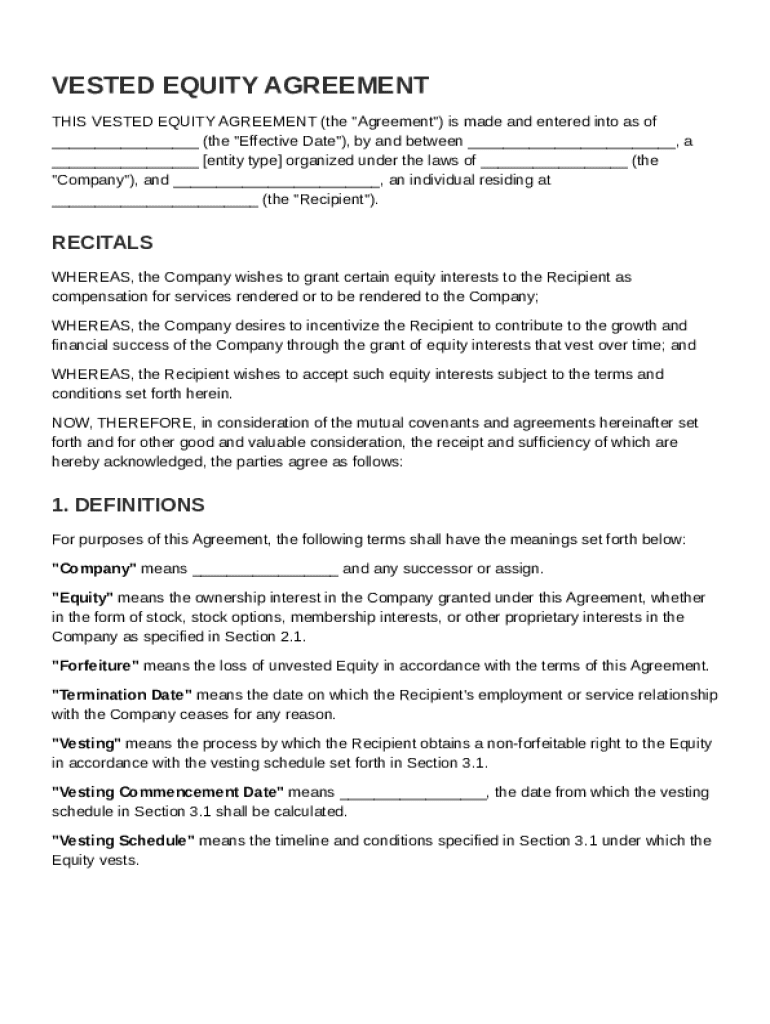
The Vested Equity Agreement Template is a comprehensive document used by companies to structure equity compensation for individuals who contribute to the company's operations. Typically, this agreement is extended to employees, contractors, or consultants as part of their compensation package. It includes detailed terms regarding the equity interests that are granted, specifying how and when these interests vest over time. The vesting schedule is crucial as it ties the recipient's equity to the duration of their service, thereby incentivizing them to contribute to the company's growth and stick with the company over a specified period.
Equity, in this context, refers to a share of ownership in a company, which entitles holders to a portion of the company's profits and, potentially, voting rights. Vested equity means that over time, the employee or recipient earns an unconditional right to the equity, subject to certain conditions described in the agreement.
How to Use the Vested Equity Agreement Template
Understanding how to use the Vested Equity Agreement Template is essential for businesses aiming to establish clear, enforceable equity compensation arrangements. First, the business should identify the individuals eligible for receiving equity compensation. Once identified, the template helps outline critical components, including vesting schedules which may be time-based or performance-based. Time-based vesting could span from one to four years, commonly following a cliff vesting plan where no equity is vested initially, unlocking a portion after a certain period.
Performance-based vesting ties equity to achieving specific business goals. The template allows companies to customize terms based on their objectives. It also offers sections for addressing potential forfeiture and clawback scenarios, ensuring that any unvested equity returns to the company if the recipient departs before the predefined period or performance milestones are not met.
Steps to Complete the Vested Equity Agreement Template
- Identify the Recipients: Determine who will receive equity compensation and the type of equity—whether stock options, restricted stock units (RSUs), or another form.
- Define Vesting Terms: Include the vesting schedule, specifying whether it is time-based or performance-based, and any cliffs or dotted conditions.
- Include Tax Implications: Outline how equity compensation is treated for tax purposes, including if any section 83(b) elections are necessary.
- Detail Forfeiture Clauses: Establish conditions under which equity might revert to the company, such as voluntary resignation or termination for cause.
- Specify Rights and Obligations: Include voting rights, if any, and the obligations recipients have in terms of confidentiality and non-compete clauses.
- Review Legal Compliance: Ensure the agreement complies with securities regulations and employment laws, possibly involving legal counsel to verify accuracy.
- Finalize and Execute: After thorough review, obtain signatures from all parties involved to formalize the agreement.
Key Elements of the Vested Equity Agreement Template
When drafting a Vested Equity Agreement, several key elements should be included to ensure comprehensiveness and clarity:
- Vesting Schedule: The timeline over which equity becomes fully owned by the recipient.
- Equity Type: Specifies whether the equity is in the form of stock options, RSUs, or another instrument.
- Forfeiture Provision: Conditions under which unvested equity is forfeited, ensuring protection for the business.
- Tax Provisions: Guidelines on how equity compensation is taxed under current laws.
- Rights and Duties: The rights, such as voting rights, conveyed with the equity and the responsibilities of the holder.
- Miscellaneous Provisions: Additional terms, such as dispute resolution procedures or amendment conditions.
Important Terms Related to the Vested Equity Agreement Template
Understanding key terms within the Vested Equity Agreement is vital:
- Cliff Vesting: A vesting schedule under which employees become vested in substantial portions of their equity at specific points.
- Performance-Based Vesting: Vesting contingent upon achieving specific business milestones or individual performance goals.
- Section 83(b) Election: A tax election that allows the recipient to be taxed on the total fair market value of the restricted stock at the time of grant rather than at vesting.
- Clawback: A provision that allows companies to reclaim equity compensation in certain situations.
Legal Use and Implications of the Vested Equity Agreement Template
The legal framework governing Vested Equity Agreements is essential for ensuring compliance with U.S. laws. Agreements must adhere to state and federal securities regulations to avoid potential legal disputes or penalties. Additionally, employment law considerations come into play, especially around status changes or terminations.
Compliance with the ESIGN Act is mandatory for any digital signatures, ensuring they are legally binding. Companies often seek legal advice to ensure that the crafted agreement upholds these standards and remains enforceable.
Examples of Using the Vested Equity Agreement Template
Several scenarios illustrate the usage of Vested Equity Agreement Templates. For example, a startup may offer stock options with a vesting schedule to its initial employees to incentivize their long-term commitment. Alternatively, a mature organization might use RSUs to reward key executives for meeting revenue targets.
In each case, the agreement defines the specific vesting terms, forfeiture conditions, and rights associated with the equity, reflecting the company’s strategic goals and operational context.
Who Typically Uses the Vested Equity Agreement Template
Vested Equity Agreement Templates are widely used across various industries and organization sizes. Startups and tech companies often rely on these agreements to attract and retain top talent while managing cash flow. Established firms may use them for executive compensation packages to align leadership with long-term goals.
Users include human resources departments, legal teams, and financial officers, each ensuring the agreement aligns with the company’s objectives and financial regulations. These agreements play a pivotal role in structuring incentivized compensation aligned with company growth trajectories.