
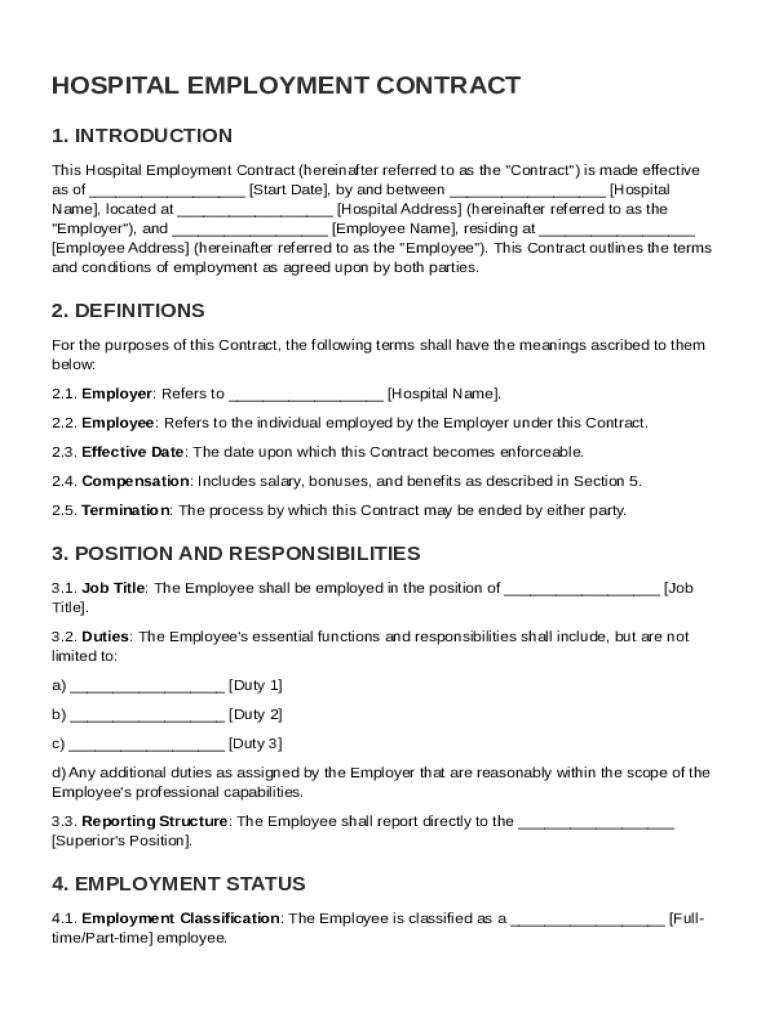







Definition & Meaning
The Hospital Employment Contract Template is a standardized legal document used to define the terms and conditions of employment between a hospital and an employee. This template provides a structured framework for outlining roles, responsibilities, compensation, benefits, and other critical elements to ensure mutual understanding and compliance with legal standards. By formalizing the employment relationship, the template helps minimize misunderstandings and disputes.
Key Aspects Covered
- Parties Involved: Clearly identifies the employer (hospital) and the employee, ensuring that both parties know their respective roles and titles.
- Employment Terms: Outlines the starting date, employment type (full-time, part-time, etc.), and the probationary period if applicable.
- Job Responsibilities: Specifies the duties and expectations associated with the job position, providing clarity on what is required from the employee.
How to Use the Hospital Employment Contract Template
Using the Hospital Employment Contract Template involves several steps to ensure it suits the specific needs of both the hospital and the employee.
Step-by-Step Usage
-
Reviewing the Template: Thoroughly examine the template to understand its structure and content. Identify sections that require customization to align with specific job roles and institutional policies.
-
Customizing Details: Input relevant details such as the employee’s name, job title, and compensation package. Tailor job responsibilities to match the specific role’s requirements within the hospital.
-
Adding Supplementary Documents: If applicable, attach supplementary documents such as non-disclosure agreements or healthcare benefits summaries to provide a comprehensive employment package.
Practical Example
A new nurse joining a hospital may have personalized entries in the contract regarding shift hours, specific unit assignments, and any probationary assessments necessary for role progression.
Steps to Complete the Hospital Employment Contract Template
Completing the template involves several sequential actions to ensure accuracy and completeness.
Detailed Process
-
Gather Necessary Information: Collect all relevant employee information, including identification, role-specific details, and agreed compensation terms.
-
Enter Essential Details: Fill in the template, starting with personal details, followed by sections on employment terms, health coverage options, and other benefits.
-
Review Legal Compliance: Ensure the contract complies with federal and state employment laws. Seek legal review if needed, ensuring adherence to local regulations.
Edge Cases
- Remote Work Provisions: If an employee is expected to work remotely, specific clauses related to remote work conditions, equipment provisions, and communication expectations should be included.
- Part-time Roles: For part-time positions, clearly define the expected working hours and any variations from standard full-time benefits.
Key Elements of the Hospital Employment Contract Template
Recognizing the core components is crucial for using the contract template effectively.
Essential Sections
-
Compensation and Benefits: Details include salary, bonuses, insurance coverage, retirement plans, and any other employee perks. Clear articulation of payment schedules is necessary.
-
Confidentiality Obligations: Stipulates requirements for maintaining patient confidentiality and handling sensitive information, critical in healthcare settings.
-
Termination Procedures: Outlines the process for voluntary resignation or termination by the hospital, including notice periods and exit formalities.
Real-World Application
A radiologist’s contract might include specific equipment usage guidelines and professional development opportunities as part of the benefits package, reflecting the unique responsibilities involved.
Important Terms Related to Hospital Employment Contract Template
Understanding key terminology is crucial for both parties in the employment agreement.
Glossary of Terms
-
Probationary Period: A trial phase where the employee’s performance is evaluated before full employment confirmation.
-
Non-Compete Clause: A provision restricting the employee from working with competing institutions within a specific geographic area and timeframe after leaving the hospital.
-
Severance Pay: Compensation provided to an employee upon termination under certain conditions, typically reflecting service duration.
Examples and Scenarios
- A non-compete clause might prevent a cardiologist from joining a rival hospital within 20 miles for one year post-employment.
State-Specific Rules for the Hospital Employment Contract Template
Understanding state regulations is essential as they significantly affect employment contracts.
Notable Differences
-
California: Strict limitations on non-compete clauses, focusing on protecting employees’ mobility.
-
Texas: Allows broader enforcement of non-compete clauses but requires them to be reasonable in scope and duration.
Compliance Examples
A hospital in California must ensure that any restrictive covenants in their contracts comply with state legislation that prioritizes employee rights over employer-imposed restrictions.
Legal Use of the Hospital Employment Contract Template
Legal implications are central to employment contracts to ensure enforceability.
Key Legal Considerations
-
Governing Law: Identifies which state’s law will apply in interpreting the contract.
-
Dispute Resolution: Specifies mechanisms for addressing grievances and resolving disputes, potentially including mediation or arbitration as preferred methods.
Case Studies
An employment dispute in New York might involve contractual interpretations under New York law, necessitating awareness of local jurisprudence.
Versions or Alternatives to the Hospital Employment Contract Template
Understanding different contractual approaches can enhance flexibility.
Alternative Approaches
-
Collective Bargaining Agreements: Used in unionized settings, providing broader coverage and negotiation terms for groups rather than individuals.
-
Independent Contractor Agreements: For consultants or specialists engaged on a temporary basis without full employment ties.
Practical Application
While a standard employment contract suits long-term employees, an independent contractor agreement is ideal for a freelance healthcare consultant providing a short-term service.




