






Definition & Meaning
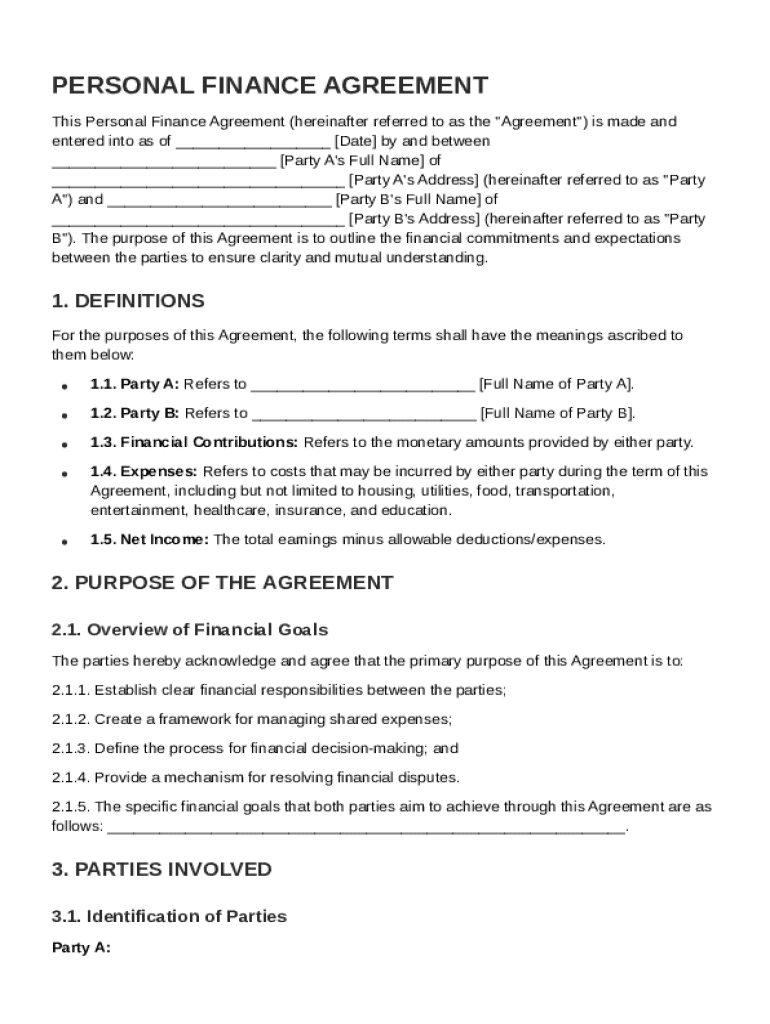
The Personal Finance Agreement Template is a standardized document that outlines the financial responsibilities and commitments between two parties, typically referred to as Party A and Party B. This template is designed to ensure clarity in managing shared expenses, establishing payment terms, and outlining dispute resolution processes. By clearly defining these elements, the agreement aims to prevent misunderstandings and conflicts regarding financial contributions and responsibilities.
- Financial Responsibilities: The template details the specific financial obligations of each party, including shared and individual expenses.
- Payment Terms: These specify how and when payments are to be made, ensuring both parties understand their financial commitments.
- Resolution Processes: Clear procedures for addressing disputes, should they arise, providing a structured approach for resolution.
Understanding the purpose and components of the Personal Finance Agreement Template is the first step toward effectively managing shared financial responsibilities.
How to Use the Personal Finance Agreement Template
Using the Personal Finance Agreement Template involves several key steps to ensure that it accurately reflects the financial arrangement between the involved parties.
- Customization: Tailor the template to fit the unique needs of both parties. This may include specifying the nature of the relationship, such as family members, business partners, or roommates.
- Detail Financial Obligations: Clearly outline the financial responsibilities of each party. This involves listing all expected contributions towards shared expenses.
- Define Payment Terms: Specify due dates and acceptable payment methods to avoid any ambiguity in financial transactions.
- Include Dispute Resolution: Establish a clear process for resolving any disputes to mitigate conflict and maintain a positive relationship.
By following these steps, users can create a comprehensive agreement that meets their specific requirements, ensuring transparency and accountability.
Key Elements of the Personal Finance Agreement Template
The Personal Finance Agreement Template is composed of several critical elements that ensure it serves its intended purpose effectively.
- Parties Involved: Clearly identifying Party A and Party B, including their contact information and roles.
- Purpose Statement: A brief description of the agreement's intention, such as sharing living expenses or managing joint financial responsibilities.
- Financial Terms: Detailed conditions and terms under which financial transactions are to be conducted, including the handling of shared costs and individual liabilities.
- Termination Clause: Specifies the conditions under which the agreement can be terminated by either party.
- Amendments: Procedures for making changes to the agreement, ensuring that modifications are mutually agreed upon and documented.
Each of these components plays a vital role in creating a thorough and effective finance agreement.
Steps to Complete the Personal Finance Agreement Template
Filling out the Personal Finance Agreement Template requires attention to detail to ensure accuracy and completeness.
- Gather Information: Collect all necessary information about the parties involved, including personal and contact details.
- Outline Financial Responsibilities: List all shared expenses and specify each party's contribution.
- Set Payment Terms: Define clear payment schedules and methods.
- Add Additional Clauses: Include any clauses that address specific concerns or requirements, such as confidentiality or exclusivity.
- Review and Sign: Both parties should thoroughly review the completed document and sign it to confirm their agreement.
This step-by-step approach ensures that the agreement is comprehensive and fully reflects the arrangement between the parties.
Legal Use of the Personal Finance Agreement Template
The Personal Finance Agreement Template must be used in accordance with legal guidelines to ensure enforceability and compliance.
- State Laws: Be aware of state-specific requirements that may affect the agreement's validity.
- Legal Language: Use clear and unambiguous language to avoid potential legal disputes.
- Consult Legal Advice: If necessary, seek legal advice to ensure that the agreement complies with applicable laws and regulations.
Understanding these legal considerations helps maintain the agreement's legitimacy and protects the interests of both parties.
Who Typically Uses the Personal Finance Agreement Template
The template is utilized by a diverse range of individuals and entities, each with unique financial arrangements.
- Roommates: Used to manage shared living expenses like rent and utilities.
- Couples: Helps in outlining financial responsibilities within a relationship or marriage.
- Business Partners: Facilitates the management of joint business expenses and profits.
- Family Members: Ensures clarity in familial financial exchanges, such as loans or shared investments.
By identifying common users, one can better tailor the template to meet specific needs and contexts.


State-Specific Rules for the Personal Finance Agreement Template
While many aspects of the Personal Finance Agreement Template are universally applicable, some considerations are specific to individual states.
- Legal Requirements: Certain states have specific legal requirements for financial agreements that must be adhered to.
- Governing Law: The agreement should specify which state's laws will govern the terms and conditions.
- Notarization: Some states may require notarization for the agreement to be legally recognized.
Being aware of these state-specific variations is crucial to ensure the agreement's validity and enforceability across different jurisdictions.
Examples of Using the Personal Finance Agreement Template
Practical examples can offer insight into real-world applications of the Personal Finance Agreement Template.
- Scenario 1: Roommates Sharing Rent: Two roommates create an agreement outlining their shared responsibility for rent and utilities, preventing disputes over who owes what.
- Scenario 2: Business Co-Owners: Business partners use the template to manage shared costs, profits, and financial decisions, ensuring clarity and reducing potential conflicts.
- Scenario 3: Family Loan: A family member loaning money to another utilizes the agreement to clearly define repayment terms and conditions, protecting both parties' interests.
Each example demonstrates the template's versatility and utility in various contexts, highlighting its role in managing financial agreements effectively.