






Definition & Meaning
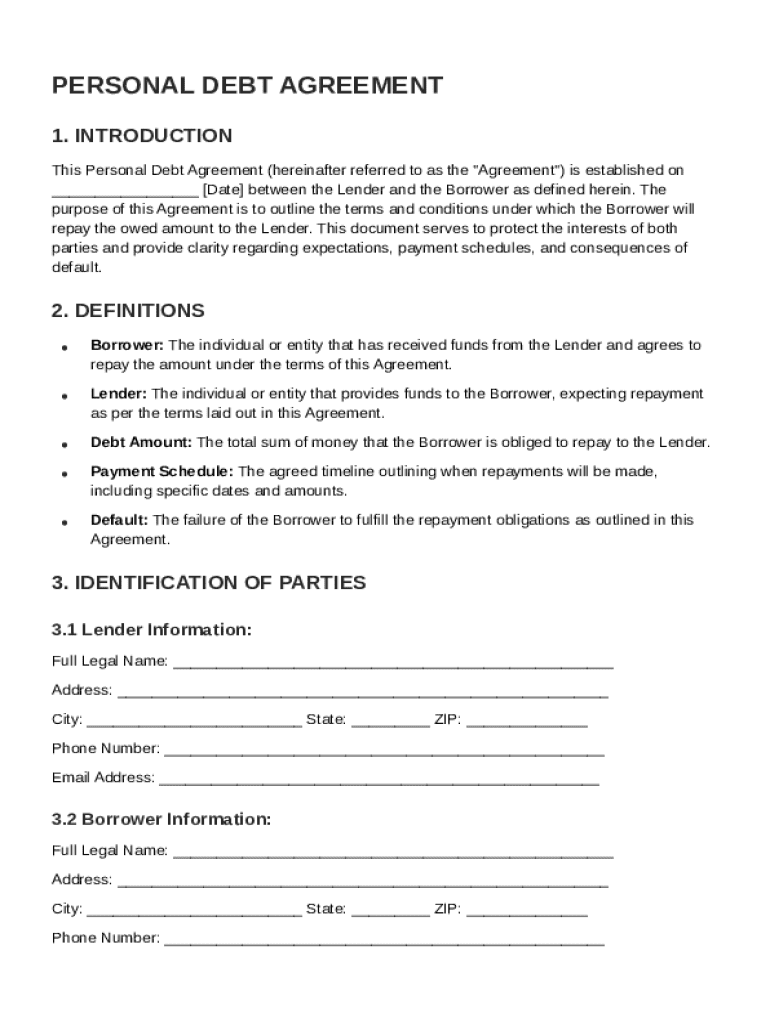
A Personal Debt Agreement Template is a legally binding document that outlines the terms and conditions involved in a personal loan between a lender and a borrower. This template is designed to protect both parties’ interests by clearly defining the expectations regarding loan repayment, interest rates, default conditions, and any other pertinent details. At its core, the agreement functions to provide transparency about the financial transaction and set legal parameters to govern the loan.
Effective use of this form requires understanding its various components, which typically include the principal amount of the loan, specified repayment terms, interest rates, and consequences for failing to meet repayment obligations. Clarity in these elements helps prevent misunderstandings and disputes. Additionally, clear definitions of the lender and borrower roles are crucial for legal clarity and accountability.
Key Elements of the Personal Debt Agreement Template
The Personal Debt Agreement Template encapsulates several critical components necessary to create a comprehensive agreement. Key elements typically include:
- Parties Involved: Identifies the lender and borrower, including their legal names and addresses.
- Loan Amount: Specifies the principal sum being borrowed.
- Repayment Terms: Details the repayment schedule, including start date, frequency, and method of payment.
- Interest Rate: States whether the loan will incur interest, and if so, specifies the percentage and how it’s calculated.
- Default Conditions: Enumerates conditions under which the borrower will be considered in default and the consequences thereof.
- Governing Law: Highlights the state or jurisdiction laws that govern the agreement.
Each of these elements ensures the agreement is legally robust, providing a clear framework that can be referred to in case of disputes or confusion.
Steps to Complete the Personal Debt Agreement Template
To effectively complete the Personal Debt Agreement Template, follow these steps:
- Gather Information: Collect all necessary personal and financial details from both the lender and borrower.
- Input Loan Details: Fill in the specifics of the loan, including the principal amount, repayment terms, and interest rate.
- Define Responsibilities: Ensure both parties’ roles are explicitly stated, along with their respective responsibilities.
- Establish Default Conditions: Clearly outline conditions for default, including any penalties or legal recourse.
- Sign and Date: Both the lender and borrower must sign and date the document to acknowledge its terms.
Completing these steps with precision helps ensure the agreement is thorough and legally enforceable.
Legal Use of the Personal Debt Agreement Template
The Personal Debt Agreement Template is used to formalize the loan agreement, ensuring it complies with state and federal regulations. It is legally enforceable and can be used as evidence in court if disputes arise. Legal usage includes:
- Contract Enforcement: Provides a document that courts can use to uphold the terms agreed upon.
- Dispute Resolution: Serves as a basis for resolving disputes by referring back to the agreed-upon terms.
- State Law Compliance: Ensures the agreement adheres to specific state laws governing personal loans.
Each of these legal uses underscores the importance of drafting the agreement accurately and thoroughly to protect both parties effectively.
Important Terms Related to Personal Debt Agreement Template
Understanding the terminology in a Personal Debt Agreement is vital for both parties involved:
- Principal: The original sum of money borrowed from the lender.
- Interest Rate: The percentage of the principal charged as interest over a specified period.
- Amortization: Process of spreading payments over multiple periods, typically seen in fixed loan structures.
- Collateral: An asset pledged as security for the loan, applicable in secured debt agreements.
- Acceleration Clause: A provision that allows the lender to demand immediate repayment if certain conditions are breached.
These terms are central to understanding the obligations and rights of each party under the agreement.
Who Typically Uses the Personal Debt Agreement Template
The primary users of the Personal Debt Agreement Template include individuals and entities involved in personal lending. This may include:
- Family Members or Friends: Engaged in informal lending arrangements seeking to establish clear terms.
- Private Lenders: Offering personal loans outside of traditional banking systems.
- Small Business Owners: Seeking or providing funding for personal reasons to maintain cash flow without involving commercial loans.
This template is also valuable for professionals such as lawyers and financial advisors assisting clients in drafting solid personal lending agreements.


Examples of Using the Personal Debt Agreement Template
Consider these real-world applications:
- Family Loan: A son borrowing money from a parent for an educational expense and documenting terms to maintain relationships.
- Private Loan for Medical Expenses: An individual lends money to a friend for unexpected medical bills, clearly outlining the repayment plans to prevent future conflict.
- Emergency Funds: A small business owner receives personal funding from a colleague for a short-term cash flow issue, documented to ensure repayment within a stipulated timeframe.
These examples illustrate how the agreement can be adapted to various personal financial transactions, each requiring explicit detailing to ensure clarity and avoid misunderstandings.
State-Specific Rules for the Personal Debt Agreement Template
Each state may impose unique requirements or restrictions on personal loans. Key considerations include:
- Interest Rate Caps: Some states have legal caps on the interest rate that can be charged on personal loans.
- Usury Laws: Regulations preventing excessively high-interest rates to protect borrowers from unfair lending practices.
- Statutory Requirements: Specific provisions or disclosures that must be included based on state legislations.
Adhering to state-specific rules is essential for ensuring the validity and enforceability of the agreement.
State-by-State Differences
Variations in state laws can affect the Personal Debt Agreement. For instance:
- Regulation Differences: States like New York and California have distinct regulations on maximum allowable interest rates.
- Legal Requirements: Some states require additional documentation or disclosures distinct from standard templates.
Understanding these differences ensures compliance across jurisdictions, protecting all parties involved in multiple or inter-state agreements.