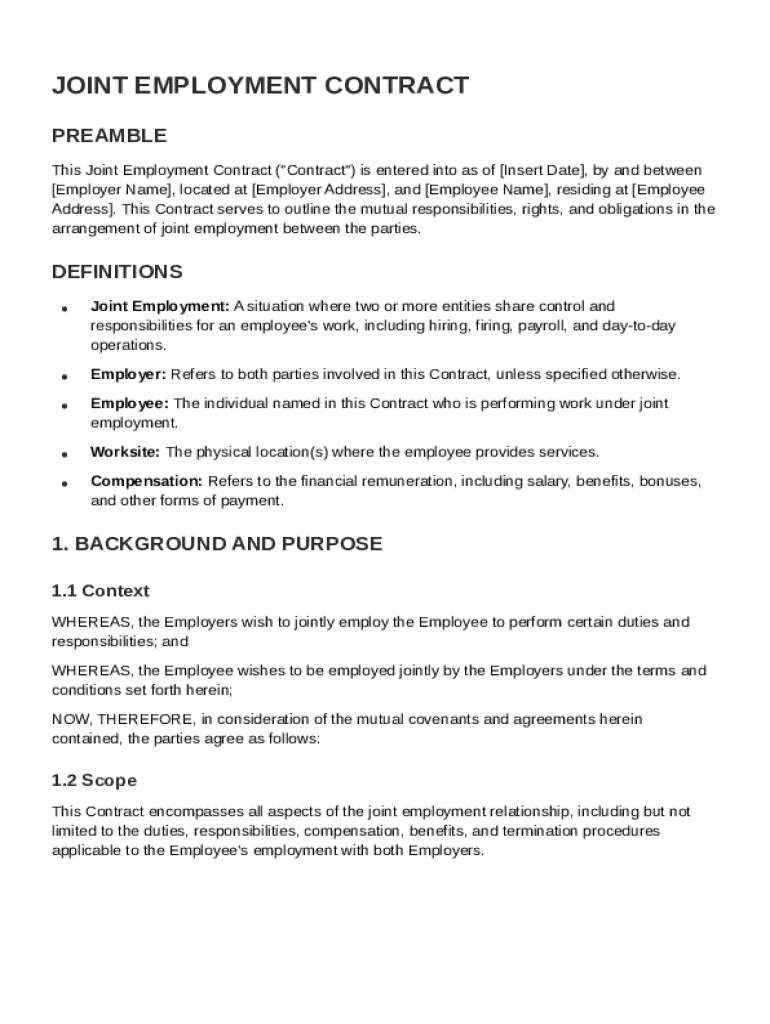







Definition and Importance of the Joint Employment Contract Template
The Joint Employment Contract Template is a comprehensive legal document that defines the responsibilities, rights, and obligations between two or more employers and an employee in joint employment circumstances. This template is crucial for ensuring all parties understand their role within the employment relationship, minimizing disputes or misunderstandings. Typically used in situations where an employee provides services benefiting multiple employers, this contract delineates how responsibilities and liabilities are shared among the employers.
- Key Responsibilities: The contract details each employer's role, specifying aspects like supervision, payment, and control over the employee's work.
- Integration with Organizational Policies: It aligns with existing HR policies, ensuring consistency in employment terms.
Understanding and utilizing this template properly is vital for business entities engaging in shared employment arrangements, as it provides a clear framework for managing joint responsibilities effectively.
How to Use the Joint Employment Contract Template
Using the Joint Employment Contract Template involves a systematic approach to filling in standard components while adapting sections to suit specific employment arrangements.
- Identify Basic Employment Details: Include information like employer names, employee name, and the workplace location.
- Describe the Employment Position: Clearly define the employee's role, responsibilities, and reporting structure within the organizations.
- Outline Compensation and Benefits: Detail how the employee will be compensated, including salary, bonuses, and benefits provided by each employer.
- Set Confidentiality Measures: Include clauses that protect sensitive business information.
- Final Review and Approval: Ensure all parties review and agree to the terms before signing.
Practically, this template serves as a base that can be customized depending on the legal and business needs of the joint employment scenario.
Steps to Complete the Joint Employment Contract Template
Completing the template requires careful attention to detail to ensure all relevant aspects are covered adequately.
- Gather Required Information: Collect necessary details about the employment situation and involved parties.
- Fill Out Initial Sections: Begin with straightforward sections, such as the identities of employers and employees.
- Customize Terms and Conditions:
- Specify duties and responsibilities for each party.
- Define the management and oversight mechanisms.
- Incorporate Legal Clauses: Add standard legal language for issues like dispute resolution and termination.
- Review and Validate: Conduct a thorough review to check for completeness and legal compliance.
- Obtain Signatures: Ensure all parties duly sign the contract, thereby formalizing the agreement.
This step-by-step process ensures the contract is both complete and tailored to the specific needs of the employment situation.
Key Elements of the Joint Employment Contract Template
Certain elements are critical when preparing a Joint Employment Contract.
- Parties Involved: Clearly identify all employers and the employee.
- Scope of Work: Define the specific duties and tasks expected from the employee.
- Duration of Employment: State the employment term and conditions for renewal or termination.
- Compensation Structure: Outline payment details, citing each employer's contribution.
- Workplace and Environment: Describe where and how the employee will conduct work.
- Legal Clauses:
- Confidentiality agreements
- Non-compete clauses
- Dispute resolution processes
Including these key elements ensures that the contract serves its purpose effectively, protecting the interests of all involved parties.
State-Specific Rules for the Joint Employment Contract Template
Employment laws vary by state, affecting how joint employment contracts are drafted and enforced.
- State Compliance: Each state has unique labor laws that must be adhered to, such as worker compensation rules, wage regulations, and workplace safety laws.
- Legal Variability: Broad federal guidelines are supplemented by specific state regulations, requiring careful adaptation of the contract template.
- Employee Rights: Different states provide various protections for workers, influencing contract terms related to job security, benefits, and workplace rights.
Understanding these differences is critical for ensuring the contract is legally binding and enforceable in the jurisdiction where the employment occurs.
Examples of Using the Joint Employment Contract Template
Real-world examples highlight the template's flexibility and applicability.
- Collaborative Companies: Two firms might jointly hire a shared resource to handle overlapping projects, with each firm benefiting from the employee's expertise.
- Parent Company and Subsidiary: In cases where a parent company and its subsidiary share staff, this contract template effectively outlines the parameters of joint management.
- Shared Technical Staff: Technology firms often use joint employment contracts for specialized roles that contribute to projects across organizational boundaries.
These examples underscore the template's practical utility in various industry contexts, enhancing workflow and legal compliance.
Legal Considerations for the Joint Employment Contract Template
Legal considerations are pivotal when drafting and executing the joint employment contract.
- Federal and State Laws: The Fair Labor Standards Act (FLSA) provides guidelines that intersect with state-specific requirements, influencing the contract's terms.
- Liability Issues: Clarity and precision in defining each employer's obligations can mitigate potential liability for wage and hour violations.
- Employment Conflicts: Provisions for conflict resolution are essential, delineating steps to address disputes that may arise between the employee and employers.
These legal considerations assure the contract's enforceability and the protection of parties involved in a joint employment relationship.
Digital vs. Paper Versions of the Joint Employment Contract Template
In today's digital age, the choice between digital and paper versions of contracts is significant.
- Digital Versions: Allow for easy modifications, sharing, and storage. Features like e-signatures, as available through platforms like DocHub, streamline the signing process and enhance efficiency.
- Paper Versions: Traditional hard copies are often used for archival and physical record-keeping.
- Choosing the Right Format: Businesses should evaluate their operational needs, considering factors like ease of access, security, and environmental impact when deciding on the format.
Choosing the appropriate format depends on organizational preferences and the logistical requirements surrounding contract management and execution.