
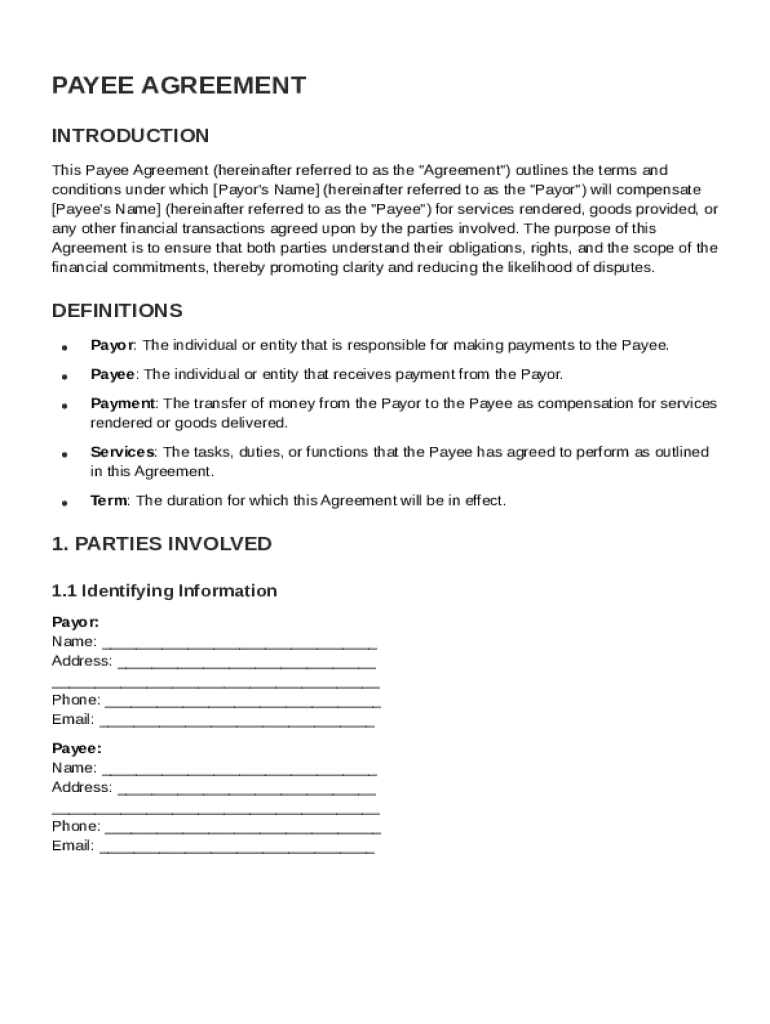







Definition and Meaning of a Payee Agreement Template
A Payee Agreement Template is a structured document outlining the terms and conditions mandated in financial transactions between two parties: the Payor and the Payee. This agreement is pivotal for defining and clarifying the obligations and responsibilities of both parties. Details such as payment terms, confidentiality, duration, termination clauses, dispute resolution processes, and governing law are meticulously laid out to eradicate potential misunderstandings and disputes. By delineating these crucial aspects, the Payee Agreement Template aims to ensure transparency and manage expectations.
How to Use the Payee Agreement Template
Using a Payee Agreement Template involves understanding how to incorporate it within your business processes effectively. Initially, it requires filling in the essential information about both parties, including names and contact details. Add clauses relevant to your agreement, such as payment schedules and responsibilities. Customize the template to reflect specific requirements like confidentiality or service stipulations. After drafting, both parties should review the agreement to ensure all terms are understood and agreeable before signing. This document becomes binding upon signature.
Key Elements of the Payee Agreement Template
Key elements of a Payee Agreement Template provide foundational structure and clarity to the document. They include:
- Identification of Parties: Clearly state the names and contact details of both the Payor and the Payee.
- Obligations and Responsibilities: Outline each party's roles and responsibilities to avoid miscommunications.
- Payment Terms: Include the amount, due dates, and preferred payment method.
- Confidentiality Clauses: Specify terms to maintain the privacy of shared information.
- Duration and Termination: Define the agreement’s duration and conditions for termination.
- Dispute Resolution: Establish the process for resolving conflicts, perhaps through mediation or arbitration.
- Governing Law: Indicate which jurisdiction’s laws will oversee the agreement.
These elements ensure that both parties have a well-defined set of expectations and understand the legal framework governing their relationship.
Steps to Complete the Payee Agreement Template
Completing the Payee Agreement Template involves careful detailing and review. The process is as follows:
- Gather Information: Collect details about both parties, agreed payment terms, and any specific conditions or clauses.
- Fill Initial Details: Input names, roles, responsibilities, and contact information for both parties.
- Define Terms: Clearly outline payment schedules, confidentiality agreements, and governing laws.
- Review Clauses: Analyze specific clauses for elements like dispute resolution or termination, making adjustments as necessary.
- Verify and Agree: Both parties should review the document to ensure accuracy and agreeableness.
- Sign the Document: Obtain signatures from both parties to make the agreement legally binding.
Each step requires precision to ensure that the agreement accurately reflects the intentions and needs of both parties involved.
Legal Use of the Payee Agreement Template
The legal use of a Payee Agreement Template is essential for it to serve its intended purpose. It must comply with relevant legal standards and jurisdictional laws. The agreement creates a legally enforceable contract once signed by both parties and should include specific provisions for modifying or terminating the agreement. It's essential to consider local regulations affecting financial transactions and confidentiality that might influence the agreement's terms. Consulting with a legal professional before finalizing the agreement can ensure compliance and prevent potential legal issues.
Who Typically Uses the Payee Agreement Template
This template is most commonly utilized by entities involved in regular financial transactions, such as businesses or independent contractors. Organizations making payments to suppliers, service providers, or freelancers often employ Payee Agreements to formalize their payment terms and conditions. These agreements are also prevalent in partnerships where revenue-sharing structures need to be clearly defined. Additionally, individuals or businesses providing loans or financial services might use them to delineate payment expectations and protect their financial interests.


State-Specific Rules for the Payee Agreement Template
Different U.S. states may have specific regulations that impact the content or enforceability of Payee Agreements. For instance, some states may have particular disclosure requirements or limitations on certain clauses like dispute resolution or usury laws. Understanding these state-specific rules is critical to ensure the agreement's validity. Adapting the template to include state-mandated language or exclude clauses that contradict state laws is advisable. Reviewing state legislation or consulting with a local attorney can provide the necessary guidance for compliance.
Digital vs. Paper Version
Choosing between a digital and a paper version of a Payee Agreement Template often depends on the needs of the parties involved. Digital versions offer ease of access, editing capabilities, and the convenience of electronic signatures. They are ideal for remote agreements and provide a sustainable option by reducing paper use. Paper versions, however, might be preferred where electronic document acceptance is limited or where traditional wet signatures are required. Both versions should retain the same legal standing, provided they contain identical terms and conditions and are properly signed.




