




01. Edit your form online
Type text, add images, blackout confidential details, add comments, highlights and more.

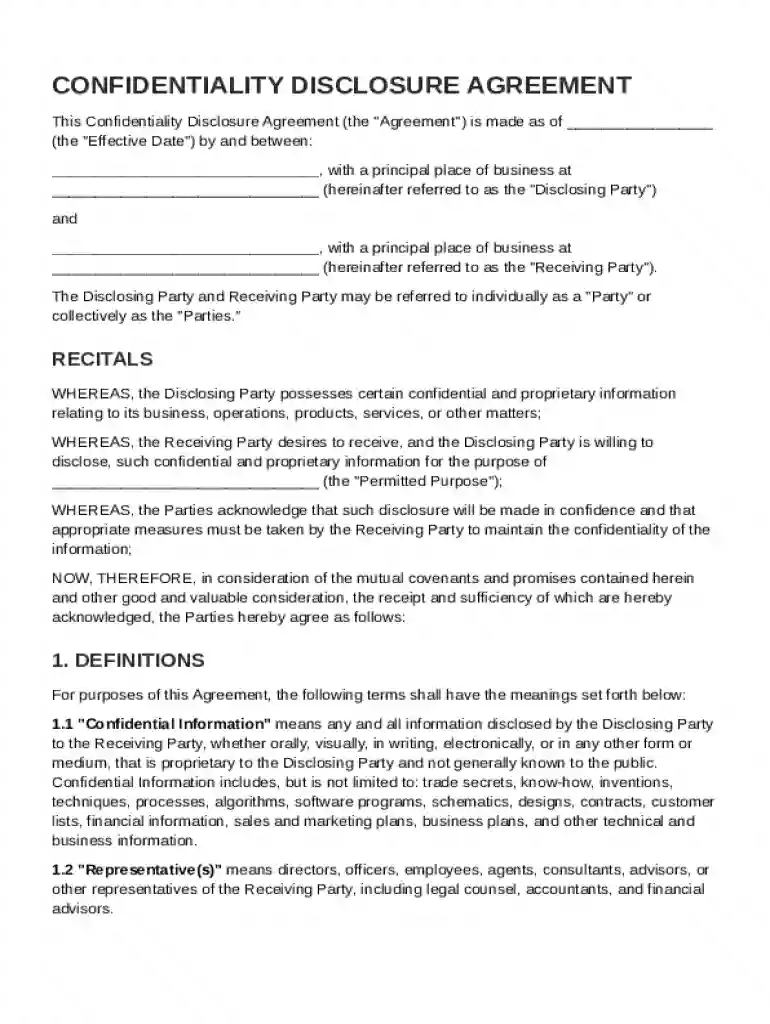
Type text, add images, blackout confidential details, add comments, highlights and more.

Draw your signature, type it, upload its image, or use your mobile device as a signature pad.

Send it via email, link, or fax. You can also download it, export it or print it out.
A Confidentiality Disclosure Agreement (CDA), often referred to as a Non-Disclosure Agreement (NDA), is a legal contract between two or more parties that specifies how confidential information shared between the parties will be handled. The agreement defines what constitutes 'Confidential Information' and outlines the obligations of the Receiving Party to maintain secrecy. It provides a framework for the exchange of sensitive information while protecting the interests of the Disclosing Party. CDAs are crucial in settings where proprietary information, such as trade secrets or innovative ideas, need to be shared under a cloak of confidentiality.
Using a Confidentiality Disclosure Agreement Template involves several clear steps to ensure it serves its purpose effectively:
Identify the Parties: Define the Disclosing and Receiving Parties. The Disclosing Party is the one sharing confidential information, while the Receiving Party is the one who will access that information.
Specify Confidential Information: Clearly outline what constitutes confidential information, considering the type of data or material subject to exchange, such as business plans, customer lists, or technical specifications.
Detail Confidentiality Obligations: State the responsibilities of the Receiving Party, which usually include securing the information, restricting access, and not disclosing it to unauthorized third parties.
Determine the Duration of the Agreement: Indicate how long the obligations under the agreement are in effect. This can range from a few months to several years, depending on the sensitivity of the information.
Include Terms for the Return or Destruction of Information: Specify what should happen to the confidential information once the agreement ends or is terminated, such as returning or destroying documents and digital copies.
Completing the CDA Template correctly enhances its enforceability and provides clarity for all parties involved. Here’s a step-by-step guide:
Fill in the Date and Parties' Names: Begin by providing the date of the agreement and the full, legal names of both the Disclosing Party and the Receiving Party.
Detail the Purpose: Clearly state the reason for disclosing confidential information. This could be for evaluation of a potential business relationship, engagement in a specific project, or consideration of a merger.
Enumerate Specific Obligations: Outline the legal obligations related to handling, protection, and nondisclosure of the identified confidential information.
List Exclusions from Confidentiality: Mention situations where the information is not considered confidential, like if it becomes public without the Receiving Party's fault, or if it was already known before the disclosure.
Define the Governing Law: Indicate which state's laws will govern the agreement. This is crucial for resolving potential disputes and determining legal compliance.
Signatures of Authorized Representatives: Conclude the agreement with signatures from authorized representatives of both parties to render it legally binding.
Understanding key terms related to a CDA is essential for effective use:
The legal framework of a CDA ensures that proprietary information exchanged remains protected. These agreements are used extensively in:
A well-structured CDA Template incorporates:
CDAs play a pivotal role across various scenarios. Here are a few instances:
While CDAs are widely used across the United States, the specific legal requirements and enforceability can vary by state, influenced by:
Understanding alternative forms to a CDA can also be beneficial. While the CDA is a robust tool for protecting information, alternatives include:
At DocHub, your data security is our priority. We follow HIPAA, SOC2, GDPR, and other standards, so you can work on your documents with confidence.


This sample contains terms representative of a Confidential. Disclosure Agreement, but any such agreement may be subject to change. CONFIDENTIAL DISCLOSURERead more
A Non-Disclosure Agreement (NDA) is a legal contract that restricts how confidential information may be used, shared, or disclosed. In HR compliance and


