







Definition and Meaning
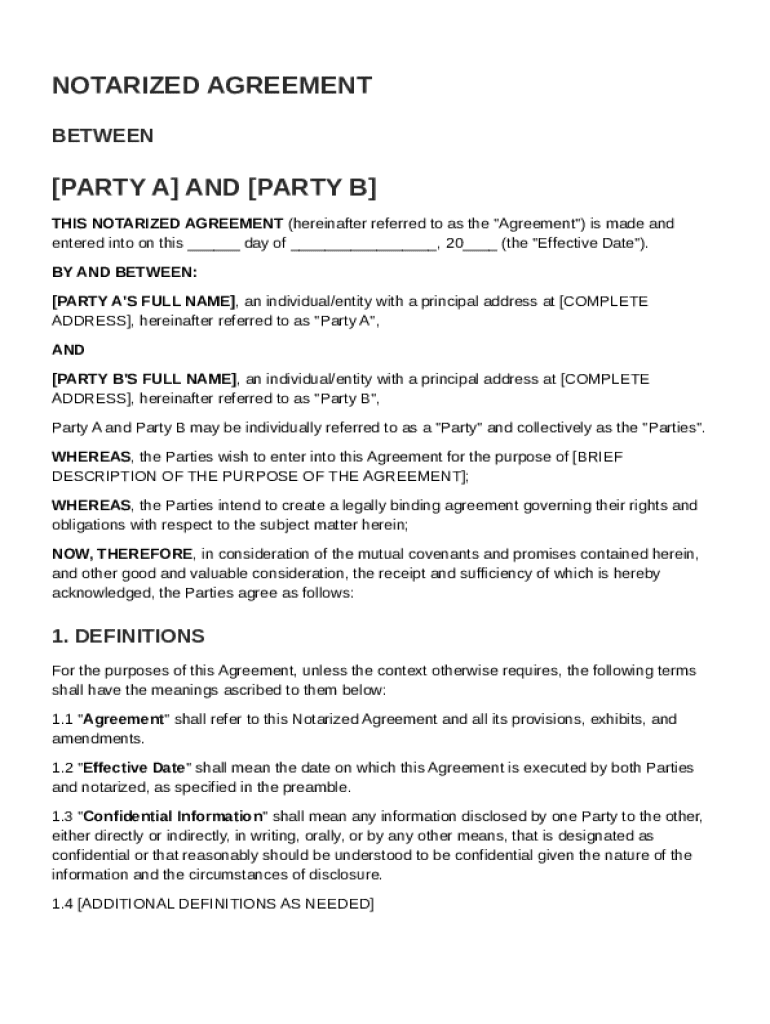
A notarized agreement template is a legally binding document designed to outline mutual rights and obligations between two parties, often referred to as Party A and Party B. This document serves as a safeguard by ensuring that the terms of an agreement are officially recognized and enforceable. It includes key elements like definitions, scope, payment terms, confidentiality clauses, and more. By having a notary public authenticate the document, the parties involved receive an additional layer of security and authenticity. This notarization process is essential to verify that all involved parties have signed willingly and without coercion.
How to Use the Notarized Agreement Template
Using a notarized agreement template involves several steps to ensure its proper execution and enforceability. Begin by carefully reviewing all sections of the template to understand the responsibilities and rights outlined. Customize the agreement by filling in the necessary details, such as party names, specific terms, and obligations. Ensure that all information inserted accurately reflects the intentions and agreements made by both parties. Once complete, arrange for both parties to review and sign the document in the presence of a notary public. The notary public will verify the identities of the signers and oversee the signing process to prevent fraud. After notarization, distribute copies of the finalized document to all parties involved for their records.
Steps to Complete the Notarized Agreement Template
- Gather Necessary Information: Collect all relevant details about the agreement, including personal information of the parties, specific terms, and any additional clauses.
- Customize the Template: Fill in the template with the gathered information, ensuring accuracy and clarity in each section, especially in areas outlining obligations and rights.
- Schedule Notarization: Arrange a meeting with a licensed notary public to witness the signing of the document.
- Identity Verification: Present legitimate identification documents to the notary public to confirm the identities of all signers.
- Sign the Agreement: Sign the document in the presence of the notary. The notary will then add their official seal, indicating the document's notarization.
- Distribute Copies: Provide copies of the fully executed document to all participating parties and maintain originals in a secure location.
Key Elements of the Notarized Agreement Template
The notarized agreement template includes several critical elements to ensure a comprehensive legal agreement. Key components include:
- Definitions: Clearly defines terms within the agreement to avoid misunderstandings.
- Scope: Outlines the extent and limitations of the agreement.
- Payment Terms: Specifies how and when payments will be made.
- Confidentiality Clauses: Protects sensitive information from being disclosed.
- Liabilities: Details each party's responsibilities in the event of a breach.
- Termination Conditions: Lists the circumstances under which the agreement may be terminated.
Each element is designed to create a clear and enforceable contract that meets the specific needs and intents of the involved parties.
Legal Use of the Notarized Agreement Template
The notarized agreement template functions as a fundamental legal tool, ensuring that agreements are recognized and enforceable in legal contexts. By involving a notary public, the template serves as a deterrent against potential disputes and fraudulent claims. The notarization process verifies that signatories are genuine and consenting individuals, adding validity to the document in a court of law. This is particularly vital in cases where the nature of the agreement might lead to legal scrutiny or when the stakes are high regarding property, financial transactions, or significant business ventures.
Important Terms Related to the Notarized Agreement Template
Understanding key legal terms is crucial when working with a notarized agreement template. Some of these terms include:
- Notary Public: A public officer authorized to authenticate the signing of documents.
- Jurisdiction: The governmental scope within which the agreement is enforced.
- Ratification: The approval process affirming the agreement's terms.
- Consent: The voluntary acknowledgment and agreement to the terms set forth.
- Indemnification: A clause ensuring compensation for losses or damages incurred.
Being familiar with these terms helps parties navigate the agreement process more effectively and ensures all legal standards are met.
State-Specific Rules for Notarized Agreement Templates
State-specific rules may affect how a notarized agreement template is executed and enforced within different jurisdictions. It's important to understand variations such as:
- Notary Requirements: Each state may have distinct rules concerning the credentials of notaries, their identification procedures, and seal requirements.
- Recording Procedures: Some states mandate that certain notarized documents be recorded with local governmental offices.
- Legal Provisions: State laws may influence particular clauses, especially in terms of enforceability and available remedies.
Consulting local legal expertise or resources can ensure compliance with specific state laws and prevent voiding the agreement due to technical oversights.
Who Typically Uses the Notarized Agreement Template
A wide range of individuals and organizations utilize notarized agreement templates to solidify various types of agreements. These users include:
- Business Partners: To establish cooperation terms and responsibilities.
- Real Estate Investors: For property transactions, leases, or sales that necessitate legal validation.
- Financial Institutions: When outlining loan agreements and repayment plans.
- Individuals: For personal agreements that require a higher degree of assurance, such as private loans or rental agreements.
In each scenario, the notarized agreement serves to protect the interests of all parties by promoting clear, enforced commitments.


Examples of Using the Notarized Agreement Template
Several practical scenarios illustrate the utility of a notarized agreement template:
- Real Estate Transactions: A landlord and tenant might use a notarized agreement to formalize lease terms, ensuring the lease is legally binding and enforceable.
- Business Contracts: Partners in a joint venture may utilize this agreement to clearly outline profit-sharing and management responsibilities.
- Private Loans: Individuals lending substantial sums may require a notarized agreement to secure repayment terms and protect their investment.
These examples demonstrate the flexibility of the template to suit various legal needs, thus offering tailored solutions across numerous contexts.




