






Definition and Meaning
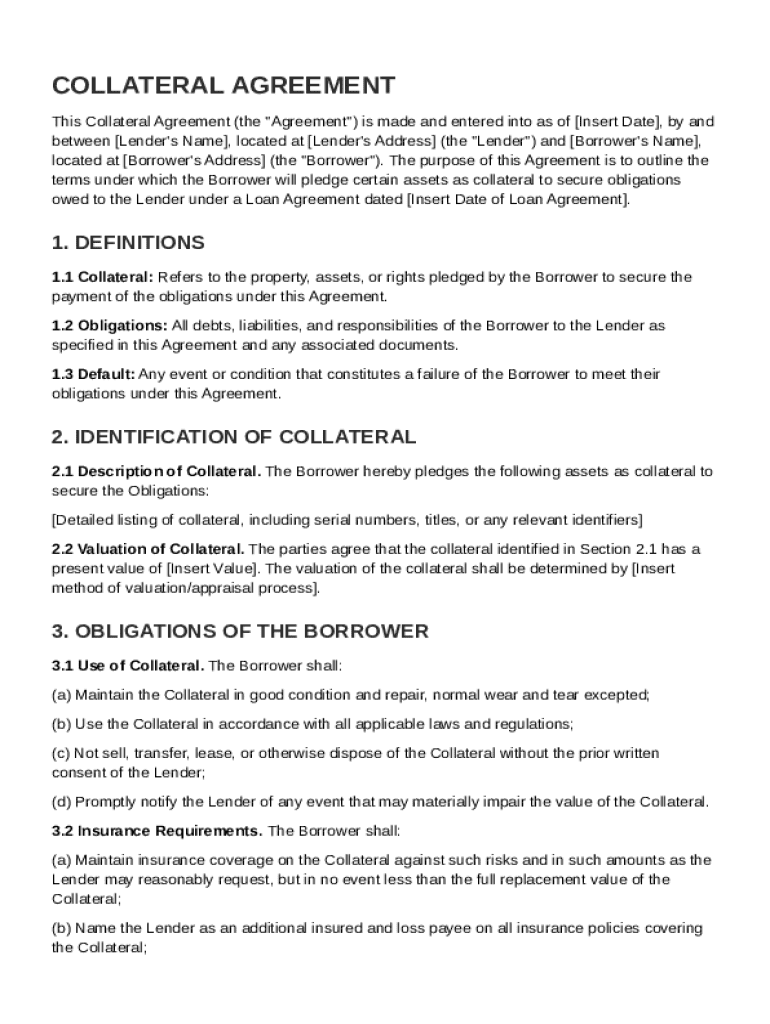
A collateral agreement is a specialized legal document used in financial transactions to secure obligations by pledging assets. In such agreements, the borrower pledges specific assets as collateral to assure the lender of repayment. This document outlines critical terms like 'Collateral' and 'Obligations,' clarifying what assets are being pledged and the responsibilities of each party involved. The collateral serves as a security measure for lenders, ensuring that they recover their funds in case of borrower default.
Key Elements of the Collateral Agreement Template
The collateral agreement template includes several essential elements to safeguard both the lender and the borrower. It specifies the identification and valuation of the collateral to establish an agreed understanding of asset worth. Maintenance and insurance terms are outlined, ensuring the assets remain in good condition throughout the agreement's duration. Additionally, the template specifies the rights that the lender has in case of default by the borrower, ensuring clarity on recovery proceedings.
Valuation of Collateral
The document specifies how the collateral will be valued, ensuring that both parties agree on its worth. Methods might include market appraisals or predetermined values, taking into account depreciation over time.
Maintenance Responsibilities
The agreement details the responsibilities of both parties for maintaining the collateral. The borrower must ensure that the collateral remains in a usable condition, while the lender may require periodic inspections.
Steps to Complete the Collateral Agreement Template
Filling out a collateral agreement template involves several steps to ensure comprehensive and accurate documentation.
- Identify the Parties Involved:
- Clearly state the names and addresses of both the borrower and the lender.
- Define the Collateral:
- Specify the assets being pledged, detailed descriptions, and any identifying information.
- Outline the Obligations:
- Document the borrower's commitments for repaying the loan and maintaining the collateral.
- Detail Default Terms:
- Define what constitutes a default and the subsequent rights of the lender concerning the collateral.
- Include Clauses:
- Add standard legal clauses covering amendments, governing law, and notice provisions.
Legal Use of the Collateral Agreement Template
Using a collateral agreement template legally hinges on its alignment with state and federal laws. It must address considerations under the Uniform Commercial Code (UCC), particularly Article 9, which governs secured transactions in personal property.
Governing Law Clauses
Including a governing law clause is crucial, as it establishes which state's laws apply, which can significantly affect the interpretation and enforcement of the agreement.
Amendments and Notices
The template should outline how amendments can be made and how notices should be delivered to remain legally enforceable. This includes specifying if any changes require written consent from all parties involved.
State-Specific Rules for the Collateral Agreement Template
Different states may have unique requirements or interpretations of collateral agreements, affecting their enforceability and terms.
Uniform Commercial Code (UCC) Variances
While the UCC offers a foundational framework, states may adopt variations affecting specific provisions. It's important to check if local modifications affect your agreement's terms.
Local Enforcement Practices
State-specific practices in lending and borrowing may dictate additional requirements or constraints, such as mandatory disclosures or borrower protections, which must be reflected in the document.
Who Typically Uses the Collateral Agreement Template
The collateral agreement template is utilized by various entities engaged in secured lending arrangements.


Financial Institutions
Banks and credit unions frequently use collateral agreements to secure loans, ranging from mortgages to business financing.
Private Lenders and Individuals
Private lending arrangers and individuals who extend credit may use these documents to protect their interests, especially in informal lending agreements.
Why You Should Use a Collateral Agreement Template
Utilizing a collateral agreement template offers numerous benefits for both lenders and borrowers.
- Security: Provides security for lenders by clearly outlining rights to the collateral.
- Clarity: Establishes clear expectations and responsibilities, reducing conflicts.
- Efficiency: Facilitates streamlined agreement creation without starting from scratch, ensuring consistent legal coverage.
Incorporating a collateral agreement into financial transactions ensures thorough documentation, minimizing misunderstandings and fostering transparent lender-borrower relationships.