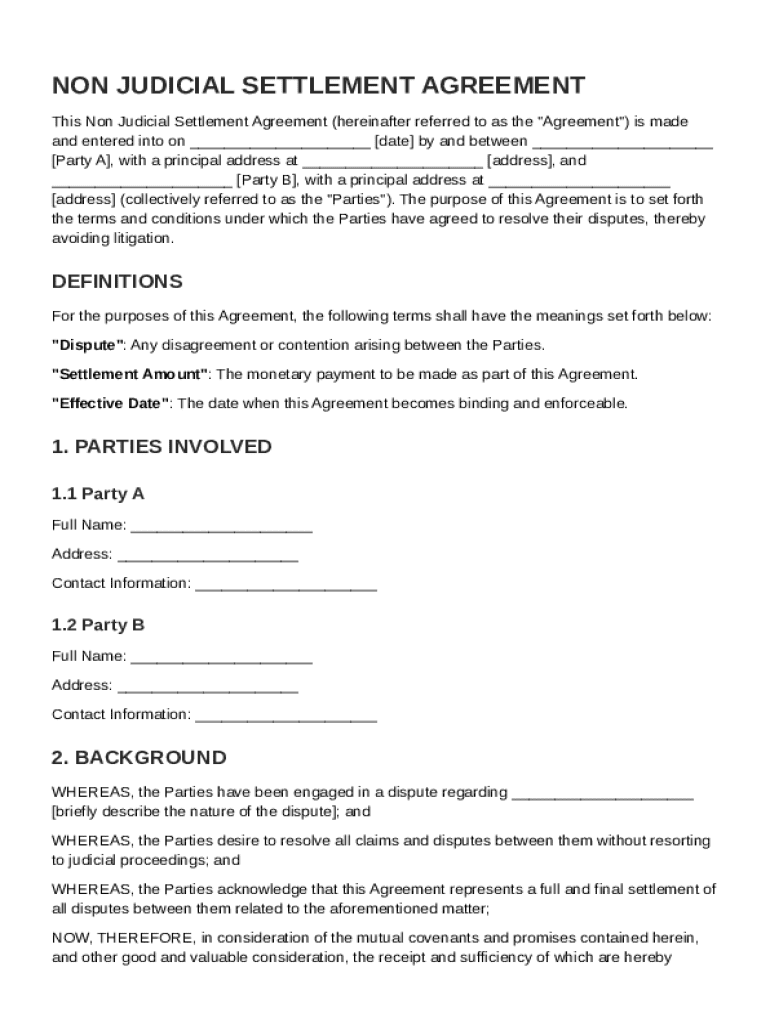







Definition & Meaning
A Non Judicial Settlement Agreement (NJSA) is a contractual arrangement between parties involved in a dispute, allowing them to resolve their issues without resorting to litigation. These agreements are often used in estate planning to address matters like trust management and distribution of assets. The agreement outlines key elements such as definitions of terms, specifics about the parties involved, and the conditions under which the dispute will be settled. NJSA ensures that disputes are resolved amicably, allowing parties to reach a mutual understanding and finalize settlements privately. This method not only reduces legal costs but also conserves time and resources typically expended in courtroom settings.
How to Use the Non Judicial Settlement Agreement Template
Utilizing the Non Judicial Settlement Agreement Template involves several critical steps. Start by identifying the specific dispute in question and gathering all necessary background information relating to it. Then, consult legal counsel to ensure all involved parties understand their rights and responsibilities under the agreement. Once all parties have a clear understanding, use the template to input the relevant information.
- Ensure all parties' names, addresses, and roles are correctly entered.
- Clearly outline the terms of the settlement, including any monetary payments, asset distribution, or other commitments.
- Specify any confidentiality or non-disclosure clauses, if applicable.
- Verify that the agreement is in alignment with any applicable state laws and regulations.
After the document is completed, have all parties review it carefully. Once everyone agrees on the terms, signatures can be collected to finalize the settlement.
Important Terms Related to Non Judicial Settlement Agreement Template
Understanding the language used in a NJSA is vital. Some common terms include:
- Parties: Individuals or entities entering into the agreement.
- Settlement Terms: Conditions under which the dispute will be resolved, including any monetary or non-monetary exchanges.
- Confidentiality Provisions: Clauses that ensure the details of the agreement remain private among the parties involved.
- Governing Law: Jurisdiction whose laws will govern the agreement.
- Dispute Resolution: Methods for resolving any potential disputes that may arise in the future.
Knowing and understanding these terms helps each party grasp the full extent of their obligations under the agreement.
Key Elements of the Non Judicial Settlement Agreement Template
An effective NJSA template typically includes the following components:
- Title and Date: Clearly specify the type and date of the agreement.
- Parties Information: Names and contact details of all parties involved.
- Background: A section that explains the context and purpose of the agreement.
- Settlement Details: Specifics on how the dispute will be resolved, including actions required by each party.
- Legal Provisions: Clauses addressing confidentiality, governing law, and dispute resolution mechanisms.
- Signatures and Dates: Spaces for each party to sign and date, confirming their acceptance and understanding of the agreement.
Including these elements ensures the document is comprehensive and serves its intended purpose effectively.
Legal Use of the Non Judicial Settlement Agreement Template
The NJSA is primarily employed in situations where parties wish to avoid the formality and costs associated with litigation. It is legally binding once all parties sign, provided it adheres to applicable legal standards and doesn't contravene public policy or statutory law.
- Suitable for resolving issues pertaining to trusts and estates.
- Enforces agreed terms regarding asset distribution, thereby preventing future disputes.
- Can incorporate clauses that address unforeseen issues or future adjustments.
Before implementing the template, it's advisable to consult a legal professional to ensure compliance with relevant laws.
State-Specific Rules for the Non Judicial Settlement Agreement Template
While NJSA rules are relatively standard, some state-specific stipulations may impact their application:
- California: Generally allows NJSAs for trust administration but prohibits their use to modify certain beneficiary rights without consent.
- Florida: Permits NJSAs for most trust modifications unless directly restricted by the trust document.
- New York: Requires court approval for certain trust modifications through a NJSA.
Familiarize yourself with your state’s specific regulations before drafting the agreement, as these can affect its validity and enforcement.
Steps to Complete the Non Judicial Settlement Agreement Template
- Gather Information: Collect all relevant data concerning the dispute and involved parties.
- Consult Legal Counsel: Ensure compliance with laws and seek advice on the settlement terms.
- Complete the Template: Fill out the template with accurate information about parties, settlement terms, and legal provisions.
- Review and Amend: Have all involved parties review the document and make any necessary changes.
- Finalize and Sign: Once everyone agrees to the terms, obtain signatures from all parties to render the agreement legally binding.
Following these steps carefully safeguards against potential errors and ensures the agreement serves its intended purpose efficiently.
Examples of Using the Non Judicial Settlement Agreement Template
There are multiple scenarios where a NJSA might be employed:
- Trusts and Estates: Used to settle disagreements over the administration of a family trust without going to court.
- Family Disputes: Resolving conflicts regarding the distribution of a deceased family member's assets amicably.
- Business Partnerships: Addressing disagreements between partners over the terms of a business dissolution.
In each case, the aim is to establish a mutually acceptable resolution without the need for litigation, saving time and resources while preserving relationships.