






Definition and Meaning
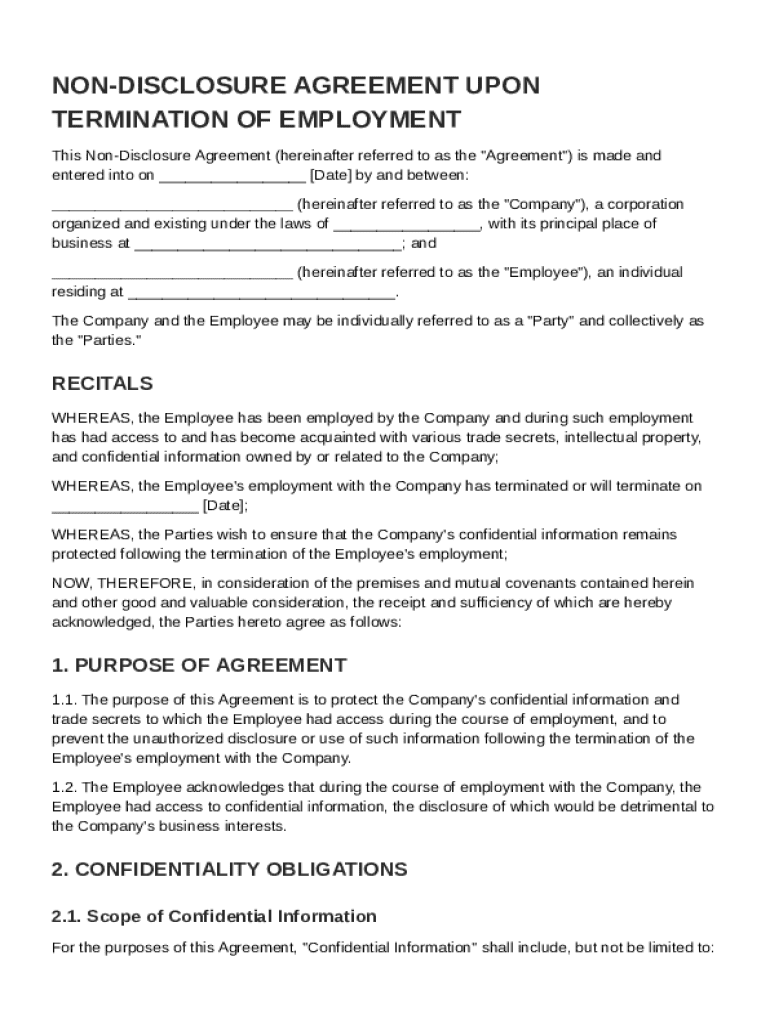
A Non-Disclosure Agreement (NDA) When Leaving a Job serves as a formal contract between an employer and an employee aimed at protecting confidential business information as the employee exits the organization. This document mandates that former employees do not disclose sensitive data they accessed during their tenure. The NDA ensures that proprietary information remains confidential, covering trade secrets, financial data, business strategies, and customer information. By establishing clear boundaries, it provides legal standing for employers should a breach occur post-employment.
How to Use the Non-Disclosure When Leaving a Job Agreement Template
Using this template efficiently requires understanding its components and the obligations therein. Begin by reviewing the entire document to grasp the terms and expectations fully. Identify key sections that pertain to confidentiality obligations and any specific clauses tailored to the company's industry or practices. Insert relevant details such as company name, employee name, and the specific types of information considered confidential. Review any additional clauses or specifics that are unique to the job role or department. Ensure the document is read, understood, and signed by both parties to render it enforceable.
Key Elements of the Non-Disclosure When Leaving a Job Agreement Template
Key components include the definition of confidential information, obligations of non-disclosure, permissible disclosures, and the timeframe during which the NDA is active. It also often contains clauses on the return of company property, remedies for breach, and dispute resolution mechanisms. A clear description of what constitutes a breach and the consequences thereof, alongside the governing law, strengthens the contract's enforceability. Each element must be tailored to reflect the company's specific objectives and the nature of the role from which the employee is departing.
Steps to Complete the Non-Disclosure When Leaving a Job Agreement Template
- Review the Agreement Thoroughly: Ensure comprehension of all clauses.
- Fill in Specific Details: Enter the full legal names and the dates applicable to the agreement's activation.
- Amend Clauses if Necessary: Tailor sections to fit company-specific requirements.
- Legal Review: Consider having legal counsel review the document for compliance.
- Employee Acknowledgment: Discuss the terms with the employee to ensure understanding.
- Sign and Date: Both parties must sign and date all copies of the agreement.
- Distribute Copies: Provide each party with a signed copy for their records.
Why Use a Non-Disclosure When Leaving a Job Agreement Template
This template is crucial for safeguarding an organization's competitive edge. By legally binding employees to confidentiality, companies can protect intellectual property, market strategies, and other insider knowledge that, if leaked, could harm business interests. This document is instrumental in maintaining trust with stakeholders by ensuring that sensitive information is not disclosed to competitors or the public without authorization. Additionally, it offers peace of mind for both parties, providing clarity about post-employment expectations.
Who Typically Uses the Non-Disclosure When Leaving a Job Agreement Template
HR departments, legal teams, and management at organizations of various sizes often utilize this template when an employee is transitioning out of a company. It is common in industries that rely heavily on proprietary knowledge, such as technology, finance, and pharmaceuticals. Startups and businesses seeking to maintain a competitive advantage are particularly vigilant in using NDAs to protect their innovations and business models against unauthorized dissemination.


Legal Use of the Non-Disclosure When Leaving a Job Agreement Template
Legally, these agreements must comply with federal, state, and local laws to be enforceable. The NDA must clearly define what constitutes confidential information and outline the legal rights and obligations of each party. Clauses should be fair, reasonable, and not overly restrictive. Employers can take action in court if an employee breaches the NDA, potentially resulting in injunctions or monetary compensation. However, legality depends significantly on clarity, specificity, and adherence to equitable practices in drafting the agreement.
Important Terms Related to Non-Disclosure When Leaving a Job Agreement Template
- Confidential Information: Any data or knowledge the employer considers sensitive or private.
- Trade Secrets: Specific types of confidential information that provide a competitive edge.
- Breach of Contract: Failure by the employee to adhere to the NDA's terms.
- Governing Law: The legal jurisdiction applicable to the agreement.
- Injunction: A legal order to prevent the employee from further breaking the NDA.
- Return of Property: A clause mandating the return of all company-owned items.
State-Specific Rules for the Non-Disclosure When Leaving a Job Agreement Template
State laws vary significantly regarding the enforceability of NDAs. For instance, California has strict rules limiting NDAs, especially those that restrain a former employee's ability to work elsewhere. New York requires clarity and fairness in the NDA terms for them to be enforceable. It's important for companies to consult legal professionals knowledgeable about state-specific regulations when drafting their agreements to avoid legal challenges.