
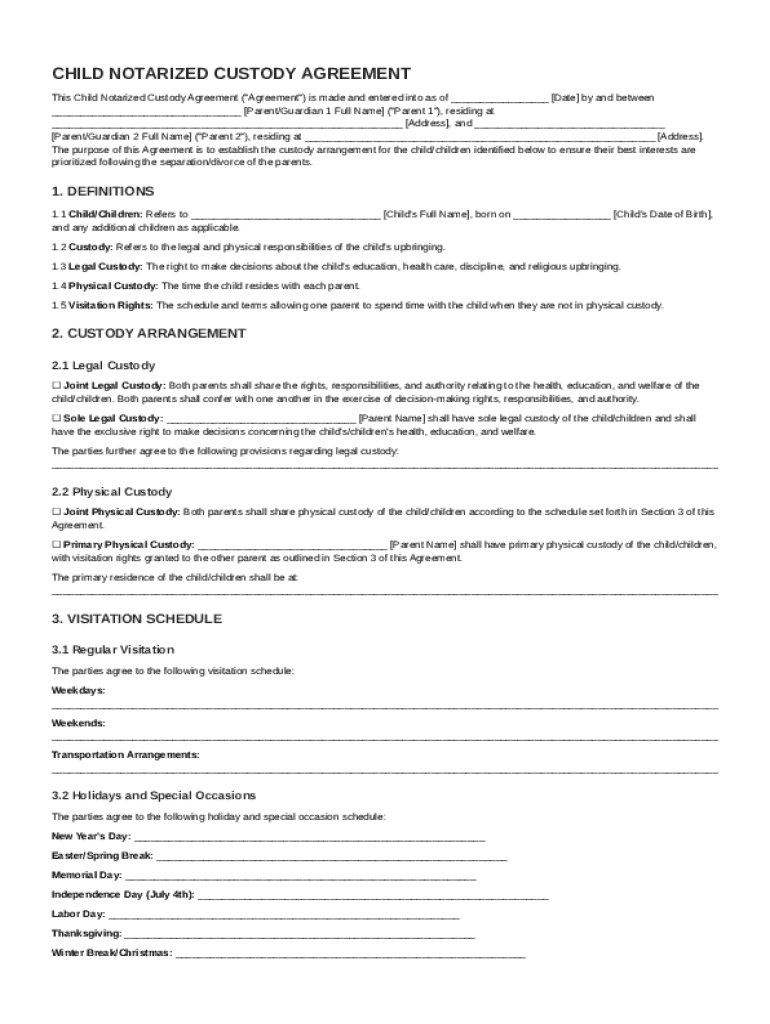







Definition and Purpose of a Child Notarized Custody Agreement
A Child Notarized Custody Agreement is a legal document outlining the custody and care arrangements for a child following their parents' separation or divorce. This agreement includes crucial determinations about legal and physical custody, which dictate where the child lives and who makes important decisions about their welfare. The document also details visitation rights, specifying when each parent will spend time with the child, ensuring a balanced schedule that considers regular days, holidays, and special events. Additionally, the agreement encompasses child support obligations, ensuring that the child's financial needs, such as education, healthcare, and general upkeep, are met consistently.
Importance of Notarization
Notarization provides an added layer of legal assurance, certifying that the agreement is authentic and has been willingly signed by both parties. This step is vital as it helps prevent future disputes regarding the agreement’s validity. When a custody agreement is notarized, it gains enhanced credibility in court, securing the terms agreed upon by both parents. Notarization involves a notary public witnessing the signing of the document and verifying the identities of the signatories, which helps protect against forgery and misunderstanding.
How to Use the Child Notarized Custody Agreement Template
The Child Notarized Custody Agreement Template is designed to guide parents in creating an effective and comprehensive agreement. Here’s how to use it:
-
Download and Review: Obtain the template and read through the entire document to familiarize yourself with its contents. Understand each section’s purpose and how it applies to your situation.
-
Customize for Your Needs: Edit the template to reflect your specific custody arrangement. This customization includes filling out personal details, specifying custody arrangements, and mentioning any unique provisions relevant to your family’s circumstances.
-
Consult Legal Assistance: While the template provides a solid foundation, consulting with a family law attorney can ensure that all legal requirements are met and that your rights are protected. They can help clarify any uncertainties and ensure compliance with state laws.
Steps for Completing the Agreement
-
Gather Necessary Information: Before filling out the template, collect all required information, such as contact details, income, and schedules.
-
Fill Out the Template: Input all gathered information into the appropriate sections of the template. Ensure accuracy and clarity to avoid future discrepancies.
-
Review with Co-parent: Once completed, review the agreement with the other parent to confirm all details are correct and mutually agreed upon.
-
Finalize and Notarize: After both parties have agreed, sign the document in the presence of a notary public to make it legally binding.
Key Elements of the Template
Understanding the critical components of the Child Notarized Custody Agreement can help ensure your document is complete and serves its purpose effectively.
Custody Arrangements
-
Legal Custody: This determines who has the authority to make significant decisions about the child's life, including education, upbringing, and healthcare.
-
Physical Custody: This defines where the child will live and who will be responsible for their day-to-day care.
Visitation Schedules
-
Regular Visitation: Outlines the typical visitation pattern, such as weekend stays or weeknight visits.
-
Holiday and Special Occasions: Specifies arrangements for holidays, birthdays, and family events to prevent misunderstandings.
Child Support Obligations
- Financial Provisions: Details the financial responsibilities each parent holds, including monthly support payments and reimbursement for specific child-related expenses.
Dispute Resolution
Including a plan for resolving disputes can prevent future conflicts by outlining a clear procedure for amending the agreement or addressing issues through mediation or arbitration.
Legal Use and State-specific Considerations
The Child Notarized Custody Agreement must comply with legal standards and be recognized by the state where it is filed. Laws regarding child custody agreements can vary significantly from one state to another. It’s essential to ensure that your agreement adheres to state-specific regulations to avoid issues with enforcement.
State-specific Rules
-
Residency Requirements: Some states require the child or the parents to have lived in the state for a certain period before filing an agreement.
-
Specific Clauses: States may have particular clauses or required inclusions for the agreement to be considered valid.
Enforcement and Modification
-
Court Approval: Once finalized, submit the agreement to a family court for approval. This step ensures the document is legally enforceable.
-
Modification Process: An outlined method for making changes to the agreement as circumstances evolve, such as changes in income or relocation, is included.
Examples and Practical Scenarios of Use
In practice, a Child Notarized Custody Agreement is pivotal in several settings:
-
Separation and Divorce: Essential for clarifying arrangements immediately following a split to provide stability for the child.
-
Long-distance Parenting: Facilitates clear schedules and expectations for parents living in different states or countries, ensuring the child has regular contact with both parties.
-
Unmarried Parents: Useful for cohabiting couples who decide to separate and choose to establish formal custody agreements to support co-parenting roles effectively.
By detailing real-life scenarios, these examples demonstrate how this template can be a critical tool in managing child custody arrangements smoothly and legally.




