







Definition & Meaning
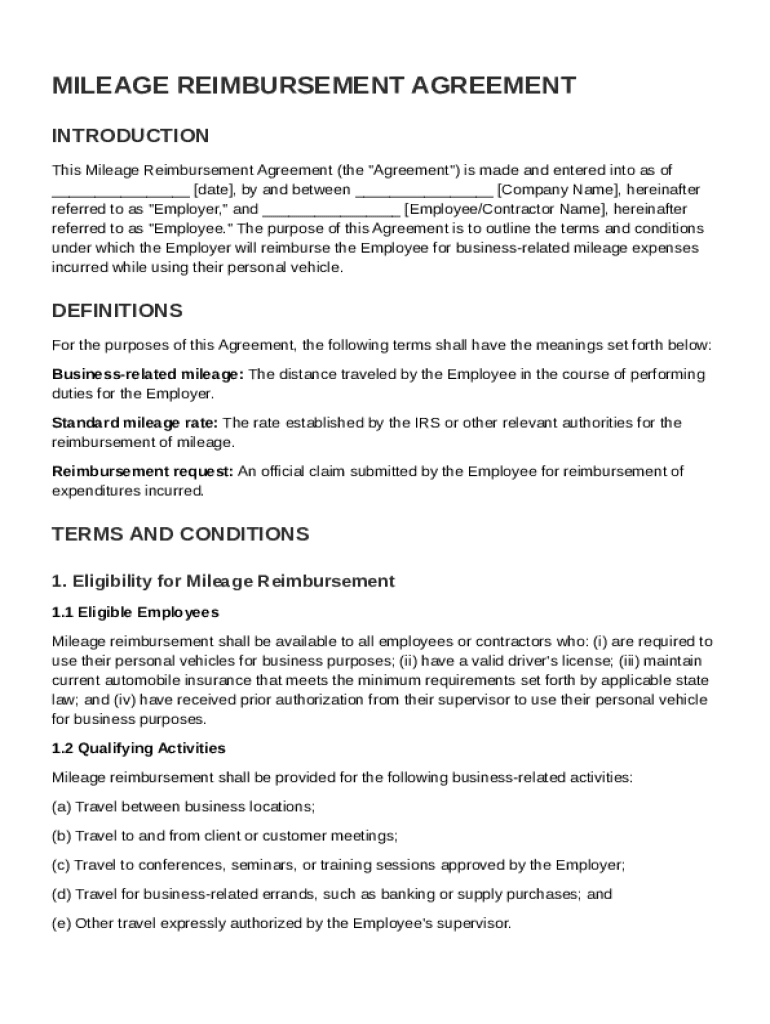
A Mileage Reimbursement Agreement Template is a formal document used by businesses to outline the terms and conditions under which employees or contractors are reimbursed for expenses incurred due to business-related travel in personal vehicles. This agreement ensures clarity between the employer and the employee regarding eligible expenses and prevents misunderstandings.
Key Components
- Eligibility Criteria: Only those who use their personal vehicles for work-related tasks are eligible.
- Qualifying Activities: Includes client meetings, site visits, and other business-related travel.
- Calculation Methods: Reimbursement rates, often aligned with IRS guidelines, specify how mileage is compensated.
- Documentation Requirements: Employees must provide detailed travel logs or receipts for expenses.
Key Elements of the Mileage Reimbursement Agreement Template
To ensure comprehensive understanding, the agreement includes specific sections.
Essential Sections
- Terms of Reimbursement: Includes rate per mile, typically aligned with federal or state guidelines.
- Approval Processes: Outlines who within the organization must approve reimbursements.
- Payment Terms: Details on when and how reimbursement payments are made, e.g., monthly.
Additional Clauses
- Amendments: Conditions under which the agreement can be revised.
- Termination: Circumstances under which the agreement may be voided.
How to Use the Mileage Reimbursement Agreement Template
Utilizing the template effectively involves several steps.
Step-by-Step Instructions
- Review the Template: Ensure it meets your organization's needs.
- Customize: Modify fields to reflect specific reimbursement policies.
- Distribute to Employees: Provide the template to employees required to track and request mileage reimbursement.
Practical Tips
- Ensure employees understand documentation requirements.
- Clarify any state-specific provisions that may affect reimbursement.
How to Obtain the Mileage Reimbursement Agreement Template
Securing the template involves accessing resources that provide standardized forms.
Sources for the Template
- Business Resource Websites: Often offer free downloadable templates.
- Professional Associations: Can provide templates tailored to industry standards.
Considerations for Customization
- Adapt the template to reflect unique organizational practices.
- Consider legal counsel for compliance with state and federal laws.
Steps to Complete the Mileage Reimbursement Agreement Template
Completing this form requires careful attention to detail.
Completion Process
- Fill Out Personal Information: Enter employee and employer details.
- Specify Reimbursement Rate: Align with the current IRS or company-mandated rates.
- Record Travel Details: Include dates, destinations, and purposes of trips.
- Sign and Submit: Ensure both employee and supervisor sign the form.
Common Mistakes
- Omitting detailed travel logs.
- Forgetting to obtain necessary signatures.
Legal Use of the Mileage Reimbursement Agreement Template
This agreement serves as a legal document.
Compliance and Legal Considerations
- ESIGN Act Compliance: Allows for electronic signatures.
- IRS Guidelines: Adherence ensures tax compliance for both employer and employee.
Legal Protections
- Provides a documented agreement that can be referenced in legal disputes.
- Helps avoid liabilities arising from miscommunications about reimbursement.
Eligibility Criteria
Understanding who qualifies for reimbursement is critical for compliance.


Criteria for Eligibility
- Employment Status: Mostly full-time employees, some contractors may be eligible.
- Nature of Travel: Must be directly related to company business activities.
Specific Scenarios
- Employees attending conferences, training, or off-site meetings.
- Required documentation levels may vary by job roles.
IRS Guidelines
Ensure adherence to IRS standards for mileage reimbursement.
Reimbursement Rate
- IRS Standard: Updated annually, this rate guides the per-mile reimbursement.
- Tax Implications: Proper documentation can help prevent potential audits.
Compliance Requirements
- Keep accurate travel logs and maintain records for tax filing purposes.
- Ensure all reimbursements align with IRS standards to avoid penalties.




