






Definition & Meaning
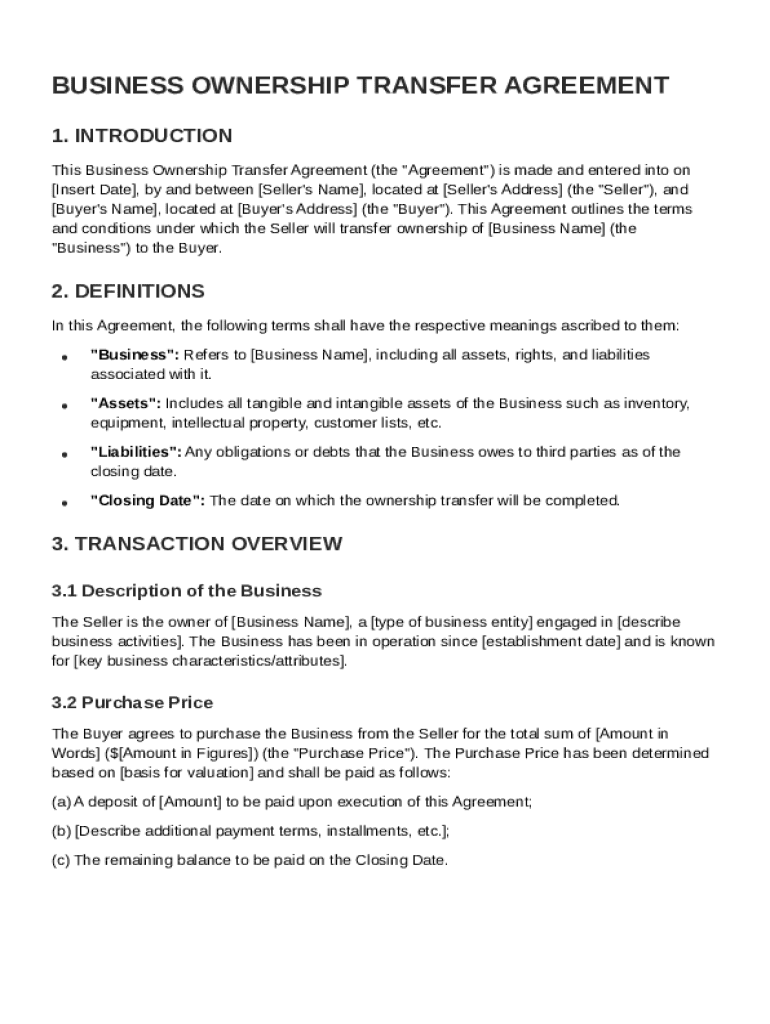
A Business Ownership Transfer Agreement is a legal document that formalizes the transfer of ownership interest from the seller to the buyer in a business transaction. This agreement is critical in ensuring that both parties are legally bound by the terms of the sale, clearly defining the roles, responsibilities, and expectations involved. It typically includes comprehensive definitions of key terms, delineating the scope and boundaries of the agreement to avoid any ambiguities or misunderstandings.
A detailed understanding of the terms is imperative as it forms the foundation of the transaction. For instance, terms such as "Seller," "Buyer," "Effective Date," and "Purchase Price" must be uniformly interpreted by all parties involved. This clarity is essential to safeguard against any potential legal disputes that might arise from misinterpretation of the conditions outlined in the agreement.
How to Use the Business Ownership Transfer Agreement Template
The Business Ownership Transfer Agreement Template is a structured guide designed to facilitate the smooth transfer of business ownership. Utilizing this template begins with a thorough review of each section to ensure all relevant details are accurately captured and understood. Users must adapt the template to their specific transaction by filling in the blank fields and verifying that all information aligns with their particular situation and legal requirements.
The template enables users to systematically input details such as the names and contact information of both parties, the agreed purchase price, and any specific terms or conditions that are unique to the transaction. It's essential that both parties review the completed document collaboratively, ensuring mutual understanding and agreement prior to signing.
Key Elements of the Business Ownership Transfer Agreement Template
The key elements of the Business Ownership Transfer Agreement Template provide a comprehensive framework for finalizing business ownership transfers. These elements typically include:
- Transaction Details: Information regarding the buyer and seller, the effective date of the transfer, and the terms of the purchase price and payment schedule are crucial.
- Representations and Warranties: Statements made by both parties affirming the accuracy of information and compliance with necessary regulations.
- Conditions Precedent: Requirements that must be met before the transaction is finalized, such as obtaining regulatory approvals.
- Indemnification Clauses: Provisions outlining responsibilities for any losses or damages suffered post-transfer.
- Miscellaneous Provisions: Additional clauses governing the agreement such as dispute resolution, governing law, and confidentiality.
Each element must be thoroughly reviewed and agreed upon by both parties to ensure a seamless transaction.
Steps to Complete the Business Ownership Transfer Agreement Template
- Identify the Parties: Enter the legal names and contact information of both the seller and buyer.
- Define the Terms: Complete the sections detailing the purchase price, payment structures, and any contingencies or special conditions.
- Fill in Representations and Warranties: Clearly outline the commitments made by both parties regarding their fulfillment of legal and financial obligations.
- Include Conditions Precedent: Specify any conditions that must be satisfied prior to the closing of the deal, such as securing financial approvals.
- Add Indemnification and Miscellaneous Clauses: Finalize provisions related to indemnity, governing law, and potential mediation processes.
- Review and Sign: Ensure both parties verify the details included in the document, correcting any inaccuracies or misunderstandings before formally signing the agreement.
Important Terms related to Business Ownership Transfer Agreement Template
Understanding the important terms related to a Business Ownership Transfer Agreement Template is crucial for accurate document interpretation. These terms often include:
- Seller and Buyer: The individuals or entities involved in the transaction.
- Purchase Price: The agreed-upon amount for the transfer.
- Effective Date: The date on which the transfer becomes legally binding.
- Representations and Warranties: Statements ensuring both parties have truthful and accurate transaction information.
- Indemnification: A clause that protects each party from certain financial liabilities.
Each of these terms should be clearly defined in the agreement to prevent future disputes.
Legal Use of the Business Ownership Transfer Agreement Template
Using the Business Ownership Transfer Agreement Template legally involves protecting both parties by ensuring compliance with relevant legal standards and regulations. This template should be used in conjunction with legal advice from qualified professionals to confirm that the document suffices the statutory requirements of the jurisdiction where the business operates.
Parties must ensure that the terms outlined are consistent with federal and state regulations. This is particularly important in transactions involving industries with specific legal and regulatory oversight, such as finance or healthcare.
State-Specific Rules for the Business Ownership Transfer Agreement Template
Different states in the U.S. may have varying rules governing business ownership transfers. These rules could influence the content and structure of your agreement. It's important to consult with legal counsel to understand any specific requirements that may apply based on your state’s statutory framework.
For example, some states may require additional disclosures or filings while others might have specific warranty requirements that need to be incorporated into the agreement. A legal advisor can guide you in tailoring the template to meet these state-specific regulations effectively.
Examples of Using the Business Ownership Transfer Agreement Template
A practical example of using the Business Ownership Transfer Agreement Template can be seen in a transaction involving a small retail business. Here, both the buyer and seller utilize the template to detail the sale price, define payment schedules, and establish conditions around the lease of the business location.
Another scenario might involve the transfer of ownership in a professional services firm, where specific conditions precedent include client consent to maintain revenue streams post-transfer. By laying out all terms in the agreement, both parties can seamlessly transition the business, reducing the risk of operational disruptions and financial liabilities.