






Definition & Meaning
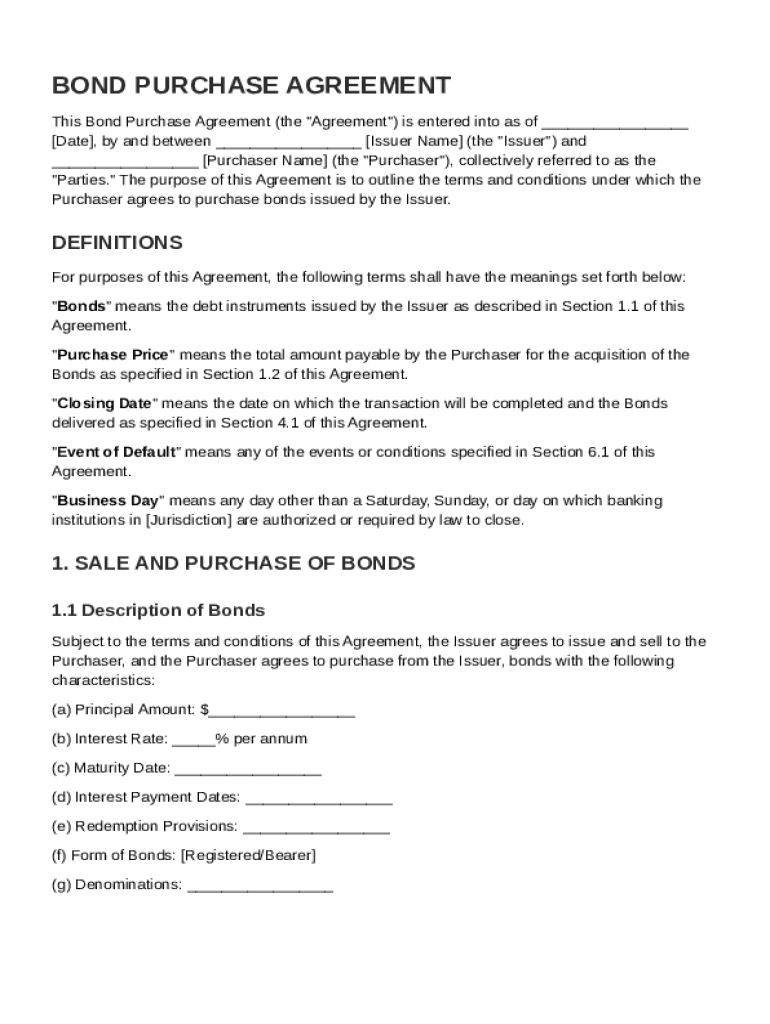
The Bond Purchase Agreement Template serves as a comprehensive legal document that outlines the terms and conditions under which a Purchaser agrees to buy bonds from an Issuer. It forms a crucial part of the bond issuance process, setting out obligations, rights, and assurances needed to protect both parties involved in the transaction. This agreement includes various sections such as definitions of key terms, provisions governing the sale and purchase of bonds, representations and warranties by both parties, and closing procedures. The inclusion of specific covenants and events of default offers guidance in case of breaches, ensuring compliance and legal recourse.
Key Elements of the Bond Purchase Agreement Template
Identifying the key elements is paramount to understanding the structure and function of the Bond Purchase Agreement Template. These elements typically include:
- Definitions of Key Terms: Clarifies the specific wording used throughout the document to avoid ambiguity.
- Sale and Purchase Details: Provides comprehensive details pertaining to the bonds being issued, including the purchase price, interest rates, and maturity dates.
- Representations and Warranties: Each party’s responsibility to affirm the truthfulness and accuracy of their claims and reports relevant to the agreement.
- Covenants: Obligations that each party promises to uphold during the duration of the agreement.
- Events of Default: Specifies conditions under which the agreement may be considered breached, and the steps to be taken if such events occur.
- Closing Conditions: Conditions that must be met for the transaction to be finalized, ensuring both parties are adequately prepared to complete the bond sale.
Who Typically Uses the Bond Purchase Agreement Template
This template is predominantly used by financial and legal professionals involved in the issuance of bonds. Common users include:
- Issuers: Corporations, municipalities, or other entities looking to raise capital through bond sales.
- Purchasers: Institutional investors such as mutual funds, insurance companies, or large-scale private investors securing bonds.
- Legal Advisors and Consultants: Professionals helping draft, negotiate, and oversee these agreements to ensure all regulations are met.
- Financial Analysts: Individuals who review and analyze the terms to assess the viability and profitability of the bond purchase.


How to Use the Bond Purchase Agreement Template
Proper utilization of the Bond Purchase Agreement Template involves several systematic steps:
- Review the Template: Begin by examining the entire template to understand its structure and requirements.
- Fill Out Required Information: Enter all necessary information, including issuer and purchaser details, bond specifics, and legal identifiers.
- Ensure Legal Compliance: Verify that all terms and conditions adhere to relevant legal standards and financial regulations.
- Negotiate Terms: Engage in discussions to modify and finalize terms agreeable to both parties, especially regarding covenants and warranty clauses.
- Finalize the Agreement: Have all parties review the completed document before signing to finalize the transaction legally.
Important Terms Related to the Bond Purchase Agreement Template
Understanding key terminologies can enhance the effective utilization of the Bond Purchase Agreement Template:
- Principal: The initial amount of money invested or lent, to be paid back in full.
- Maturity Date: The date on which the bond’s principal amount is due to be paid back.
- Coupon Rate: The annual interest rate paid on the bond’s face value.
- Issuer: The entity issuing the bond to raise funds.
- Purchaser/Investor: The entity or individual buying the bond.
- Default: Failure to fulfill the bond's terms, such as missing payments.
Legal Use of the Bond Purchase Agreement Template
The legal validity of the Bond Purchase Agreement Template is crucial for its enforceability. It needs to:
- Comply with Securities Laws: Must align with the securities regulations applicable to both federal and state levels.
- Contain Binding Clauses: Include legally binding clauses ensuring both parties fulfill their obligations.
- Incorporate Dispute Resolution Methods: Outline procedures for resolving potential disputes between parties.
- Adhere to Contractual Formalities: Ensure signatures, notary acknowledgments, and witness attestations are accurately provided for it to be legally binding.
Examples of Using the Bond Purchase Agreement Template
Practical scenarios where the template is leveraged:
- Municipalities Issuing Bonds: Local governments draft agreements to issue bonds to finance public projects such as schools or infrastructure.
- Corporate Bond Issuance: Companies sell bonds using these agreements to raise funds for capital expenditures or debt refinancing.
- Private Placement Transactions: Structured agreements facilitate private investors in securing bonds directly from issuers, often involving more detailed negotiation terms.
State-Specific Rules for the Bond Purchase Agreement Template
Recognizing and adhering to state-specific rules is vital for the template’s applicability:
- Securities Laws Variation: Each state may have unique securities laws, dictating different compliance requirements.
- Tax Implications: Differences in taxation laws at the state level can impact bond issuance and investment returns.
- Regulatory Authorities: State regulations often dictate interactions with local financial regulatory authorities, impacting how agreements are structured and enforced.
Steps to Complete the Bond Purchase Agreement Template
Detailed process for populating the template accurately:
- Information Gathering: Collate all necessary information regarding issuer, purchaser, and bond specifics.
- Template Customization: Customize the template to fit the specific transaction context and the involved entities.
- Legal Review: Conduct a comprehensive legal review of the filled template to ensure compliance and accuracy.
- Negotiation and Amendment: Facilitate negotiations on terms, adjusting the document as necessary to reflect the final agreed-upon conditions.
- Finalizing Signatures: Secure signatures from all involved parties and necessary notarizations to complete the agreement’s execution.