



Definition & Meaning
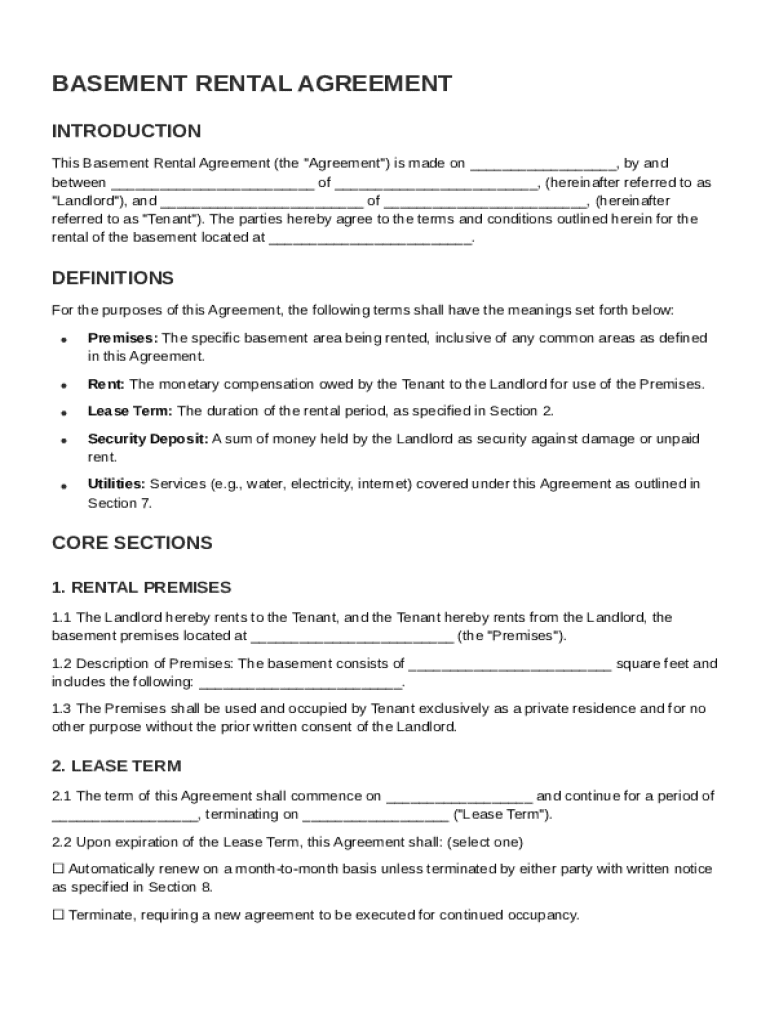
A Basement Rental Agreement Template is a comprehensive legal document that outlines the terms and conditions under which a basement is rented out by a landlord to a tenant. This agreement serves to formalize the relationship between both parties, providing clarity on various aspects of the rental arrangement. It typically includes key definitions related to the rental, such as "landlord," "tenant," "premises," and "lease term," among others. The primary function of this document is to ensure that both parties have a mutual understanding of their rights and responsibilities, thereby reducing the potential for disputes. This legal framework helps protect the interests of both the landlord and tenant by clearly stating the rules that govern their rental relationship.
Key Elements of the Basement Rental Agreement Template
The Basement Rental Agreement Template contains several crucial components that form the backbone of the rental contract. Key elements include:
- Lease Term: Specifies the duration of the rental period, whether it's month-to-month or a fixed term.
- Rent Payment: Details the amount of rent, due dates, acceptable payment methods, and any late payment penalties.
- Security Deposit: Outlines the amount of deposit required, conditions for its return, and rules regarding deductions for damages.
- Use of Premises: Declares that the rental space is for exclusive residential use and stipulates any restrictions on alterations or additional occupants.
- Maintenance Responsibilities: Clarifies the duties of both parties in maintaining the property, including repair obligations and care of shared spaces.
These elements ensure both parties are aware of what is expected, helping prevent potential conflicts.
Steps to Complete the Basement Rental Agreement Template
Filling out a Basement Rental Agreement Template effectively involves several key steps to ensure accuracy and completeness:
- Review the Template: Begin by thoroughly reading the entire template to understand each section and its purpose.
- Input Landlord and Tenant Details: Accurately fill in the names, addresses, and contact information for both parties.
- Specify the Property Details: Clearly describe the basement location and any included amenities.
- Lease Term and Financials: Enter the lease duration, rental payment information, security deposit, and any other financial requirements.
- Customize Additional Clauses: Add any specific conditions or rules that both parties have mutually agreed upon.
- Review and Sign: Ensure both parties review the agreement before signing to confirm that all terms are acceptable.
Proper completion of these steps is critical to creating a legally sound document.
Legal Use of the Basement Rental Agreement Template
The Basement Rental Agreement Template serves as a legally binding contract once signed by both parties. It is governed by the relevant residential tenancy laws of the state where the property is located. This document upholds legal enforceability because it outlines specific rights and obligations, thus providing legal recourse for either party in the event of a breach. Proper understanding and adherence to state-specific legal requirements are crucial for the validity of the agreement. Furthermore, this ensures compliance with local laws regarding rental agreements, deposits, and tenant rights.
Important Terms Related to Basement Rental Agreement Template
Understanding important legal terminology within the Basement Rental Agreement Template is essential for both parties:
- Governing Law: Indicates the jurisdiction whose laws apply to the agreement.
- Indemnification Clause: Protects one party from being held liable for certain damages or losses experienced by the other.
- Termination Procedures: Details the proper method for ending the lease, including advance notice requirements.
Grasping these terms is critical as they govern how various scenarios and disputes are managed throughout the lease term.
State-Specific Rules for the Basement Rental Agreement Template
State-specific rules significantly affect various clauses in the Basement Rental Agreement Template. Each state has unique rental laws that may dictate:
- Maximum Security Deposit Amounts: Limits may be imposed on how much landlords can demand for security deposits.
- Notice Period for Termination: Varies when either party wishes to end the lease.
- Repairs and Maintenance: Obligations might differ regarding who's responsible for specific kinds of repairs.
For example, California has specific regulations that impact everything from security deposits to tenants' rights related to habitability. Ensuring compliance with state laws is essential to avoid legal complications.
Examples of Using the Basement Rental Agreement Template
Practical scenarios where the Basement Rental Agreement Template proves useful include:
- Subletting a Finished Basement: A homeowner rents out a finished basement as a living space to a tenant looking for an affordable rental solution.
- Temporary Housing for Out-of-Town Workers: The agreement can be used for short-term stays, providing clarity on lease duration and rules.
These examples illustrate the versatility of the template in addressing different rental situations while maintaining a legal framework.
Who Typically Uses the Basement Rental Agreement Template
The Basement Rental Agreement Template is typically utilized by individuals and entities such as:
- Homeowners: Looking to supplement income by renting out an unused portion of their home.
- Real Estate Investors: Managing multiple rental properties and seeking standardized agreements.
By catering to these types of users, the template offers a structured way to handle basement rentals, ensuring that all necessary legal and logistical points are covered.