
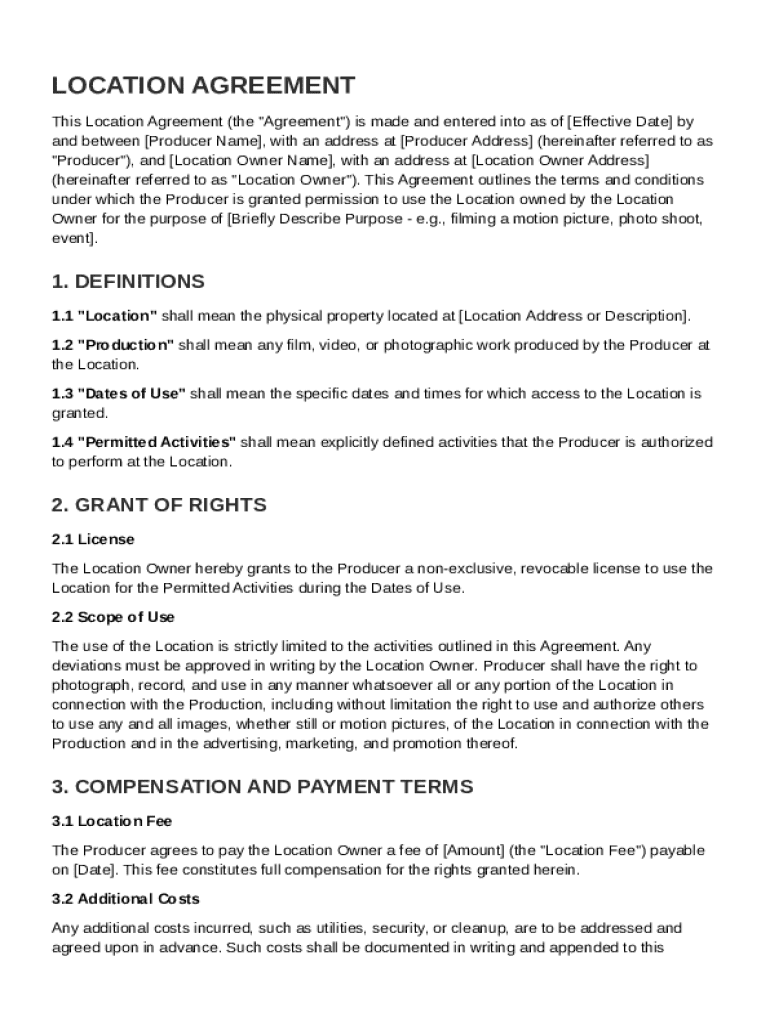







Definition and Purpose of a Location Agreement Template
A Location Agreement Template is a legal document that formalizes the terms between a Producer and a Location Owner for the use of a specific location for various production activities, such as filming or photo shoots. The document ensures all parties involved have a clear understanding of their rights, responsibilities, and the terms of use, minimizing the risk of disputes. Key components of the agreement often include the definitions of terms, the rights granted to the Producer, compensation details, and insurance requirements. Additionally, the template can include termination clauses, confidentiality obligations, and information regarding governing law, setting a foundational framework for any production endeavor.
Key Elements of the Location Agreement Template
The Location Agreement Template is comprehensive, comprising several critical sections that ensure all necessary details are captured:
- Definitions: Clarifies key terms used throughout the agreement to prevent ambiguity.
- Rights Granted: Specifies which rights are transferred to the Producer, such as production, filming, and photography rights.
- Compensation Details: Outlines the fee structure, including any fees for additional services or extended use.
- Responsibilities of Parties: Lists the tasks each party is expected to fulfill to ensure a smooth production process.
- Insurance Requirements: Details the type of insurance coverage required, ensuring both the Producer and Location Owner are protected against potential liabilities.
The agreement serves as a guide to protect both parties' interests, ensuring compliance and mutual understanding.
Legal Use of the Location Agreement Template
The Location Agreement Template is structured to adhere to U.S. legal standards, ensuring its provisions are enforceable. It includes:
- Governing Law: Specifies which state’s law governs the agreement, a crucial element when dealing with cross-state productions.
- Termination Clauses: Defines conditions under which the agreement can be prematurely terminated, protecting parties in scenarios such as breach of contract.
- Confidentiality Obligations: Imposes secrecy on sensitive information shared during the production, safeguarding proprietary and personal data.
These aspects provide a legal framework that supports the effective use of the template in any U.S. jurisdiction, ensuring compliance with varying state laws.
How to Use the Location Agreement Template
Utilizing the Location Agreement Template efficiently involves several steps, ensuring that all provisions are tailored to the specifics of the production:
- Review the Template: Assess the entire template to align its terms with the particular needs of your production.
- Customize Provisions: Modify clauses such as compensation and rights granted to reflect the specifics of the agreement.
- Consult Legal Counsel: Seek legal advice to ensure the terms meet all legal requirements and cover potential contingencies.
- Agreement Execution: Obtain signatures from all parties to formalize the agreement.
This process ensures that the template fulfills its purpose effectively, supporting seamless production activities.
Steps to Complete the Location Agreement Template
The Location Agreement Template can be efficiently completed by following these detailed steps:
- Input Parties’ Information: Clearly list the details of both the Producer and Location Owner.
- Specify Location Details: Precisely identify the location, including addresses and any specific areas within the location to be used.
- Outline Production Dates: Include start and end dates for the use of the location.
- Define Compensation Terms: Specify all fees, including ancillary costs such as overtime or property restoration.
- Include Insurance Requirements: Detail the types of insurance and coverage amounts required.
- Draftsignatures Section: Ensure space is provided for signatures and dates from all parties involved.
By following these steps, the agreement is tailored to the unique needs of the production, laying a clear pathway for its execution.
Who Typically Uses the Location Agreement Template
The Location Agreement Template is a versatile document suited for a variety of users within the production sector:
- Independent Filmmakers: Often use the template to map out agreements for smaller scale productions.
- Large Production Studios: Utilize it as a blueprint for managing multiple location agreements efficiently.
- Photographers and Videographers: Find it useful for arranging location shoots, ensuring they have the necessary legal permissions.
Each of these users relies on the structure and comprehensive nature of the template to facilitate their respective productions, streamlining the process of securing and using locations.

Important Terms Related to the Location Agreement Template
Understanding specific terms commonly used in the Location Agreement Template is essential for correctly interpreting and utilizing the document. Some crucial terms include:
- Producer: The party responsible for the production activities, holding rights to use the location.
- License Fee: The compensation paid to the Location Owner for the use of their property.
- Indemnification: A provision ensuring that the Producer will cover any losses or damages incurred by the Location Owner from the production.
Familiarity with these and other terms within the template is pivotal for drafting agreements that are clear and legally sound.
Examples and Scenarios Using the Location Agreement Template
The Location Agreement Template can be applied in numerous scenarios, illustrating its flexibility:
- Film Shoots: Involves elaborate setups requiring detailed descriptions of the property and associated rights.
- Commercial Photography: Requires permissions for capturing specific parts of the location, often with a shorter timeframe.
- Event Hosting: May involve using a location for a one-time event, such as a live recording, needing unique clauses for event-specific conditions.
Real-world scenarios such as these highlight the template’s utility in addressing diverse production needs, ensuring that all legal and logistical bases are covered for any on-location activities.




