






Definition & Meaning
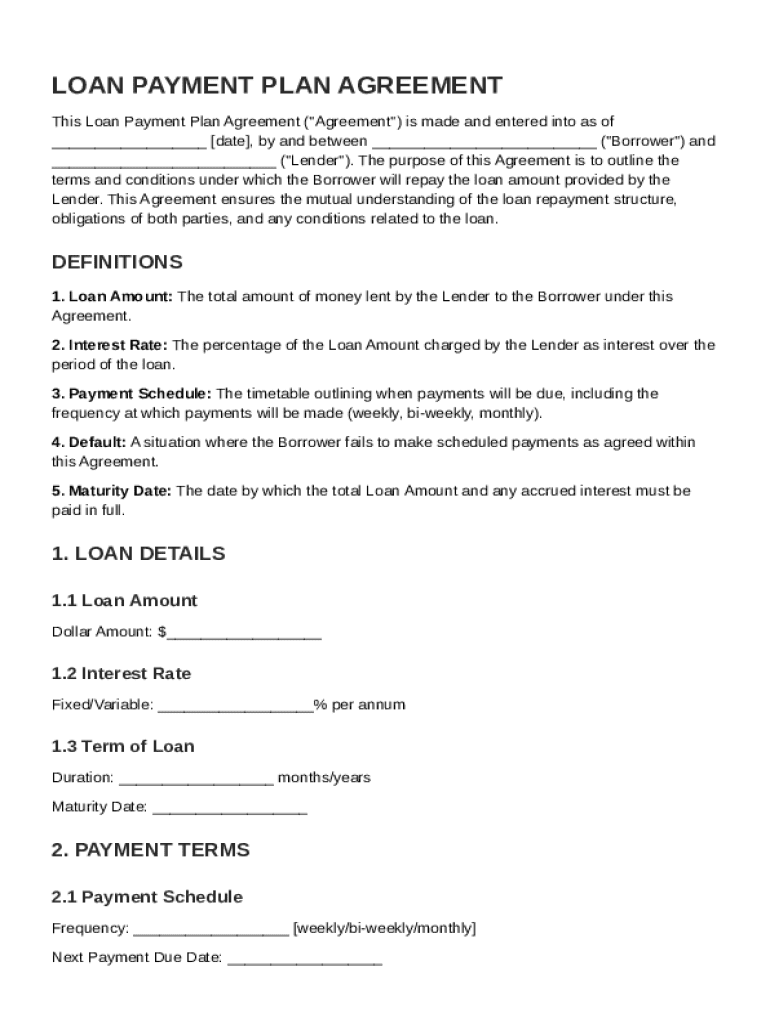
A Loan Payment Plan Agreement Template is a legal document outlining the terms and conditions for the repayment of a loan between a borrower and a lender. It serves as a formal contract that ensures both parties understand their rights and obligations. The agreement typically includes essential components such as the loan amount, interest rate, repayment schedule, and any penalties for default. By providing clarity and structure, this template helps prevent misunderstandings between the lender and the borrower, fostering a transparent and mutually beneficial relationship.
Key Components
- Loan Amount: Defines the total amount borrowed.
- Interest Rate: Specifies the percentage applied to the loan principal, affecting total repayment.
- Payment Schedule: Outlines the timing and frequency of payments, such as monthly or quarterly.
- Default Conditions: Details consequences if the borrower fails to meet payment terms.
Practical Examples
An auto loan might include monthly payments over a five-year term with a fixed interest rate. Conversely, a business loan could offer flexible interest rates with quarterly payments.
How to Use the Loan Payment Plan Agreement Template
Utilizing a Loan Payment Plan Agreement Template involves several steps to ensure all terms are accurately represented and agreed upon by both parties. This process usually begins with a discussion between the borrower and lender to determine the loan's terms, followed by filling out the template according to those agreed-upon parameters.
Step-by-Step Guide
- Discuss Terms: Borrower and lender confer on loan specifics.
- Fill Out Template: Complete sections with pertinent information such as names, dates, and amounts.
- Review: Both parties should review the agreement to ensure all details are correct.
- Sign: Once satisfied, both parties sign the document to formalize the agreement.
Common Scenarios
- Personal Loans: Between family members or friends to formalize the borrowing.
- Business Loans: Used by companies to secure funding from financial institutions.
Key Elements of the Loan Payment Plan Agreement Template
The Loan Payment Plan Agreement Template comprises several critical elements that establish the framework for repayment. These elements dictate how the loan will be managed and the responsibilities of each party involved.
Major Sections
- Governing Law: Specifies which state laws will oversee the agreement.
- Miscellaneous Provisions: Includes any additional clauses pertinent to the loan.
- Prepayment Options: Details the borrower's ability to pay off the loan early without penalties.
Importance
Incorporating these sections ensures that the agreement is comprehensive and legally binding, protecting both the borrower and the lender.
Specific Use Cases
- Corporate Loans: May include specific clauses about stock options or convertible securities.
- Mortgage Loans: Typically emphasize payment schedules and penalties for late payments.
Legal Use of the Loan Payment Plan Agreement Template
The legal use of the Loan Payment Plan Agreement Template is crucial in safeguarding the interests of both the borrower and the lender. It establishes a legally binding contract that can be used in a court of law if disputes arise.
Compliance with Laws
- ESIGN Act: Allows electronic signatures to be legally binding, making online agreements valid.
- State Laws: Depending on the governing state, certain clauses may be required for compliance.
Legal Protections
By formalizing the loan terms, the agreement provides legal recourse if one party defaults or fails to uphold their responsibilities, ensuring both parties have a clear understanding of their commitments.
Important Terms Related to Loan Payment Plan Agreement Template
Understanding the terminology used in a Loan Payment Plan Agreement Template is essential for both parties. These terms define the loan's structure and obligations.
Common Terms
- Principal: The original sum of money borrowed.
- Amortization: The process of spreading out a loan into a series of fixed payments.
- Balloon Payment: A large payment due at the end of a loan term.
Nuanced Interpretations
- Variable Interest Rate: Can fluctuate based on market conditions, affecting payment amounts.
- Collateral: Property or assets pledged as security for a loan.
State-Specific Rules for the Loan Payment Plan Agreement Template
State-specific regulations may affect the content and enforceability of a Loan Payment Plan Agreement Template. These disparities can influence interest rates, terms, and borrower protections.
Examples
- California: Has specific usury laws that limit interest rates on personal loans.
- New York: Requires detailed disclosures about the loan's terms and costs.
Variations
Different states may impose unique requirements or restrictions, such as maximum interest rates or mandatory consumer protections, which must be considered when drafting the agreement.
Steps to Complete the Loan Payment Plan Agreement Template
Completing a Loan Payment Plan Agreement Template involves organized steps to ensure accuracy and completeness. This process helps formalize the agreement between the borrower and the lender.
Completion Process
- Gather Information: Collect necessary details from both parties.
- Populate Template: Fill in the loan amount, interest rate, and payment terms.
- Review Terms: Double-check all entries for accuracy.
- Finalize and Sign: Upon agreement, both parties sign and date the document.
Detailed Steps
- Documentation: Attach any required supporting documents or proof of income.
- Review by Legal Counsel: Optional, but beneficial for ensuring compliance and clarity.
Who Typically Uses the Loan Payment Plan Agreement Template
A variety of individuals and organizations may utilize a Loan Payment Plan Agreement Template. Its flexibility makes it suitable for different loan arrangement scenarios.


Typical Users
- Individuals: Borrowers seeking personal loans from friends or family.
- Businesses: Companies seeking external financing from banks or investors.
- Financial Institutions: Lenders providing structured loan products to clients.
Benefits for Different Users
For individuals, the template offers a way to formalize personal loan agreements, reducing the risk of disputes. Businesses can use it to establish clear terms with investors or partners, promoting transparency and trust.