Definition and Purpose of a Loan Consolidation Agreement Template
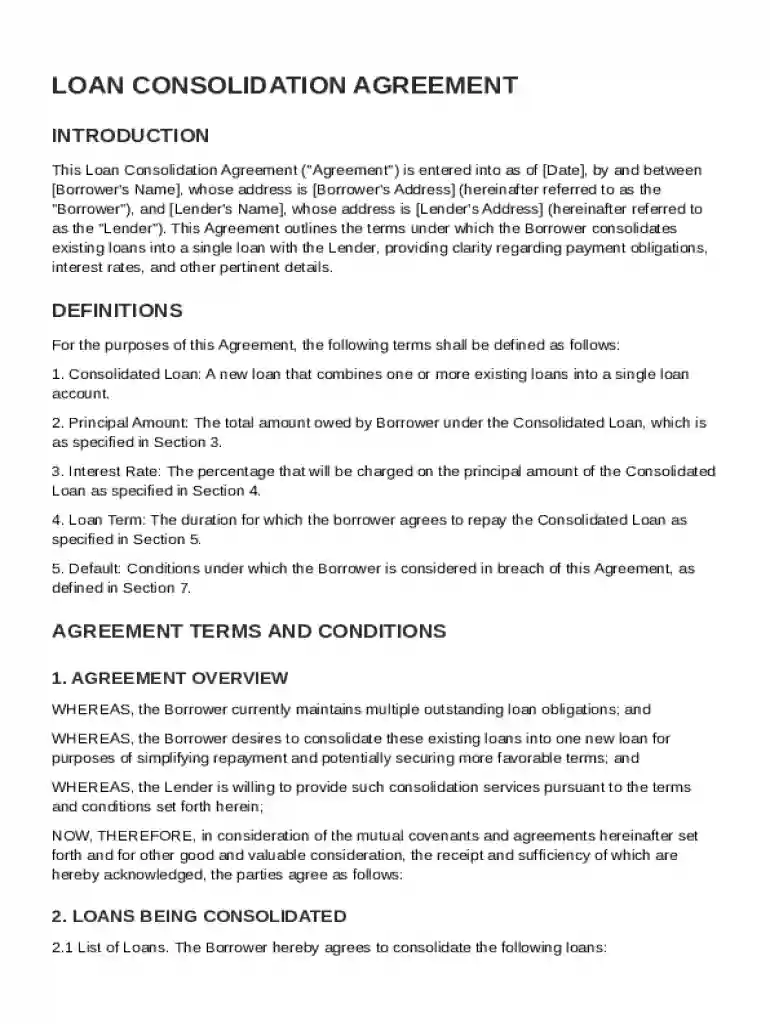
A Loan Consolidation Agreement Template is a structured document that consolidates multiple loans into one new loan. This agreement serves to simplify the repayment process for borrowers by combining their various debts under a single loan with one monthly payment. It delineates important aspects such as the consolidated loan's principal amount, interest rate, and repayment terms. The primary function of this template is to provide clarity on the responsibilities and rights of both the borrower and the lender, ensuring a mutual understanding of the agreement's specifics.
Key Features of the Agreement
- Consolidated Loan: Defines the total sum borrowed after consolidating multiple loans.
- Principal Amount: Indicates the exact amount owed to the lender after consolidation.
- Interest Rate: Specifies the interest applicable on the consolidated loan, which could differ from previous rates.
- Repayment Schedule: Details the timeline and frequency of payments expected from the borrower.
- Obligations and Rights: Clarifies the duties and entitlements of each party involved.
- Default Conditions: Outlines repercussions if the borrower fails to meet their payment obligations.
- Dispute Resolution: Provides guidelines for resolving disagreements between the borrower and lender.
How to Use the Loan Consolidation Agreement Template
Using a Loan Consolidation Agreement Template involves several critical steps to ensure accuracy and completeness in the final agreement form.
Step-by-Step Instructions
- Gather Necessary Information: Collect details about each existing loan, such as outstanding balances, interest rates, and lender contact information.
- Fill Out Personal Information: Include both the borrower's and lender's full legal names and contact details.
- Input Loan Details: Accurately enter the consolidated loan amount, interest rate, and repayment terms into the template.
- Review Default Conditions: Make sure the default conditions and potential repercussions are clearly understood and fair.
- Include Dispute Resolution Process: Ensure the agreement outlines a clear process for handling any disputes.
- Obtain Signatures: Both parties must review and sign the agreement to make it legally binding.
Practical Example
Consider a student who has graduated with multiple education loans at different interest rates and repayment schedules. By using the loan consolidation agreement template, they can combine these loans into one manageable payment, often at a fixed interest rate, thereby simplifying their financial obligations while potentially lowering monthly payments.
Key Elements of the Loan Consolidation Agreement Template
To create an effective loan consolidation agreement, certain elements are essential for a comprehensive and legally sound document.
Essential Components
- Identification of Parties Involved: Clearly states the names of the borrower(s) and lender.
- Loan Terms: Detailed description of the loan amount, interest rate, and timeline for repayment.
- Security and Collateral: Information on any collateral that secures the loan, if applicable.
- Amendment Clause: Provisions allowing modifications under mutual agreement.
- Termination Conditions: Specifies situations where the agreement may end prematurely.
Variations and Exceptions
Some agreements may include clauses specific to variable interest loans, grace periods, or the inclusion of co-signers.
Legal Use and Compliance
The Loan Consolidation Agreement Template must adhere to legal standards to ensure enforceability.
Legal Considerations
- State Regulations: Different states may have specific laws and guidelines governing loan consolidation agreements.
- Disclosures: The template must include all required disclosures as per federal and state regulations.
- Binding Signatures: Both parties' signatures certify that the document is recognized as legally binding.
Advantages of Using a Loan Consolidation Agreement Template
Opting for a structured approach to loan consolidation offers several benefits.
Benefits
- Simplified Repayment: A single monthly payment reduces complexity and the risk of missed payments.
- Potentially Lower Interest: Consolidation often results in a lower interest rate, reducing the total interest paid over the life of the loan.
- Improved Credit Score: Consistent, timely payments can enhance credit ratings over time.
- Financial Clarity: Clear terms and conditions help parties avoid misunderstandings and ensure clear financial arrangements.
Required Documents for Loan Consolidation
Before filling out the template, gather all relevant documents to streamline the process.
Necessary Documentation
- Statements from Each Current Loan: To verify outstanding balances and terms.
- Personal Identification: Government-issued ID for identity verification.
- Income Verification: Recent pay stubs or tax returns to assess financial stability.
Digital vs. Paper Version of the Template
The Loan Consolidation Agreement Template can be processed in both digital and traditional paper formats, with specific advantages to each.
Digital Version
- Convenience: Easily accessed, edited, and signed electronically.
- Environmentally Friendly: Reduces paper usage, aligning with sustainable practices.
- Integration with Digital Tools: Can be easily shared with loan processing software and platforms for faster processing.
Paper Version
- Traditional Preference: Some parties may prefer physical documents for their records.
- Compatible with Non-Digital Settings: Suitable for scenarios where digital access is limited or unavailable.
These sections provide comprehensive insight into the Loan Consolidation Agreement Template, covering its purpose, key elements, and how it is used while aligning with U.S. legal standards.