






Definition & Meaning
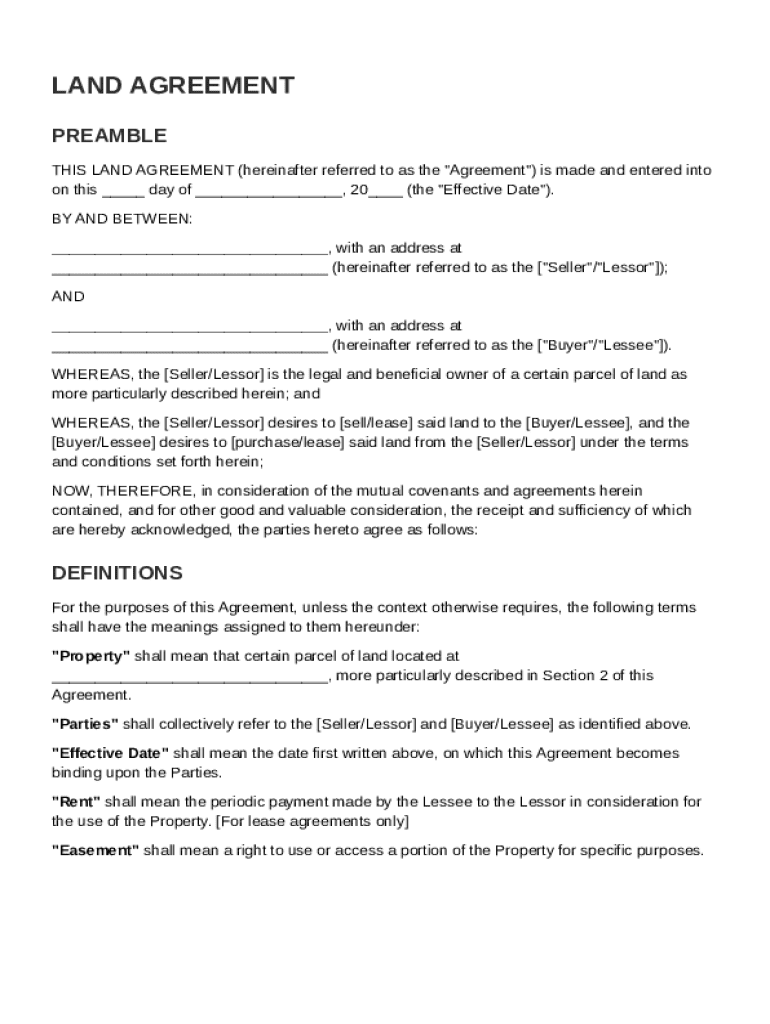
A Land Agreement Template is a formal legal document that facilitates the transaction process between a seller, also known as the lessor, and a buyer, referred to as the lessee, concerning a parcel of land. This document specifies the essential terms and conditions of the sale or lease, including the rights and responsibilities of each party. It presents a detailed description of the property involved, ensuring that both parties clearly understand the scope and nature of the transaction. The template is tailored to outline the contingencies, default conditions, and procedures for dispute resolution, thus protecting the interests of both the seller and the buyer. This comprehensive structure helps in providing a structured guideline for the parties involved and underscores the importance of formalizing the transaction through a legally binding document.
Key Elements of the Land Agreement Template
To effectively draft or use a Land Agreement Template, understanding its key elements is crucial. These components typically include:
-
Parties Involved: Names and addresses of both the seller/lessor and buyer/lessee.
-
Property Description: A detailed account of the property, including its location, boundaries, and any specific features or limitations.
-
Terms of Sale or Lease: This section includes the purchase price or lease amount, payment terms, and any conditions regarding the sale or lease.
-
Rights and Responsibilities: Clearly defined duties and privileges of each party, such as maintenance responsibilities and permissions related to the property’s use.
-
Contingencies and Conditions: Situations that might affect the validity of the contract or necessitate further actions, such as pending inspections or financing approvals.
-
Default Conditions: Terms dictating what constitutes a default by either party and the remedies available in such scenarios.
-
Dispute Resolution: Procedures for handling disagreements, including mediation, arbitration, or litigation.
These elements form the core of a Land Agreement Template, guiding users in creating agreements that protect their interests and fulfill legal requirements.
Steps to Complete the Land Agreement Template
-
Gather Necessary Information: Start by collecting all pertinent details regarding the parties involved and the property description.
-
Fill Out Basic Details: Input the names, addresses, and contact information of both the seller/lessor and buyer/lessee.
-
Describe the Property: Provide an accurate and thorough description of the real estate, including any known limitations or features that impact the property’s use or value.
-
Outline the Financial Terms: Clearly state the agreed-upon purchase price or lease amount and the payment schedule, along with any financing conditions.
-
Assign Rights and Responsibilities: Detail each party's duties, including any required maintenance or usage restrictions.
-
Specify Contingencies: List any conditions that might affect the agreement’s activation, such as zoning approvals or satisfactory property inspections.
-
Address Default and Dispute Resolution: Define what actions constitute a breach of contract and outline the resolution process for disputes.
Through these steps, users can systematically complete the Land Agreement Template, ensuring a comprehensive and legally sound agreement.
Who Typically Uses the Land Agreement Template
The Land Agreement Template is predominantly used by individuals and entities involved in real estate transactions. Typical users include:
-
Individual Buyers or Sellers: People engaged in buying or selling private land or property.
-
Real Estate Investors and Developers: Professionals investing in or developing real estate projects who need formal agreements to manage transactions accurately.
-
Real Estate Agents: Professionals facilitating transactions between buyers and sellers.
-
Legal Professionals: Attorneys or law firms involved in real estate law to draft or review land agreements for clients.
-
Property Management Firms: Companies managing property sales or leases for third parties.
Each user leverages the template to ensure clarity, legal compliance, and mutual understanding in real estate transactions.


Important Terms Related to Land Agreement Template
Understanding specific terminology is crucial for anyone utilising a Land Agreement Template. Some key terms include:
-
Fee Simple: The greatest interest in a parcel of land that one can own, signifying complete ownership.
-
Easement: A right granted to use part of a property for a specific purpose, like utility access.
-
Covenant: Conditions tied to the ownership of land, dictating certain uses or actions.
-
Encumbrance: Any claim, liability, or restriction on the title that could affect the transfer of ownership.
-
Lien: A legal right or interest that a lender has in the borrower's property, granted until a debt obligation is satisfied.
These terms are fundamental to drafting and understanding a land agreement, ensuring that parties accurately interpret their rights and obligations.
Legal Use of the Land Agreement Template
The legal validity of a Land Agreement Template is pivotal in ensuring enforceable transactions. Compliance with the following legal considerations is essential:
-
Conformity to State Laws: Land agreements must adhere to the property laws specific to the state where the property is located in the U.S.
-
Notarization and Witnesses: Some states require land agreements to be notarized or witnessed to be considered valid.
-
Disclosure Requirements: Sellers or lessors must disclose any known issues with the property that could impact its value or use.
-
Amendment Procedures: Outlines on how to legally modify the agreement if necessary, ensuring that all changes are documented and agreed upon by both parties.
Legally using the Land Agreement Template involves adhering to these parameters to secure the rights and interests of all involved parties.
State-Specific Rules for the Land Agreement Template
Real estate transactions in the U.S. are governed by state-specific laws and regulations. This necessitates tailoring the Land Agreement Template to accommodate various state rules. Variations can include:
-
Transfer Tax Requirements: Some states impose taxes on the transfer of real estate properties, influencing the transaction terms.
-
Disclosure Obligations: Requirements for disclosing information about the property can vary, including mandatory reports on environmental hazards or zoning restrictions.
-
Provisions for Default: States might have specific rules about how defaults are handled and what constitutes a fair remedy.
Understanding and integrating these state-specific regulations is critical for ensuring the legality and enforceability of a land agreement.
Examples of Using the Land Agreement Template
Practical examples illustrate the versatility and utility of the Land Agreement Template:
-
Residential Property Sale: A homeowner selling their property can use the template to specify the sale terms, including contingencies related to home inspections and financing.
-
Commercial Lease Agreement: A business leasing office space can outline the terms regarding rental payments, maintenance responsibilities, and permitted uses of the premises.
-
Agricultural Land Lease: Farmers leasing land for cultivation could delineate conditions relating to soil usage, crop rotation, and water rights.
-
Joint Development Agreement: In real estate development, parties might use the template to define collaborative efforts, financial contributions, and rights to development profits.
These scenarios demonstrate how the Land Agreement Template caters to varied needs, offering a structured approach to formalizing land-related transactions.