






Definition & Meaning
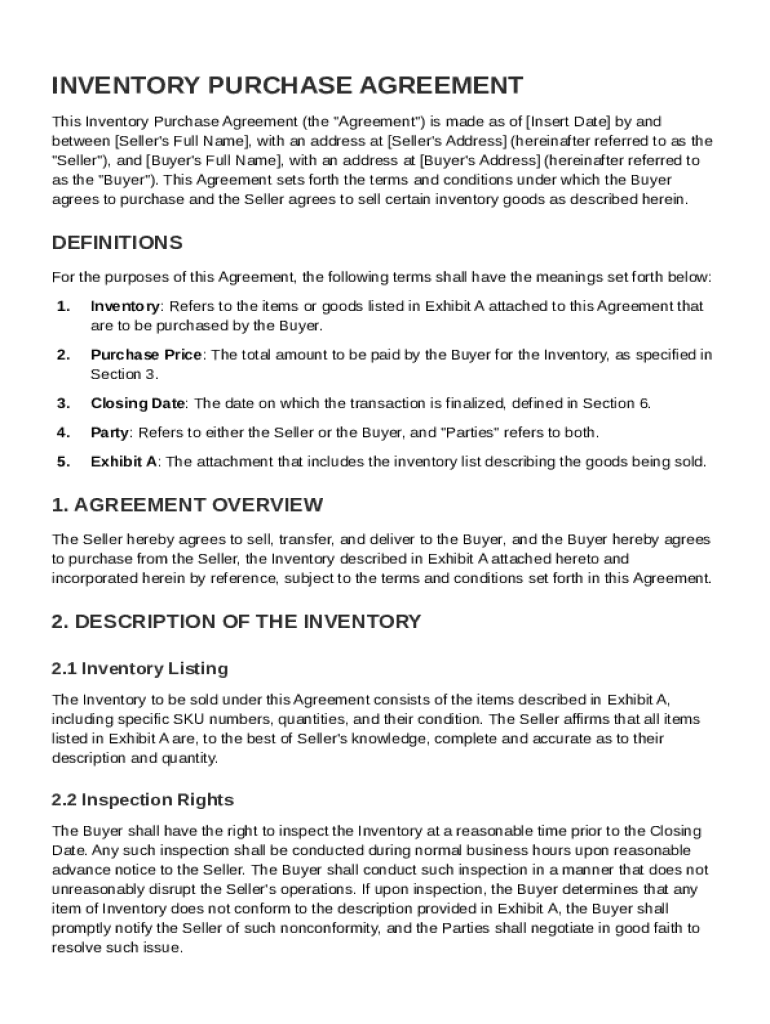
An Inventory Purchase Agreement Template is a structured document used to outline the essential terms and conditions governing the sale and purchase of inventory between a seller and a buyer. This template typically includes critical components such as definitions of key terms, specific details about the inventory being sold, payment arrangements, delivery requirements, warranty provisions, and indemnification clauses. The agreement is designed to clarify the obligations of both parties in the transaction, reducing the risk of misunderstandings or disputes. It is an important tool for businesses involved in the regular buying and selling of substantial inventory.
How to Use the Inventory Purchase Agreement Template
When using the Inventory Purchase Agreement Template, users should customize specific sections to reflect the details of their particular transaction.
- Identify the Parties: Clearly list the full names and contact information of both the buyer and the seller.
- Describe the Inventory: Provide detailed descriptions of the inventory, including quantity, type, condition, and any identifying features or serial numbers.
- Outline Payment Terms: Specify the agreed-upon price, any payment schedules, and the methods through which payment will be made (e.g., bank transfer, credit card, or check).
- Set Delivery Conditions: Clarify the terms of delivery, including the location, timing, and responsibility for transportation.
- Include Warranties and Indemnification: Detail any warranties offered by the seller and include indemnification clauses to protect both parties against potential liabilities.
- Review and Sign: Ensure both parties review the agreement thoroughly, make any necessary amendments, and then sign in the designated spaces.
Key Elements of the Inventory Purchase Agreement Template
The Inventory Purchase Agreement Template is composed of several key elements crucial for a comprehensive and enforceable agreement:
- Parties Involved: Clearly delineates the buyer and seller.
- Inventory Details: Describes the specifics of the inventory, including any quality standards.
- Payment Provisions: Outlines the financial aspects, including price and payment method.
- Delivery Terms: Specifies how and when the inventory will be delivered.
- Warranties: Details any guarantees provided regarding the inventory's condition.
- Indemnification: Includes clauses that protect parties from legal liabilities related to the transaction.
- Governing Law: Establishes the legal framework that will apply to the agreement.
Important Terms Related to Inventory Purchase Agreement Template
Several terms are vital in understanding and using the Inventory Purchase Agreement Template effectively:
- Purchase Price: The total amount agreed upon by both parties for the inventory.
- Inspection Period: A timeframe in which the buyer has the opportunity to inspect the inventory before completing the purchase.
- Conditions Precedent: Specific conditions that must be met for the transaction to proceed.
- Force Majeure: A clause that releases parties from obligations due to extraordinary events beyond their control.
- Title and Risk Transfer: Highlights when the ownership and risk associated with the inventory shift from the seller to the buyer.
Legal Use of the Inventory Purchase Agreement Template
The legal use of the Inventory Purchase Agreement Template involves adherence to specific legal standards and practices to ensure the agreement is enforceable:
- Compliancy with State Laws: Ensures the agreement aligns with the relevant local and state laws governing sales contracts.
- Legally Binding Signatures: Requires signatures from the authorized personnel of both parties to make the agreement legally enforceable.
- Record Keeping: Maintains thorough records of the agreement and any modifications to uphold its validity during legal inquiries.
- Conflict of Laws: Addresses any potential conflicts between the laws of different states that might affect the agreement.
Steps to Complete the Inventory Purchase Agreement Template
Completing the Inventory Purchase Agreement Template involves several systematic steps:
- Initial Consultation: Engage with the counterpart to reach a mutual understanding of the agreement objectives.
- Detail Specifics: Enter precise details about the inventory, financial terms, and delivery conditions.
- Review Legal Requirements: Validate that the agreement complies with applicable laws and standards.
- Finalize Terms: Review and agree on any final adjustments with the other party.
- Formalize Agreement: Obtain signatures from all relevant parties to formalize the agreement.
- Distribute Copies: Ensure both parties have signed copies for their records.
Who Typically Uses the Inventory Purchase Agreement Template
Various entities and individuals typically use the Inventory Purchase Agreement Template:
- Retail Businesses: For acquiring stock for resale to consumers.
- Manufacturers: For purchasing raw materials and component parts.
- Wholesalers: For negotiating bulk inventory purchases to distribute to other businesses.
- Distributors: For securing products from manufacturers that will be supplied to retailers or other entities.


Examples of Using the Inventory Purchase Agreement Template
Real-world examples of how an Inventory Purchase Agreement Template is used include:
- Retail Chains: Chains sign agreements with suppliers for seasonal inventory to ensure timely delivery and stock availability.
- Manufacturing Firms: Utilize the template to procure raw materials essential for production lines, ensuring ongoing operations.
- Tech Companies: Use the form to source hardware and components from suppliers with specified warranty terms.
- E-Commerce Platforms: Execute agreements for inventory to guarantee stock levels for online sales.