






Definition & Meaning
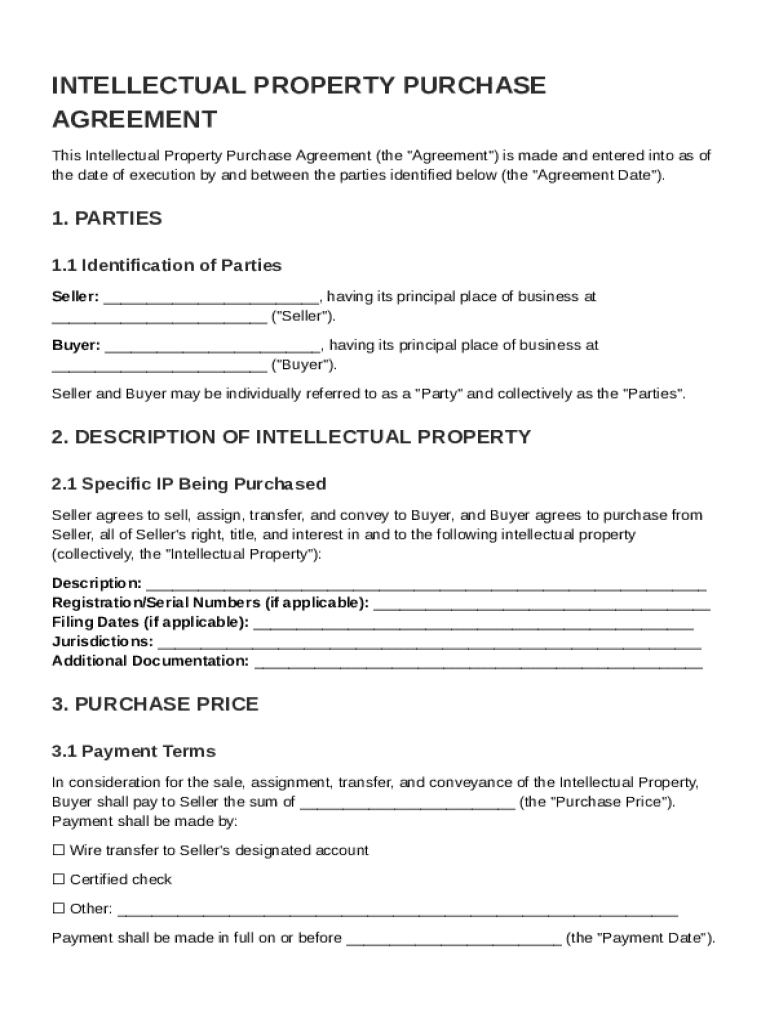
The IP Purchase Agreement Template is a legal document that facilitates the transfer of intellectual property rights from a seller to a buyer. This agreement serves to clearly outline and formalize the terms under which specific intellectual property, like patents, trademarks, copyrights, or trade secrets, is sold. It ensures that both parties involved understand their obligations and rights concerning the transaction, reducing the likelihood of disputes. By defining precise terms and conditions, the document plays a crucial role in protecting the interests of both the seller and the buyer throughout the process.
Key Components
- Parties Identification: Clearly defines the seller and buyer engaged in the transaction.
- Description of IP: Provides a detailed account of the intellectual property being transferred.
- Purchase Price and Terms: Outlines the financial exchange and payment conditions agreed upon by both parties.
- Representations and Warranties: Establishes promises each party makes regarding the authenticity and ownership of the intellectual property.
- Confidentiality Clauses: Ensures sensitive information is protected throughout and after the transaction.
- Indemnification: Describes responsibilities for covering any potential damages or legal claims resulting from the transaction.
How to Use the IP Purchase Agreement Template
Using the IP Purchase Agreement Template involves several steps to ensure it aligns with the specific needs of the transaction. Begin by reviewing the template's structure and content to familiarize yourself with its requirements. Then, tailor the document by inserting the pertinent details relevant to your situation:
- Insert Party Details: Accurately fill in the names, contact information, and roles of both the seller and buyer.
- Specify the Intellectual Property: Clearly describe the intellectual property to be transferred, including any registration numbers or identifiers.
- Outline Financial Terms: Detail the agreed purchase price and any payment schedules or methods.
- Include Relevant Clauses: Ensure that all necessary representations, warranties, and confidentiality agreements are clearly stated.
- Seek Legal Review: Consider having a legal professional review the document to confirm comprehensive coverage and legal compliance.
- Finalize and Execute: Once both parties agree on all terms, have the document signed by all involved individuals to formalize the agreement.
Key Elements of the IP Purchase Agreement Template
A robust IP Purchase Agreement Template includes essential elements to ensure legality and completeness. Here are some critical components:
- Governing Law: Specifies the jurisdiction that will oversee any disputes arising from the agreement.
- Termination Conditions: Describes the scenarios under which the agreement may be revoked or terminated before completion.
- Miscellaneous Provisions: Includes additional clauses necessary for comprehensive coverage, such as non-compete agreements or dispute resolution methods.
Examples of Common Clauses
- Governing Law: Typically aligns with the state laws where either party operates or where the intellectual property is registered.
- Termination Conditions: May include breach of contract, mutual consent, or failure to meet payment terms.
- Miscellaneous Provisions: Examples might include arbitration agreements or clauses on the IP's future use.
Steps to Complete the IP Purchase Agreement Template
To complete the IP Purchase Agreement Template effectively, you must follow a structured approach:
- Gather Information: Collect all necessary details about the intellectual property and both parties involved.
- Draft the Agreement: Use the template to create a draft, inserting accurate information where indicated.
- Review for Accuracy: Carefully review each section to ensure it reflects the true intentions and agreements of both parties.
- Modify as Needed: Adjust sections for clarity, completeness, and compliance with applicable laws.
- Legal Consultation: Engage with a legal professional for any complex issues or to validate compliance.
- Final Review and Signing: Conduct a final review before obtaining signatures from both parties, ensuring a legally binding agreement.
Legal Use of the IP Purchase Agreement Template
The IP Purchase Agreement Template must adhere to legal standards to be enforceable. Using the template involves:
- Compliance with Laws: Ensuring all sections conform to relevant intellectual property laws and regulations.
- Binding Agreement: Once signed, the document becomes legally binding, requiring both parties to honor the terms laid out.
- Protection of Rights: Provides a safeguard for the buyer's new ownership rights and the seller's receipt of agreed compensation.
Legal Considerations
- Intellectual Property Verification: Confirm ownership and any existing encumbrances on the IP before completing the agreement.
- Full Disclosure: Both parties should fully disclose any pertinent information affecting the transaction to avoid future disputes.
Important Terms Related to the IP Purchase Agreement Template
Understanding the specialized language used within the IP Purchase Agreement Template is crucial:
- Assignment: The transfer of rights or interests in the intellectual property.
- Encumbrance: Any legal claim or burden on the IP that may affect its transferability.
- Warranty: An assurance from the seller that the intellectual property is as described and free from undisclosed claims.
Examples of Terms in Use
- Assignment: When a patent owner assigns their ownership rights to a company purchasing their invention.
- Encumbrance: A trademark may be under a legal dispute, affecting the seller's ability to transfer it freely.
- Warranty: The seller promises there are no liens or legal challenges against the software being sold.
Who Typically Uses the IP Purchase Agreement Template
The IP Purchase Agreement Template is generally utilized by a variety of entities involved in the transfer of intellectual property rights:
- Businesses: Companies acquiring new technologies, brands, or creative works.
- Inventors: Individuals transferring patented inventions to corporations or other individuals.
- Legal Professionals: Attorneys assisting clients with intellectual property transactions requiring formal documentation and legality.


Real-World Scenarios
- Startup Acquisitions: A growing tech company purchases patents from a smaller startup to integrate innovative technologies into their products.
- Brand Expansion: A corporation acquires trademarks from another business to enhance its brand portfolio and market reach.
State-Specific Rules for the IP Purchase Agreement Template
State-specific rules may affect the IP Purchase Agreement Template, impacting how agreements are structured and enforced:
- State Laws and Regulations: Each state may have unique laws governing intellectual property transactions, affecting the choice of governing law in the agreement.
- Variation in Enforcement: Enforcement of specific clauses, like non-compete agreements, can significantly differ from one state to another.
Examples of State Variations
- California: Has strict regulations around non-compete clauses, often rendering them unenforceable.
- New York: Allows for more flexibility in intellectual property rights but may require additional filings for certain transactions.