






Understanding the HUD Repayment Agreement Template
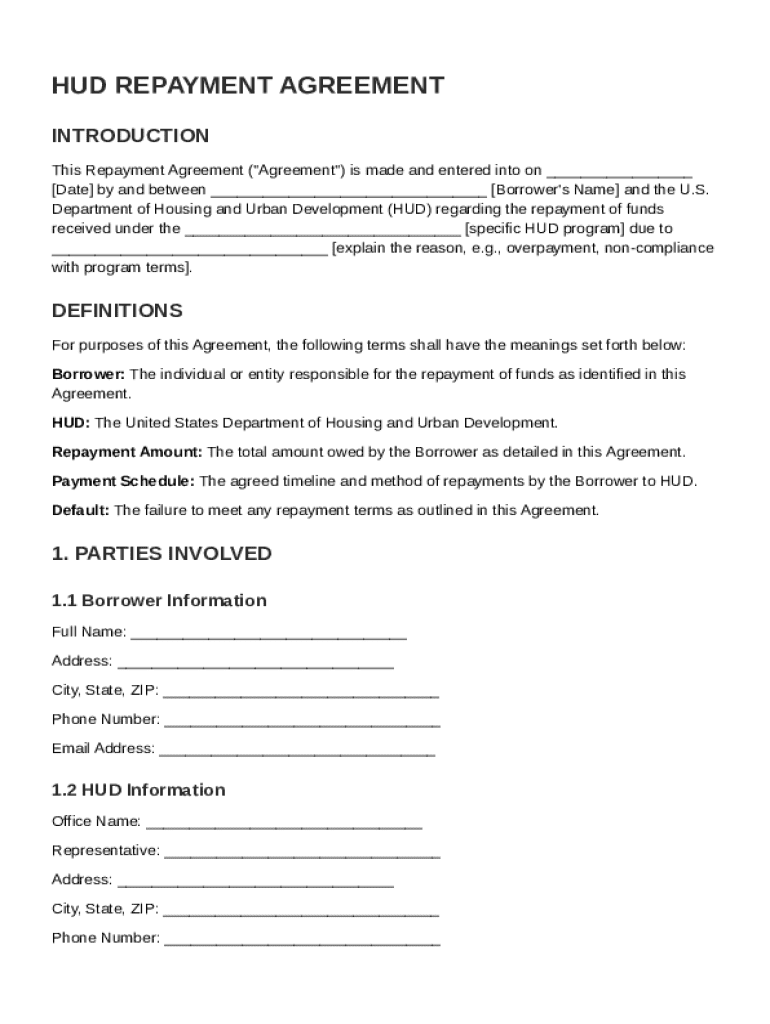
The HUD Repayment Agreement Template is a crucial document that outlines the terms under which borrowers must repay funds received from the U.S. Department of Housing and Urban Development (HUD). The repayment typically comes into play due to overpayments or non-compliance with HUD program requirements. This template includes essential sections such as definitions, the involved parties, repayment terms, and the rights and obligations of both the borrower and HUD. It also covers default conditions, remedies for defaults, amendment procedures, governing law, and various miscellaneous provisions. Each section is designed to ensure clarity and protect both parties' interests.
How to Obtain the HUD Repayment Agreement Template
Acquiring the HUD Repayment Agreement Template can be done through official HUD channels. Typically, borrowers receive this document directly from HUD when there is a need for repayment due to overpayment issues or non-compliance. Alternatively, it might be accessible through legal advisors specializing in real estate or government-funded housing programs. Be sure to obtain the template from a reputable source to ensure it meets the necessary legal standards.
Steps to Complete the HUD Repayment Agreement Template
-
Gather Necessary Information: Collect all relevant data including borrower's identification details, loan amount, and repayment terms.
-
Review the Agreement Terms: Carefully read each clause to understand the obligations and conditions detailed in the document.
-
Fill Out Borrower Details: Enter personal and contact information in the appropriate sections.
-
Specify Repayment Terms: Clearly document the repayment schedule, including amounts and due dates.
-
Legal Verification: Have a legal expert review the completed form to ensure compliance with federal regulations.
-
Signatures: Both borrower and a HUD representative must sign the form to make it binding.
Key Elements of the HUD Repayment Agreement Template
- Repayment Terms: Lists the principal amount, interest rate, and repayment schedule.
- Parties Involved: Identifies the borrower and HUD, detailing their roles in the agreement.
- Default Conditions: Specifies situations that might lead to defaults and the subsequent consequences.
- Amendment Procedures: Provides guidelines on how terms can be modified if both parties consent.
Important Terms Related to the HUD Repayment Agreement Template
Understanding the terminology is vital. Key terms include "borrower," which refers to the individual or entity who has received funds from HUD. "Overpayment" and "non-compliance" signal reasons triggering repayment. Finally, "security interest" may be mentioned if there is collateral associated with the debt.
Legal Use of the HUD Repayment Agreement Template
This document serves a legal function as it ensures borrowers fulfill their obligations to HUD. The agreement becomes legally binding upon signing by both parties. It is essential for protecting the interests of HUD while providing a clear repayment structure for borrowers, thereby reducing the risk of future defaults.
State-Specific Rules for the HUD Repayment Agreement Template
While the template is standardized, certain terms might vary depending on state regulations. It is crucial to consult with a local attorney to ensure the agreement aligns with specific state laws that govern financial transactions and housing assistance programs. Some states may have unique provisions affecting collection practices or borrower protections.
Examples of Using the HUD Repayment Agreement Template
Consider a scenario where a borrower inadvertently receives excess funds from HUD due to an administrative error. The HUD Repayment Agreement Template would set out the repayment conditions to rectify the overpayment. Similarly, if a housing grant recipient fails to comply with program terms, this document will outline how the funds should be returned to HUD. These examples emphasize the template's role in maintaining transparency and ensuring obligations are met.