
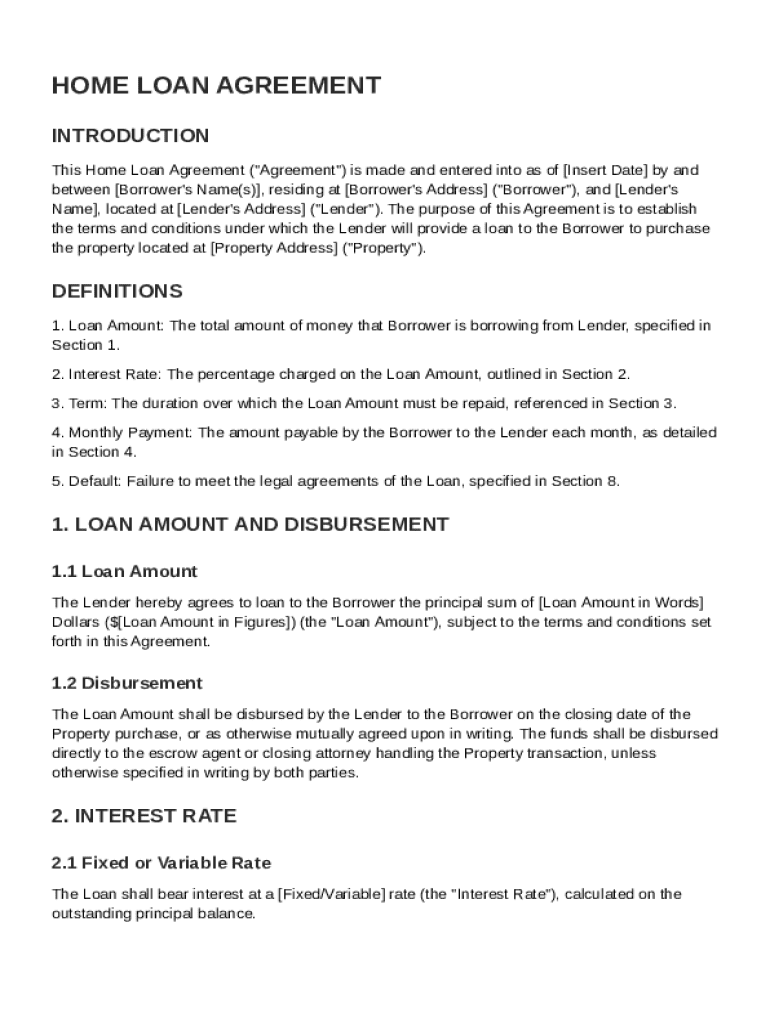







Definition and Meaning of a Home Loan Agreement Template
A Home Loan Agreement Template is a standardized document used to outline the contractual relationship between a lender and a borrower concerning the provision of funds to purchase a property. This template provides a clear framework for the obligations, rights, and expectations of both parties, ensuring clarity and legal protection. The agreement typically includes details on the loan amount, interest rates, repayment schedule, and terms regarding late fees or prepayment options. Borrowers and lenders rely on the Home Loan Agreement Template to ensure all terms are well-documented, reducing potential conflicts and misunderstandings.
How to Use the Home Loan Agreement Template
Users of the Home Loan Agreement Template can adapt it to their specific needs by filling in details unique to the loan arrangement, such as the names of the parties involved, property details, and custom terms.
- Loan Details: Enter the loan amount, interest rate, and repayment term specifics.
- Parties Information: Include the full legal names and contact information of both lender and borrower.
- Property Description: Specify the property being purchased, including its address and legal description.
- Custom Terms: Adjust sections like prepayment penalties or rights in case of default, as necessary.
Cases exist where only particular sections of the template need modification, such as the default terms unique to the financial institution's policies or the borrower's negotiated conditions.
Steps to Complete the Home Loan Agreement Template
Completing the Home Loan Agreement Template involves several detailed steps, ensuring that all required information is accurate and comprehensive.
- Identify Parties: Record the legal names, addresses, and contact information of both the borrower and the lender.
- Detail the Loan: Specify the total loan amount, the principal, and applicable interest rate types, whether fixed, variable, or hybrid.
- Outline Repayment Schedule: Include specifics about monthly payment amounts, due dates, and the total duration of repayment.
- Define Collateral: Describe the residential property securing the loan, including all necessary legal identifiers.
- List Conditions: Append conditions for late payments, early payoff policies, and scenarios constituting default.
- Review and Approve: Both parties should thoroughly review to understand the obligations before signing.
Completing each step methodically ensures all parties are aligned in expectations and legal compliance.
Who Typically Uses the Home Loan Agreement Template
Typically, the Home Loan Agreement Template is utilized by financial institutions, including banks and credit unions, and private lenders providing residential property financing. It is also used by:
- Individual Borrowers: Seeking clarity on the terms when securing a home loan.
- Real Estate Attorneys: Assisting clients with residential transactions requiring financing.
- Mortgage Brokers: Bridging lenders and homebuyers, ensuring terms are transparent and mutually agreeable.
Each user brings a unique perspective to the agreement, whether it’s ensuring lawful compliance or facilitating swift processing.


Key Elements of the Home Loan Agreement Template
Several essential components are fundamental to a well-rounded Home Loan Agreement Template:
- Loan Principal and Interest: Define the principal amount and interest rate type, providing specifics for calculation and adjustment over time.
- Repayment Timeline: Include the start date, monthly payment amount, and the total term length for repayments.
- Default Terms: Clearly outline conditions that constitute borrower default and resultant actions.
- Legal Obligations: Specify both parties' duties concerning property maintenance and insurance requirements.
- Amendment Procedures: Detail the processes required for altering any part of the agreement post-signing.
These elements ensure that the contract serves not only as a financial agreement but also as a legal safeguard.
Legal Use of the Home Loan Agreement Template
The Home Loan Agreement Template must meet specific legal standards, reflecting federal and state regulations governing financial transactions.
- Compliance with ESIGN Act: Ensure that electronic signature provisions meet the standards set by the electronic records regulation.
- Governing Law Clause: Include a detailed section specifying which jurisdiction’s laws will apply in case of disputes.
- Disclosure Requirements: Provide statutory disclosures regarding interest rates and loan terms as required by law.
Understanding these legal facets ensures that the template remains enforceable and that all parties are adequately informed.
State-Specific Rules for Home Loan Agreements
Loan agreements can be subject to variations based on state regulations concerning property financing.
- Interest Rate Caps: Some states impose maximum allowable interest rates depending on the borrowing amount and property type.
- Foreclosure Procedures: Rules regarding real property foreclosure can vary significantly by state, affecting lender actions in case of default.
- Homestead Protection Laws: Laws protecting certain home equity levels might affect lending stipulations.
Reviewing state-specific requirements can prevent legal complications and ensure agreements stand up under local scrutiny.
Digital vs. Paper Versions of Home Loan Agreements
In recent years, the industry has seen a shift from traditional paper documents to digital versions of loan agreements. Each format offers distinct advantages:
- Digital Formats: Enhance accessibility, allowing parties to review and sign on various devices and integrate seamlessly with document management platforms like DocHub.
- Paper Formats: Still necessary for institutions or individuals preferring physical documentation or lacking digital access.
Choosing between digital and paper often depends on user preference, access to technology, and institution policy adherence, with digital formats increasingly leading in efficiency and security.




