






Definition & Meaning
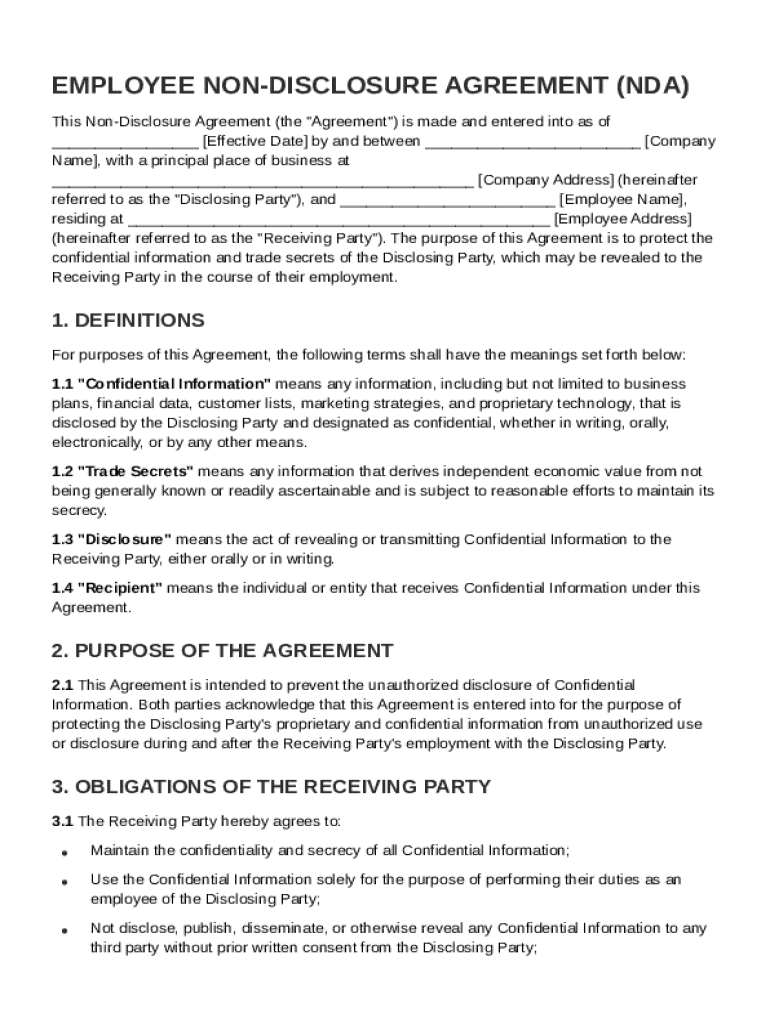
An HR Non-Disclosure Agreement (NDA) Template is a legally binding contract used by companies to protect confidential information and trade secrets shared with employees. This agreement aims to prevent unauthorized disclosure of sensitive information that could harm the company if revealed. It typically outlines the definition of confidential information, the obligations of the employee to maintain confidentiality, exclusions from the agreement, and consequences for breaches.
Key Elements of the HR Non-Disclosure Agreement
- Confidential Information: Details what constitutes confidential information, including trade secrets, business plans, client lists, and proprietary data.
- Obligations of the Employee: Specifies the employee's duty to protect confidentiality during and after their employment.
- Exclusions: Defines what information is not covered, such as information already in the public domain.
- Duration: Outlines how long the confidentiality obligations last, which can extend beyond employment.
How to Use the HR Non-Disclosure Agreement Template
To effectively use the HR NDA template, companies should:
- Customize the Template: Tailor the document to align with specific business needs and include necessary clauses relevant to the industry.
- Consult Legal Experts: Engage with legal professionals to ensure the agreement complies with local laws and effectively protects the company's interests.
- Review with Employees: Prior to signing, discuss the NDA with employees to clarify their responsibilities and the importance of maintaining confidentiality.
- Secure Signatures: Obtain signatures from all parties involved to formalize the agreement.
Steps to Complete the HR Non-Disclosure Agreement Template
How to Fill Out the Template
- Identify the Parties: Clearly state the company and employee involved in the agreement.
- Describe Confidential Information: Detail the type of information considered confidential.
- Specify Obligations and Exclusions: Define the employee's responsibilities and list exclusions.
- Set the Duration: Indicate how long the confidentiality obligations will remain in effect.
- Legal Clauses: Include sections on governing law and remedies for breaches.
- Sign the Agreement: Ensure both parties sign the document, providing legality.
Common Mistakes to Avoid
- Ambiguity: Ensure the language is clear and specific to avoid misconceptions.
- Overreaching Scope: Avoid unnecessarily broad definitions that may hinder enforceability.
- Inadequate Duration: Specify an appropriate time frame for obligations to ensure they are reasonable and enforceable.
Who Typically Uses the HR Non-Disclosure Agreement Template
This template is commonly utilized by:
- Employers: To protect their proprietary information shared with employees.
- HR Departments: To formalize the confidentiality expectations when onboarding new hires.
- Legal Teams: To draft and review NDAs ensuring compliance with legal standards.


Real-World Application
- Startups: Protect emerging innovations, product designs, and business strategies.
- Tech Companies: Secure software code, algorithms, and technical documentation.
- Consultancies: Safeguard client data and proprietary methodologies.
Important Terms Related to HR Non-Disclosure Agreement Template
Understanding key terms within the NDA can enhance clarity and compliance:
- Confidentiality: The obligation to keep certain information secret.
- Trade Secret: Information that provides a business advantage and is protected to prevent misuse.
- Breach: Violating the terms of the agreement by unauthorized disclosure.
Definitions in Context
- Non-Compete: Restrictions on employees engaging in businesses competing with the employer.
- Governing Law: The state laws that will preside over any legal disputes related to the NDA.
Legal Use of the HR Non-Disclosure Agreement Template
NDAs are legally enforceable as long as they meet certain criteria:
- Clarity: The agreement must clearly define its terms and confidentiality obligations.
- Reasonableness: The restrictions placed on employees must be reasonable in scope and duration.
- Consideration: There should be some form of consideration, such as employment or compensation, for the agreement to be valid.
Legal Consequences of Breach
- Injunctions: Legal orders preventing further breaches.
- Monetary Damages: Compensating losses incurred due to unauthorized disclosure.
Examples of Using the HR Non-Disclosure Agreement Template
Consider scenarios where NDAs are critical:
- Mergers and Acquisitions: Protects due diligence materials disclosed to employees.
- Product Development: Ensures new designs remain confidential until official release.
- Partnerships: Secures sensitive information shared between collaborating firms.
Case Study: A Tech Startup
- Situation: A startup developing an innovative app needs to protect its code and design.
- Solution: Implements an NDA for all employees and contractors, creating a robust legal framework to safeguard its intellectual property.
- Outcome: The startup successfully prevents leaks and secures a competitive edge.
State-Specific Rules for the HR Non-Disclosure Agreement Template
While NDAs are generally standardized, state-specific rules can affect enforceability:
- California: Strong protections for employee mobility may limit the enforceability of overly broad or restrictive NDAs.
- New York: Courts require NDAs to be reasonable in scope, considering the nature of the business.
How to Adjust for Different States
- Research Local Laws: Stay informed about state-specific requirements for NDAs.
- Legal Consultation: Work with legal professionals to tailor the NDA to state laws, ensuring its enforceability.
By considering these aspects, companies can create a comprehensive HR Non-Disclosure Agreement that effectively protects their intellectual property while aligning with legal standards.