






Definition & Meaning
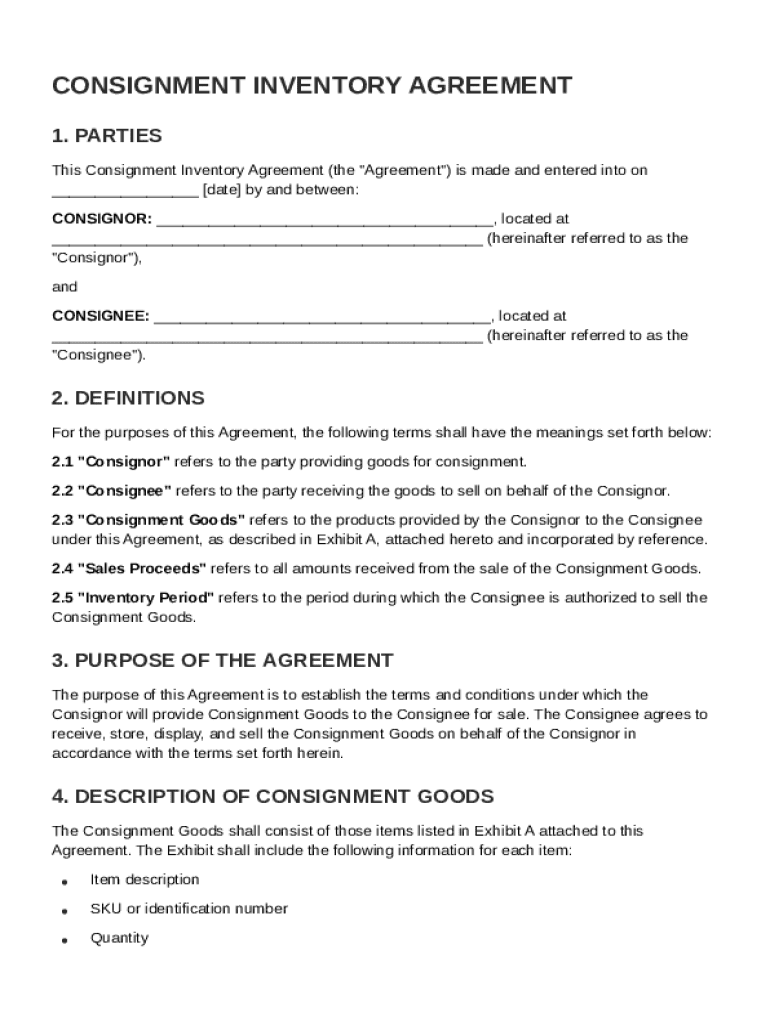
A Consignment Inventory Agreement is a legal document that outlines the terms and conditions under which a Consignor provides goods to a Consignee for sale. The Consignor retains title to the goods until sold by the Consignee. This arrangement allows the Consignee to sell the inventory without purchasing it upfront. The agreement specifies responsibilities regarding provision, storage, sale, and reporting. Key elements include ownership rights, payment structures, inventory management, termination conditions, and legal obligations like confidentiality and indemnification. This type of agreement is commonly used in retail to streamline inventory management and mitigate financial risk for both parties.
How to Use the Consignment Inventory Agreement Template
Using a Consignment Inventory Agreement Template involves several steps to ensure comprehensive coverage of the arrangement's terms. Start by entering the names and contact information of both the Consignor and Consignee. Define the scope of goods under consignment, including descriptions and quantities. Specify the duration of the agreement and the conditions for termination. Terms related to payment, such as the Consignee’s fee, should be clearly outlined. Also, include details on how inventory records will be maintained and reported to the Consignor. Finally, both parties should review the document thoroughly before signing to ensure mutual understanding and agreement of the terms.
Key Elements of the Consignment Inventory Agreement Template
A well-constructed template includes several vital sections:
- Parties Involved: Details of both the Consignor and Consignee, including names and addresses.
- Goods Description: Clear details on the products provided, including quantities and specifications.
- Ownership and Title: Confirmation that ownership remains with the Consignor until sale.
- Payment Terms: Conditions under which payments are made, including commissions or fees for the Consignee.
- Duration and Termination: The timeframe for the agreement and any conditions that could lead to early termination.
- Inventory Management: Procedures for tracking, storing, and reporting inventory levels.
- Legal Obligations: Confidentiality clauses and indemnification terms.
Steps to Complete the Consignment Inventory Agreement Template
Completing the template requires a systematic approach:
- Gather Necessary Information: Collect contact details and agreed terms between the Consignor and Consignee.
- Fill Out Party Details: Include accurate names and addresses for each party.
- Describe the Goods: Clearly outline the specifics of the inventory to be sold on consignment.
- Define Payment Structures: Specify how and when payments or commissions will be calculated and distributed.
- Set Duration: Note the start date, end date, and any conditions for early termination.
- Include Legal Clauses: Ensure confidentiality and indemnification are clearly stated.
- Review and Sign: Both parties must carefully read through the document and sign to confirm agreement.
Who Typically Uses the Consignment Inventory Agreement Template
This template is mostly utilized by individuals and businesses involved in the retail industry. Retailers who want to sell products without directly purchasing them use it to manage inventory risks financially. Artists, vendors, and boutique store owners also frequently use these agreements to display and sell goods in various locations without owning retail space. The agreement benefits both emerging and established businesses by enabling flexibility in inventory management and reducing upfront costs associated with traditional purchasing methods.


Legal Use of the Consignment Inventory Agreement Template
To ensure legal compliance, the agreement must adhere to relevant laws and regulations. It should clearly define ownership retention by the Consignor, which protects them against claims by third-party creditors. It is advisable for both parties to consider state-specific laws that may impact the agreement, especially those regarding sales and use tax obligations. The agreement should be reviewed periodically to ensure it remains compliant with current laws. Legal advice might be necessary for complex arrangements to ensure enforceability.
State-Specific Rules for the Consignment Inventory Agreement Template
Consignment agreements may be subject to state-specific rules. For example, certain states have regulations about how long unsold goods can remain on consignment or the conditions under which goods can be reclaimed. Many states also have laws concerning the disclosure of consignment terms to creditors and the conditions under which ownership is established. It is crucial for parties to familiarize themselves with local regulations to ensure that the agreement is enforceable in their jurisdiction and compliant with any commercial consignment rules.
Software Compatibility
The Consignment Inventory Agreement Template can be utilized across various document management systems, enhancing flexibility and ease of use. Platforms like DocHub allow users to import the template in PDF format and facilitate editing, signing, and sharing online. This compatibility extends to systems like Google Workspace, ensuring seamless integration with Google Drive and email. Users can edit, annotate, and store the finalized agreements securely, supported by robust encryption standards to maintain confidentiality and data integrity. This ensures legal compliance and ease of management for all involved parties.