






Definition & Meaning
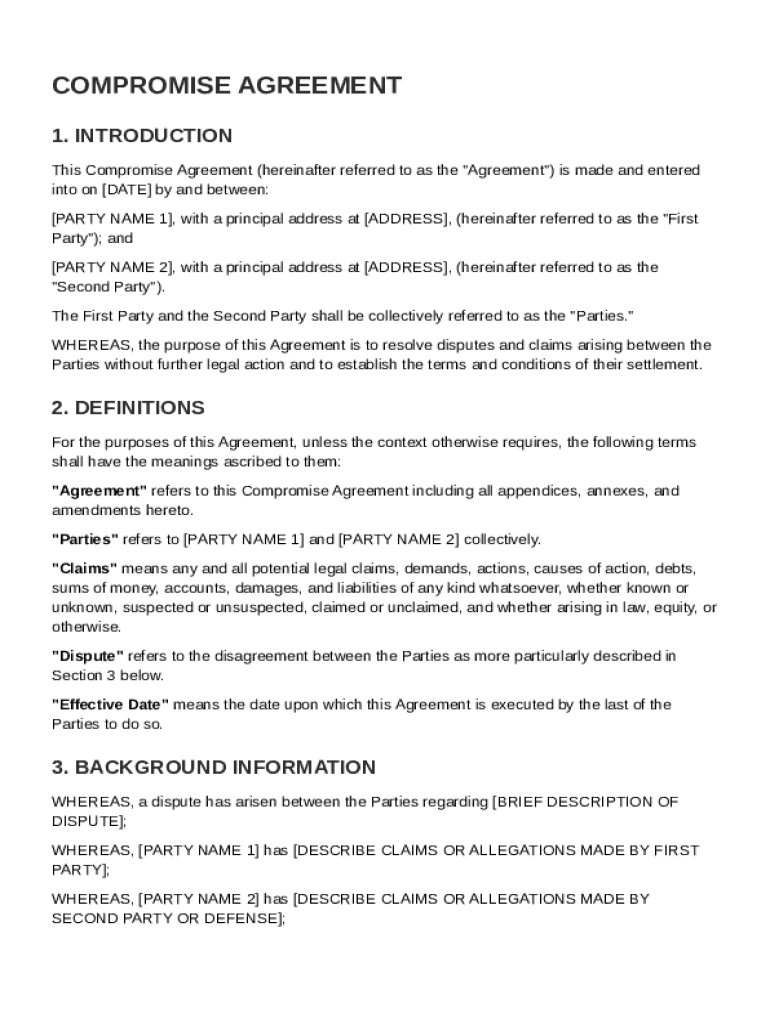
A Compromise Agreement, often known as a severance agreement in the United States, is a legally binding document designed to handle disputes between two parties without resorting to further legal actions. This template is crucial for facilitating an amicable resolution by outlining key aspects such as financial settlements, confidentiality clauses, and the release of claims. The agreement serves as a method to formalize negotiations and ensure that both parties are clear on the terms, which include any settlement amounts and non-monetary considerations. Notably, it helps minimize potential liabilities and emphasizes that neither party admits any wrongdoing.
Key Elements of the Compromise Agreement Template
Key components of a Compromise Agreement include:
- Definitions of Terms: Clearly explains the terminology used within the agreement.
- Background Information: Provides context and details regarding the dispute or claim.
- Settlement Terms: Includes the financial settlement amount, non-monetary terms, and any action items required by either party.
- Release of Claims: Outlines the specific claims being waived by the parties involved.
- Confidentiality Provisions: Sets out expectations regarding non-disclosure of the agreement's terms.
- Dispute Resolution: Describes the methods, such as arbitration or mediation, to be used if new disputes arise.
- Governing Law: States the legal jurisdiction applicable to the agreement.
These elements are critical to ensure that all aspects of the resolution are comprehensively addressed and legally enforceable.
How to Use the Compromise Agreement Template
To effectively use a Compromise Agreement Template, follow these steps:
- Download the Template: Available online, often in formats like DOC or PDF.
- Customize the Document: Tailor the template to reflect the specific terms and details of the dispute in question.
- Consult Legal Counsel: Before finalizing, it is advised to have legal professionals review the document to ensure compliance and mutual understanding.
- Review and Sign: Both parties should carefully review the terms, make necessary amendments, and then sign the agreement for it to become binding.
Utilizing a template helps streamline the process, ensuring that all necessary elements are covered without starting from scratch.
Legal Use of the Compromise Agreement Template
In the U.S., the legal use of a Compromise Agreement Template must adhere to several guidelines:
- Compliance with Federal and State Laws: Ensures provisions meet legal standards.
- Inclusion of All Parties' Consent: The agreement must be voluntarily signed without any duress or undue influence.
- Recognition as a Binding Contract: Both parties must fully understand that the document is legally enforceable once signed.
Legal counsel can provide invaluable guidance to confirm that the final document meets all regulatory requirements and effectively protects the interests of both parties.
Steps to Complete the Compromise Agreement Template
Completing the template involves:
- Input Party Information: Clearly state the names, roles, and contact details of both parties involved.
- Detail the Dispute Background: Include factual context leading to the agreement.
- Define Settlement Terms: Specify any monetary settlements or actions required by each party.
- Address All Claims: Document any claims or rights parties agree to relinquish.
- Specify Confidentiality Clauses: Clearly detail what information must remain undisclosed.
- Outline Dispute Resolution: Establish the methods for resolving future disputes.
Each step will ensure the agreement is thorough and leaves no room for ambiguity or misunderstanding.
Examples of Using the Compromise Agreement Template
Examples of Compromise Agreement usage include:
- Employment Termination: Used to resolve claims when an employee is leaving an organization.
- Business Disputes: Helps businesses settle disagreements without court intervention.
- Personal Injury Claims: Facilitates settlements between injured parties and responsible entities.
Real-world scenarios demonstrate the template’s flexibility and effectiveness in diverse situations, emphasizing its value as a tool for conflict resolution.
Important Terms Related to Compromise Agreement Template
Understanding specific terms is crucial:
- Mutual Release: Both parties agree to waive future claims against each other.
- Severance Package: Compensation provided to resolve employment termination.
- Confidentiality Agreement: A legal promise not to disclose contract details.
Familiarity with these terms enhances comprehension of the document and ensures informed decision-making.
Penalties for Non-Compliance
Failing to adhere to the Compromise Agreement can result in:
- Legal Action: The non-compliant party may face lawsuits to enforce the agreement.
- Financial Penalties: Could be ordered to pay damages to the aggrieved party.
- Void Agreement: Non-compliance could render the agreement void, reinstating original claims.
These potential repercussions highlight the importance of honoring the agreement’s terms, underscoring the need for both parties to fulfill their obligations as outlined in the document.