
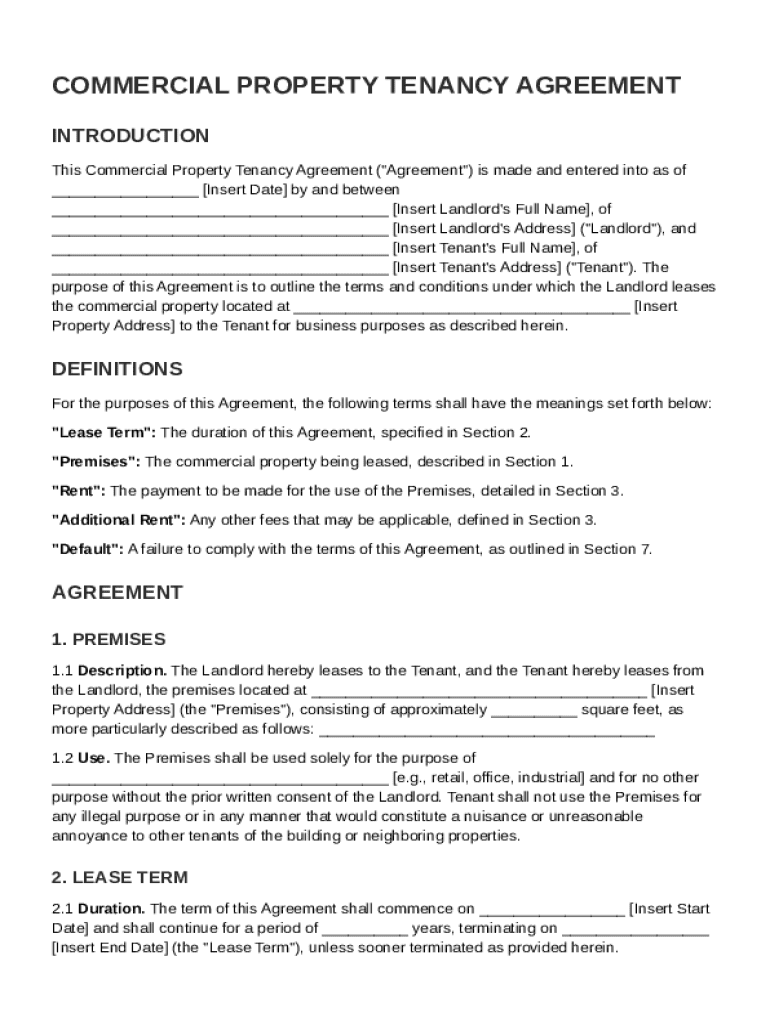







Key Elements of the Commercial Property Tenancy Agreement Template
The Commercial Property Tenancy Agreement Template is a comprehensive document that outlines the terms under which a landlord leases a commercial property to a tenant. Key elements include:
-
Definitions of Key Terms: This section clarifies essential terms used throughout the agreement, such as "landlord," "tenant," and "premises." It establishes a mutual understanding and avoids ambiguities that could lead to disputes.
-
Premises Details: The agreement should specify the details of the property being leased, including its address, size, and any specific areas included in the lease. Precise descriptions help in preventing misunderstandings about what is covered under the lease.
-
Lease Duration: This part outlines the timeframe of the tenancy, including the start and end dates. It may also cover renewal options and conditions under which the lease may be extended or terminated early.
-
Rent Obligations: Details about the amount of rent, due dates, and payment methods. This section should also address any late fees or penalty charges for overdue payments, maintaining financial clarity.
-
Security Deposits: This clause includes the required security deposit amount, terms for its use, and conditions for its return. Understanding this element is critical for both parties to know their financial protections and responsibilities.
-
Maintenance Responsibilities: Outlines who is responsible for property maintenance and repairs, detailing any obligations the tenant has in terms of upkeep or improvements.
-
Insurance Requirements: This part of the agreement specifies what types of insurance both parties must hold and ensures that liability is appropriately managed.
-
Indemnification Clauses: These clauses specify how both parties will handle indemnification, protecting either party from legal responsibility for each other’s actions or omissions.
-
Termination Conditions and Dispute Resolution: Explains the grounds under which the lease can be terminated and describes the process for resolving any disputes that may arise. This may include mediation or arbitration clauses.
How to Use the Commercial Property Tenancy Agreement Template
Utilizing the Commercial Property Tenancy Agreement effectively involves several key steps:
-
Review the Template Thoroughly: Before using the template, thoroughly review every section to ensure it aligns with the specifics of the rental arrangement. This involves understanding each clause and making necessary adjustments.
-
Customize Specific Terms: Customize the template to reflect the actual terms agreed upon between the landlord and the tenant. This includes entering accurate financial figures, property descriptions, and tenant information.
-
Ensure Compliance with Local Laws: Verify that the template complies with state-specific laws and regulations concerning commercial tenancies to avoid legal issues in the future.
-
Consult with Legal Experts: It’s advisable to have the final document reviewed by a legal expert to ensure it is legally binding and protects the rights of both parties.
-
Signing Process: Once both parties are satisfied with the agreement, ensure that it is signed by both the tenant and the landlord. This signifies mutual consent and understanding.
Who Typically Uses the Commercial Property Tenancy Agreement Template
This template is primarily used by:
-
Landlords: Owners of commercial properties use this template to establish clear leasing terms with their tenants.
-
Tenants: Businesses seeking to lease commercial spaces for operations employ this template to understand their rights and obligations.
-
Real Estate Agents and Brokers: Professionals in real estate often use these agreements to facilitate property transactions and ensure legal compliance.
-
Legal Advisors: Attorneys specializing in property law may use this template as a starting point to draft more customized agreements for their clients.


Important Terms Related to Commercial Property Tenancy Agreement Template
Understanding the following terms is crucial when working with a Commercial Property Tenancy Agreement Template:
-
Fixed-term Lease: A lease agreement with a defined duration, typically one to five years.
-
Triple Net Lease (NNN): A lease structure where the tenant is responsible for base rent and additional property expenses such as taxes, insurance, and maintenance.
-
Gross Lease: A lease where the landlord covers all property expenses, and the tenant only pays the agreed-upon rent amount.
-
Eviction Clause: Specifies conditions under which a tenant may be evicted, detailing relevant legal procedures.
-
Force Majeure: A clause that outlines circumstances under which obligations may be delayed or excused due to unforeseen events like natural disasters.
Legal Use of the Commercial Property Tenancy Agreement Template
The legal use of the template entails the following:
-
Enforcing Tenant Obligations: Legally secures tenants to fulfill their responsibilities as outlined in the lease, aiding landlords in managing their properties effectively.
-
Protecting Landlord Rights: Ensures that landlords can manage their properties by collecting rent and maintaining the property's condition.
-
Amending Lease Terms: Legal provisions allow landlords and tenants to modify terms through mutual agreement without creating a new contract.
-
Dispute Resolution: Provides a legal framework for resolving disputes through predefined procedures, minimizing potential litigation.
State-Specific Rules for the Commercial Property Tenancy Agreement Template
Commercial tenancy laws can vary significantly by state, affecting:
-
Disclosure Requirements: Some states have specific disclosure requirements that must be included in tenancy agreements.
-
Lease Termination Procedures: Variations in legal procedures for terminating a lease might exist depending on the state.
-
Security Deposit Regulations: States may have different rules regarding the amount landlords can demand and the conditions for retaining deposits.
-
Eviction Laws: State-specific eviction laws dictate what actions landlords can take when a tenant defaults on the lease.
Form Submission Methods (Online / Mail / In-Person)
While the template is not typically submitted, knowing how to manage document processes can be beneficial:
-
Online Platforms: Platforms like DocHub allow landlords and tenants to negotiate and sign agreements digitally, ensuring a streamlined and secure process.
-
Mail: For formal submission, documents can be mailed to appropriate parties when a physical record is needed.
-
In-Person: For those who prefer traditional methods, both parties can meet in person to sign the agreement, fostering better communication and understanding.
Versions or Alternatives to the Commercial Property Tenancy Agreement Template
While the standard template is extensive, variations or alternatives include:
-
Standard Short-form Agreements: Used for simple and shorter-term arrangements where extensive details are unnecessary.
-
Customized Agreements: Tailored contracts created by legal professionals for unique leasing situations beyond what the standard template can accommodate.
-
Industry-specific Agreements: Variants designed to meet the specific needs of industries like retail or manufacturing, addressing unique operational concerns.




