






Definition and Meaning
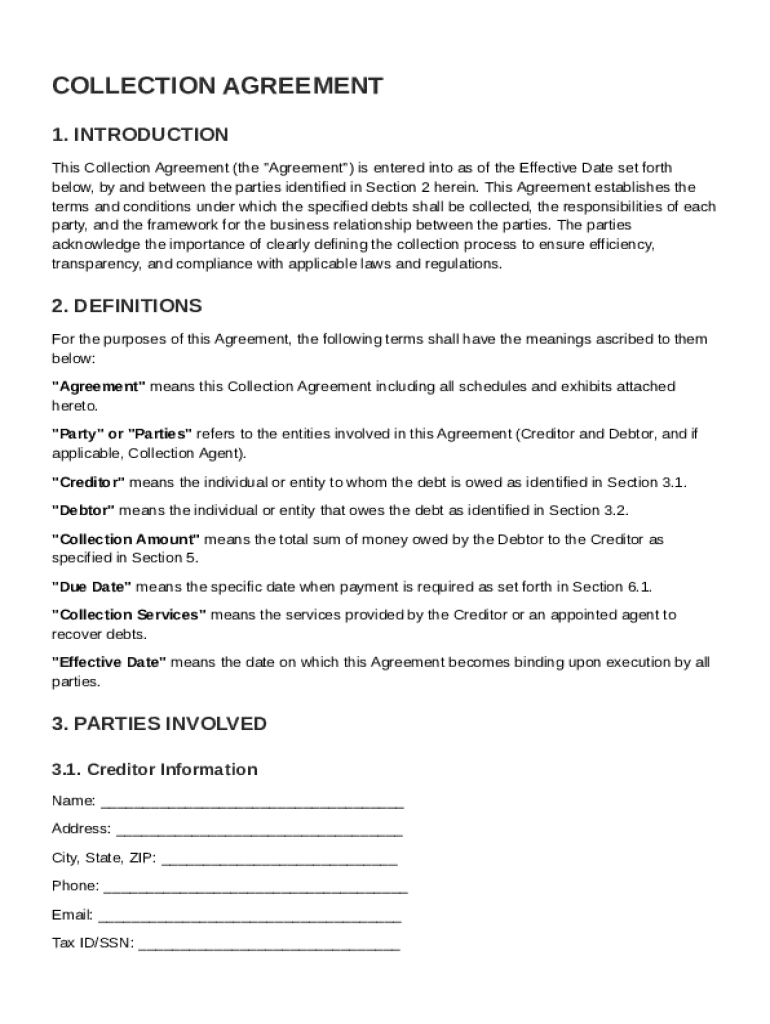
A Collection Agreement Template is a legal document designed to formalize the terms under which a creditor and debtor engage in debt collection. This agreement typically includes essential components such as definitions of pertinent terms, a schedule for payments, responsibilities that each party must adhere to, processes for resolving disputes, confidentiality clauses, and the governing law applicable to the agreement. Its primary aim is to ensure a transparent and organized repayment process while maintaining compliance with relevant laws and regulations.
Key Components of a Collection Agreement
- Definitions: Clarity around terms like "Creditor," "Debtor," and the "Debt" itself is critical for mutual understanding.
- Payment Schedule: Details on amounts, due dates, and methods of payment ensure orderly transactions.
- Party Responsibilities: Clearly defined duties and obligations help in managing expectations and performance.
- Dispute Resolution: Mechanisms such as mediation or arbitration offer structured ways to handle disagreements.
- Confidentiality: Provisions that safeguard sensitive information shared between parties.
- Governing Law: Defines the legal framework (often state law) that presides over the agreement.
How to Use the Collection Agreement Template
When utilizing a Collection Agreement Template, parties should carefully assess their unique circumstances and adjust the template accordingly. Here are the general steps to follow:
- Review the Template: Begin by thoroughly reading the standard terms and structure of the template.
- Customize Legal Terms: Modify sections to reflect specific state laws or unique stipulations agreed upon by the parties.
- Detail Party Information: Ensure that all relevant data about the creditor and debtor, including addresses and contact information, are accurately inserted.
- Specify Payment Terms: Clearly define the payment schedule, including any penalties for late payments or defaults.
- Include Additional Clauses: Add any special conditions or amendments that are pertinent to the transaction at hand.
- Seek Legal Review: For complex agreements, it is advisable to have an attorney review the document to ensure all clauses are legally sound.
Steps to Complete the Collection Agreement Template
Completing a Collection Agreement Template involves several critical steps to ensure all conditions are precisely outlined:
- Fill Out Basic Information: Enter the debtor and creditor details, including full legal names and contact information.
- Draft Payment Terms: Establish the total debt owed, payment deadlines, and acceptable payment methods.
- Outline Responsibilities: Clearly state the obligations each party must fulfill during the agreement term.
- Include Dispute Mechanisms: Add provisions for conflict resolution, including preferred methods such as mediation or litigation.
- Review Legal Clauses: Ensure all legal language aligns with jurisdiction-specific requirements and protects all parties equally.
- Finalize & Sign: Confirm that all sections are accurately completed and have both parties sign the agreement, securing third-party witness signatures if necessary.
Key Elements of the Collection Agreement Template
A detailed examination of necessary elements in the Collection Agreement Template is essential for a comprehensive agreement:
Core Sections
- Party Information: Names, addresses, and representative contacts.
- Debt Details: Total amount, interest rates, and due dates.
- Repayment Plan: Structured instructions on how and when payments should be made.
- Confidentiality & Security: Measures to protect exchanged proprietary information.
Ancillary Provisions
- Amendment Procedures: How changes to the agreement are to be handled.
- Termination Conditions: Stipulations for ending the agreement prematurely under certain conditions.
- Legal Jurisdiction: Designation of which state or local laws apply to the agreement.
Legal Use of the Collection Agreement Template
The Collection Agreement Template must be used within the confines of applicable federal and state laws to ensure its enforceability:
- Federal Regulations: Compliance with acts such as the Fair Debt Collection Practices Act for legal collection practices.
- State Laws: Adjust terms to adhere to specific rules and guidelines set forth by the state in which the agreement is executed.
- Documentation and Recording: It's crucial to keep proper records and documentation of the agreement and any amendments to safeguard legal standing.
Important Terms Related to Collection Agreement Template
Understanding specific terms often used in Collection Agreement Templates can improve clarity and execution:
- Debtor: The party that owes a payment or repayment.
- Creditor: The party owed the money or repayment.
- Default: The failure to repay according to agreed terms.
- Arbitration: A method for settling disputes outside of court.
- Confidentiality: Obligations to protect shared information from unauthorized disclosure.
State-Specific Rules for the Collection Agreement Template
Collection agreements must be customized to reflect the regulatory environment of the state in which they are applied:
- Interest Rate Caps: Some states have legal limits on the interest rates that can be charged.
- Collection Practice Regulations: Specific rules about how debts can be legally collected.
- Statutes of Limitation: These determine the time frame in which legal actions to collect debt can be initiated.
Notable Examples
- California: Requires explicit disclosure of certain fees and conditions.
- New York: Mandates particular consumer protection clauses.
Examples of Using the Collection Agreement Template
By examining scenarios where a Collection Agreement Template is applied, one can grasp its practical applications:
- Medical Debt Collection: Used by healthcare providers to collect outstanding patient payments while detailing instalment plans.
- Business-to-Business Credit: Aids in collection of overdue payments between trading companies, highlighting terms of trade credit.
- Student Loan Repayments: Universities and financial institutions use templates to manage student loan collections, stressing structured payment plans.