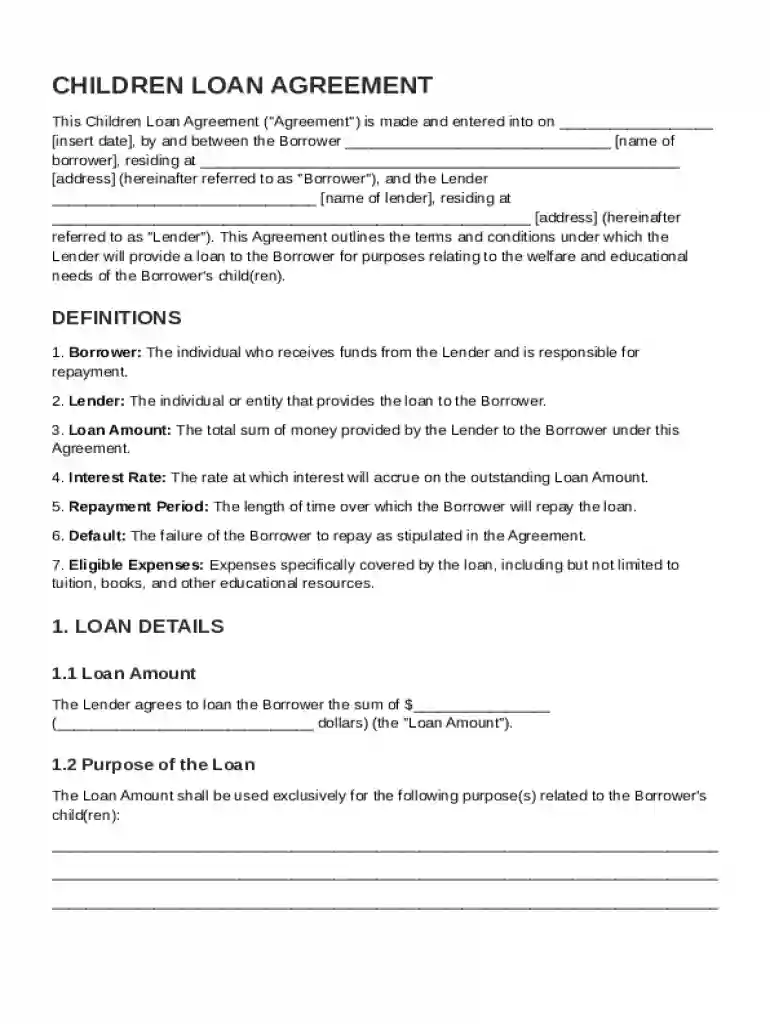
Definition and Purpose of the Children Loan Agreement Template
The Children Loan Agreement Template is a legal document designed to formalize a loan arrangement specifically aimed at supporting the welfare and educational needs of children. It establishes the terms between a lender and a borrower, delineating all necessary details such as loan amount, purpose, interest rate, and repayment schedule. This template is essential for ensuring clarity and mutual understanding, with its comprehensive nature covering key areas like default conditions and amendments. Its structured format ensures that all parties are aware of their obligations, promoting responsible financial management for the benefit of the children.
Key Elements of the Children Loan Agreement Template
A thorough loan agreement template must include several critical components:
- Loan Amount and Purpose: Clearly define the principal amount loaned and its intended use, focusing on aspects related to children's welfare, such as education or medical expenses.
- Interest Rate and Repayment Terms: Specify the interest to be applied, if any, alongside a detailed repayment schedule, including frequency and duration.
- Default Conditions: Outline the consequences for failing to adhere to the repayment terms, safeguarding the lender's interests while outlining potential repercussions like legal recourse.
- Governing Law: Establish the jurisdiction under which the agreement is regulated, typically within the borrower's state, to ensure compliance with local laws.
- Amendment Procedures: Explain how modifications to the agreement may occur, requiring written consent from all parties involved to prevent unilateral changes.
How to Use the Children Loan Agreement Template
To utilize this template effectively:
- Review all Sections: Familiarize yourself with each part of the template to ensure there's a complete understanding of the terms.
- Personalize Details: Input specific data like names, amounts, and repayment dates to tailor the document to your unique situation.
- Consult Legal Advice: If necessary, seek guidance from a legal expert to ensure compliance with applicable laws and that the terms are enforceable.
- Secure Signatures: Both parties must review the agreement and provide their signatures, indicating their commitment to the outlined terms.
Steps to Complete the Children Loan Agreement Template
- Download the Template: Access the template from a trusted source, ensuring it complies with local laws.
- Fill in Essential Information: Input borrower and lender details, loan amount, and intended use.
- Specify Repayment Plan: Define the repayment schedule, specifying periods, amounts, and any interest rates.
- Outline Default Clauses: Clearly state conditions and consequences for missed payments.
- Include Legal Jurisdiction: Mention the governing law that will oversee the agreement's enforceability.
- Final Verification and Signing: Carefully review all details, seek any necessary legal input, and acquire signatures from both parties.
Legal Use of the Children Loan Agreement Template
This document is legally binding and should be treated with the same seriousness as any other contractual agreement. Key legal considerations include:
- Enforceability: The agreement must be structured in compliance with state laws to be enforceable in court.
- Compliance: Ensure the agreement complies with financial regulations, especially if interest is involved.
- Modification Restrictions: Any changes must be documented and agreed upon by all parties to remain valid.
Important Terms Related to the Children Loan Agreement Template
Understanding specific terminology is crucial for using this template:
- Principal Amount: The original sum of money loaned, excluding interest.
- Maturity Date: The final due date for loan repayment.
- Collateral: Assets pledged by the borrower to secure the loan, if applicable.
- Amortization: The process of spreading out loan payments over time.
Software Compatibility and Document Management
The Children Loan Agreement Template can be managed efficiently using document workflow platforms like DocHub. Understanding compatibility is essential:
- File Formats: Highly compatible with multiple formats including PDF, DOC, and more, enabling easy integration and usage.
- Edit and Share: Seamlessly edit, annotate, and share documents digitally with colleagues or legal advisors for faster collaboration.
- Security Measures: Leverage encryption and other security protocols to protect sensitive information contained in the agreement.
State-Specific Rules and Differences
Loan agreements must align with jurisdictional rules. Variations may occur based on:
- Interest Rate Limits: Some states cap the interest rates that can be legally charged.
- Filing Requirements: Certain jurisdictions may require filing of such agreements if they include collateral.
- Age of Majority: Laws governing when a child can be involved in contractual agreements vary by state.
Understanding these nuances ensures the agreement is valid and respected within the applicable legal context.