




01. Edit your form online
Type text, add images, blackout confidential details, add comments, highlights and more.

Type text, add images, blackout confidential details, add comments, highlights and more.

Draw your signature, type it, upload its image, or use your mobile device as a signature pad.

Send it via email, link, or fax. You can also download it, export it or print it out.
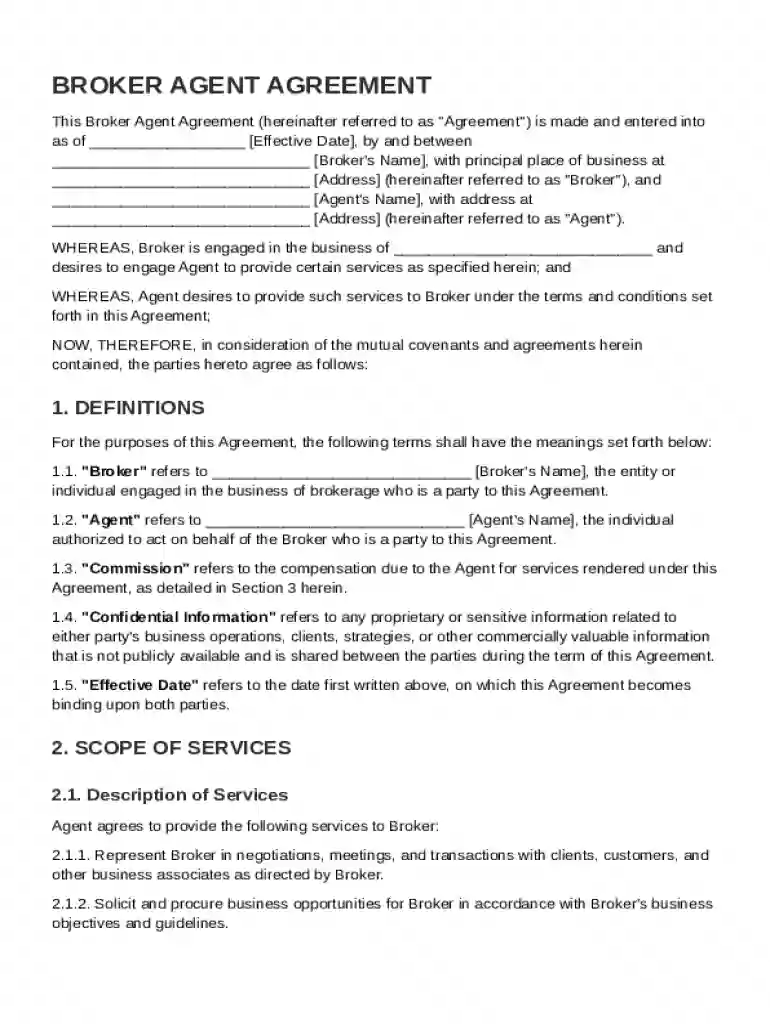
The Broker Agent Agreement Template serves as a legal document that outlines the terms and conditions under which an agent is engaged by a broker. This includes the roles and responsibilities assigned to the agent, such as representing the broker in negotiations and securing business opportunities. This agreement clarifies the nature of the relationship, ensuring both parties understand their commitments, rights, and duties. It encompasses various clauses that detail scope of services, compensation structures, confidentiality obligations, indemnification provisions, and dispute resolution processes.
Examples of Broker Agent Agreements span a wide array of industries. In real estate, for instance, it details listings and sales agreements between agents and brokerage firms. In other sectors like insurance, the agreement defines agents’ roles in policy selling and client management. Having a clear definition and understanding of this agreement's purpose ensures all parties are aligned in their expectations and obligations.
Understanding the essential components of a Broker Agent Agreement is critical to ensuring its effectiveness and comprehensiveness.
Scope of Services: Clearly defines the services the agent is expected to provide. This might include tasks like new client acquisition, negotiation, and representation in specific transactions.
Compensation Structure: Outlines how the agent will be remunerated for their services. It can be based on commissions, flat fees, or a combination of both, and might include conditions under which extra fees may be applicable.
Confidentiality Clauses: Ensures that any sensitive information shared between the broker and agent remains protected, maintaining trust and professional integrity.
Dispute Resolution: Lays out the procedures to be followed in the event of a disagreement. It may specify arbitration or mediation before resorting to litigation.
Termination Conditions: Details under which circumstances the agreement can be terminated, such as breach of contract or mutual consent.
These elements provide a foundation for smooth cooperation, helping to avoid misunderstandings and conflicts.
Utilizing a Broker Agent Agreement Template involves specific steps to tailor it to the individual needs of the parties involved.
Customizing the Template: Start by adapting generic clauses to fit the particular context of the brokerage and the type of service expected from the agent. This means editing elements like compensation terms, tasks, and geographic location applicable to the services.
Detailing Agent's Role: Clearly define what is expected in the agent’s role, ensuring that no ambiguities exist. Specify the exact nature of the tasks the agent will handle, such as negotiation or client management.
Legal Review: It's essential to have a legal professional review the customized document. This helps ensure that the agreement complies with state laws and covers necessary legal protections.
Finalizing and Signing: Both parties should carefully review the finalized document. Afterward, both the broker and the agent should sign the agreement to formalize it.
By following these steps, the template transforms into a robust document that delineates all aspects of the broker-agent relationship.
Ensuring the legal integrity of a Broker Agent Agreement Template is paramount for both brokers and agents.
This document must comply with U.S. laws, including contract and employment laws specific to the states where the agreement occurs. It should encompass clauses that align with the Fair Labor Standards Act (FLSA) and other relevant legislation, such as the Uniform Commercial Code (UCC) for specific transactions.
Compliance with State Regulations: Different states might have specific requirements for drafting legal contracts, such as mandatory disclosures or specific language that needs to be included.
Indemnity and Liability: Clearly outline liability limitations and indemnity clauses to protect both parties from potential future disputes.
Having a thorough understanding of these legal facets ensures the agreement serves its purpose effectively and legally.
A wide range of professionals and entities can benefit from implementing the Broker Agent Agreement Template.
Real Estate Brokers: Use these agreements extensively to formalize relationships with individual agents who represent the firm in various transactions.
Insurance Firms: Engage agents to expand their market reach and manage client relationships and policy sales.
Freelance Marketing Agents: Individuals offering intermediary services to larger companies employ these agreements to ensure clear terms for compensation and duties.
Understanding the typical users of this template allows those considering its implementation to better benchmark and tailor their own agreements.


Completing the Broker Agent Agreement Template involves several critical steps to ensure completeness and accuracy.
Provide Party Details: Include full legal names and contact information for both the broker and the agent involved.
Specify Agreement Scope: Detail the intended scope of services, including any additional responsibilities or conditions.
Define Payment Terms: Clearly outline the compensation model, whether commission-based or fee-based, along with payment schedules.
Include Confidentiality and Non-Compete Clauses: Protect sensitive information and business interests by detailing confidentiality expectations and any non-compete conditions involved.
Outline Dispute Resolution Procedures: Define the process for resolving any disputes, specifying whether arbitration, mediation, or other methods will be employed.
Set Termination Terms: Clearly state under what conditions the agreement may be terminated before its natural conclusion.
Following these steps ensures the completion of a thorough and legally sound agreement.
Understanding how state laws affect Broker Agent Agreements is crucial, as regulations and requirements can vary widely.
License Requirements: Some states have specific licensing requirements that agents must meet to legally operate in the brokerage field. These conditions should be explicitly stated within the agreement.
Varying Contract Laws: Contractual obligations might differ by state, which can influence clauses related to breaches, enforceability, and indemnification.
Different Arbitration Preferences: States may prefer or require specific forms of dispute resolution, so it's wise to align the agreement accordingly.
Adhering to state-specific rules not only enhances the validity of the agreement but also strengthens its enforceability.
Familiarity with important terms associated with broker-agent agreements enhances comprehension and aids in more effective negotiations.
Principal-Agent Relationship: The foundational working relationship outlined in the agreement, where one party, the agent, acts on behalf of another, the principal or broker.
Commission Structure: Defines how agents are paid, whether through a percentage of sales or a flat fee.
Indemnification: Provisions protecting each party from liability or loss arising from the performance or non-performance of specific agreement duties.
Non-Solicitation Clauses: Parts of the agreement that prevent the agent from engaging former clients or customers upon contract termination.
By mastering these terms, parties can navigate agreements with greater confidence and precision.
The process of implementing a Broker Agent Agreement involves several steps and may require a timeframe for approval.
Preliminary Negotiations: Initial discussions determine the broad terms, scope of services, and compensation framework agreed upon by both parties.
Drafting Stage: The initial agreement draft is created, incorporating all negotiated terms.
Review and Revision: Both parties review the draft for accuracy and propose possible revisions.
Final Approval: The agreement goes through a final legal review before being signed by both parties, formalizing the contract.
Timeframe: From initial negotiation to final signing, the process can take days to weeks, depending on the complexity of terms and any required legal input.
Understanding the application process ensures a smooth transition from negotiation to a fully operational agreement.
At DocHub, your data security is our priority. We follow HIPAA, SOC2, GDPR, and other standards, so you can work on your documents with confidence.



Jul 6, 2026 Draft a complaint under Section 31 in the form prescribed by your State RERA rules, naming the agent and describing the contravention of SectionRead more
This sample representation agreement says that the broker will negotiate for the excess to go to the buyer.


