






Definition & Purpose of a Bridging Loan Agreement
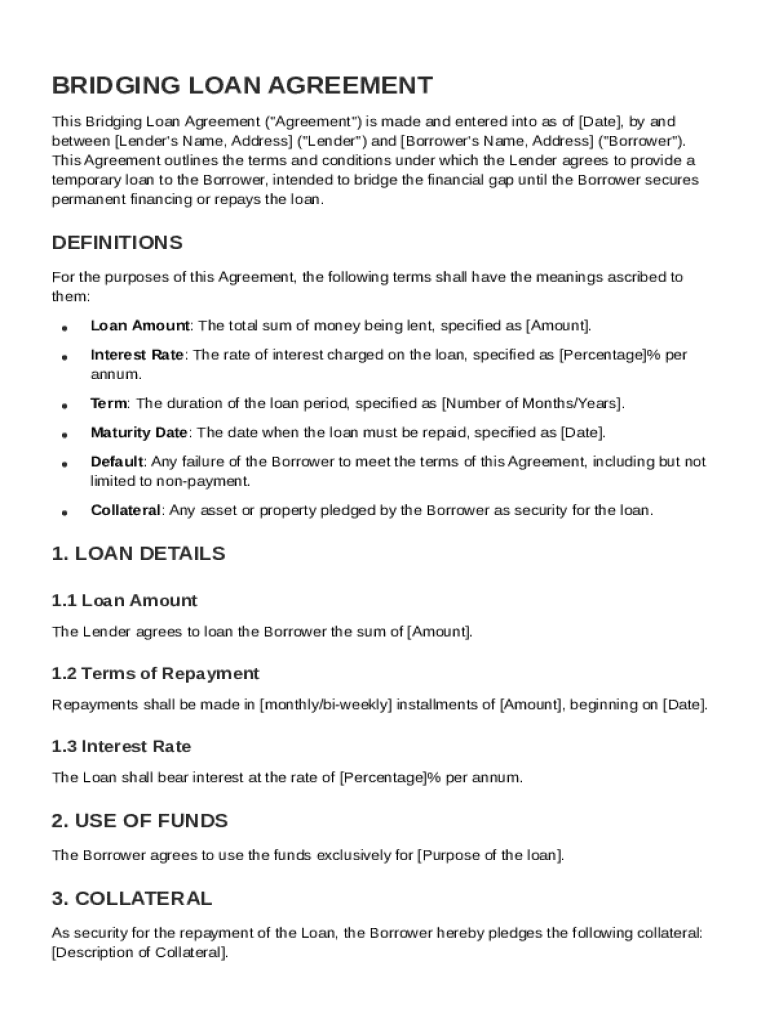
A Bridging Loan Agreement is a financial contract designed to provide short-term financing to cover temporary gaps until a borrower secures permanent funding or resolves a financial obligation. This type of loan is often used in real estate transactions, such as purchasing a new property before selling an existing one. The agreement outlines critical terms like loan amount, interest rate, repayment timeline, and conditions involving collateral. It also addresses the obligations of both lender and borrower, ensuring that both parties understand their responsibilities. Specific clauses detail the definitions of terms used throughout the document, providing clarity to prevent misunderstandings.
Key Loan Details
- Loan Amount and Interest Rate: Clarity on the principal sum and the applicable interest rate is crucial for both parties. Typically, bridging loans have a higher interest rate than traditional loans due to their short-term nature.
- Repayment Terms: These terms specify how long the borrower has to repay the loan, often ranging from a few weeks to a couple of years.
- Collateral Provisions: To secure the loan, borrowers often offer collateral, such as property. The agreement will detail what happens to this collateral if the borrower defaults.
How to Use the Bridging Loan Agreement Template
Utilizing a bridging loan agreement template ensures that all essential components are included and legally binding. Users can customize the template to fit specific situations, but must maintain the integrity of standard clauses essential in legal and financial contexts.
Steps to Leverage the Template
- Insert Specific Loan Details: Add the loan amount, interest rate, and repayment terms relevant to the transaction.
- Define Parties Involved: Clearly state the names and contact information of the lender and borrower.
- Specify Collateral: Clearly document any assets pledged as collateral, including their estimated values.
Benefits of Using a Template
- Efficiency: Templates streamline the document creation process by pre-filling standard legal language.
- Accuracy: Ensures no critical legal terms or clauses are overlooked.
- Flexibility: Allows for adjustments to accommodate unique deal terms.
Steps to Complete the Bridging Loan Agreement Template
Completing the template involves a series of straightforward but crucial steps. Following these steps ensures that the agreement is comprehensive and ready for execution.
Detailed Process
- Review and Personalize the Template: Go through the entire template and personalize the sections to reflect specific details of the transaction.
- Validate Legal Provisions: Ensure that all legal terms comply with relevant state laws. This step may require consulting a legal professional.
- Signatures and Execution: Both parties should review the completed document, sign it, and retain copies for their records.
Final Checkpoints
- Confirm all information is current and accurate.
- Ensure the document is signed by all parties involved.
- Check for any additional requirements specific to your jurisdiction.
Important Terms Related to Bridging Loan Agreements
Understanding the terminology within a bridging loan agreement is vital for all parties involved. These terms ensure clarity and precision throughout the agreement.
Common Terms
- Maturity Date: The final date by which the loan principal and accrued interest must be paid.
- Default: Failure to fulfill legal obligations, specifically non-payment.
- Governing Law: Specifies the jurisdiction whose laws will apply in interpreting the agreement.
Examples of Use
- Using collateral to secure a loan gives lenders assurance of repayment potential in case of default.
- Predefined interest rates help both parties understand the financial cost associated with borrowing.
Legal Use of the Bridging Loan Agreement Template
The legality of a bridging loan agreement ensures enforceability and protection for both parties. It is imperative that the agreement complies with state-specific lending laws and general contract law principles.
Ensuring Compliance
- Review Legal Requirements: Verify with state laws governing loans and financial transactions.
- Consult Legal Resources: Consider seeking advice from a legal professional to ensure all clauses are enforceable.
Key Elements of the Bridging Loan Agreement Template
Several fundamental elements must be included in a bridging loan agreement to ensure that it addresses all necessary legal and financial factors.
Essential Clauses
- Interest and Payments: Clearly defined calculation methods for interest and schedules for payments.
- Representations and Warranties: Declarations made by both parties regarding their ability and intention to comply with agreement terms.
- Events of Default: Specific conditions under which the borrower is considered in default.
State-Specific Rules for Bridging Loan Agreements
Bridging loan agreements may be subject to additional state-specific regulations that govern loan activities and borrower protections.
Common Examples
- Interest Rate Caps: Some states have laws that limit the maximum interest rate for loans.
- Lien Requirements: Regulations surrounding the recording and enforcement of liens on collateral can vary.
Navigating State Differences
- Review state-specific regulations before finalizing any agreements.
- Ensure compliance with relevant statutory requirements to avoid future legal complications.
By following these guidelines, users can effectively utilize a bridging loan agreement template to streamline the creation of secure financial agreements. The comprehensive details in this guide ensure that all parties are protected and informed throughout the loan process.