






Definition and Purpose of a Container Rental Agreement
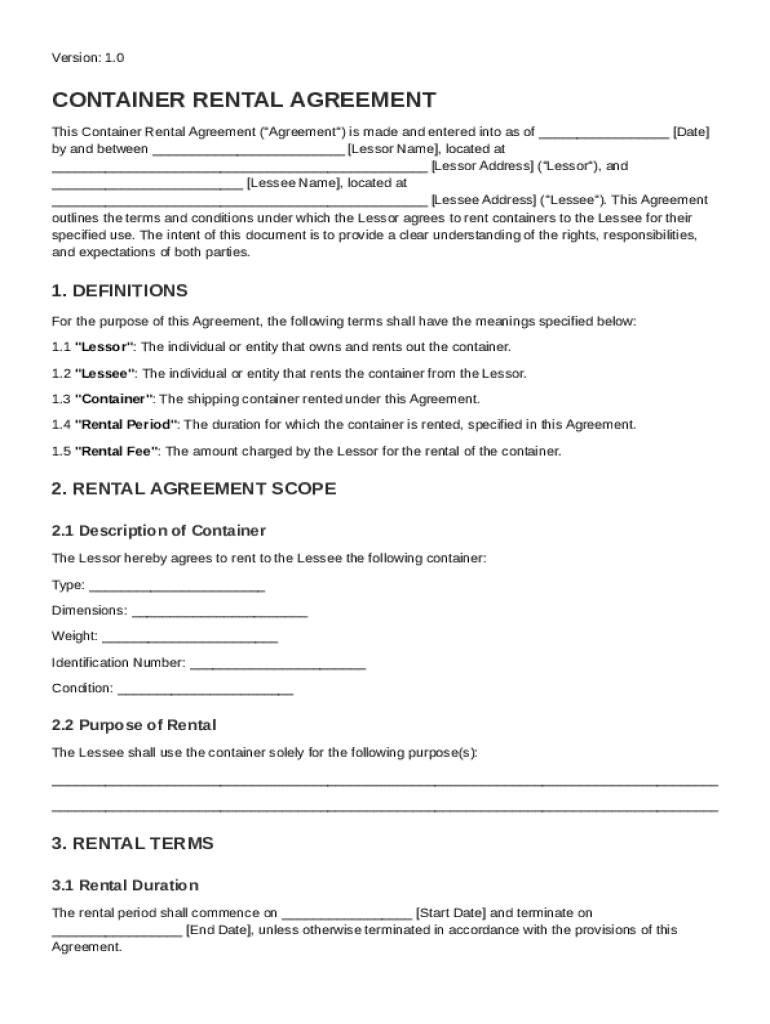
A Container Rental Agreement is a legally binding document used to outline the terms and conditions under which a shipping container is leased between two parties: the Lessor and the Lessee. It provides clarity regarding responsibilities, rental duration, fees, maintenance duties, and other obligations of both parties. This agreement ensures that both the Lessor and the Lessee have a clear understanding of their roles and what is expected during the rental period, minimizing potential disputes.
Key Components of the Agreement
- Rental Duration: Specifies the start and end dates of the rental period.
- Fees and Payment Terms: Outlines rental fees, payment schedules, and any associated costs.
- Maintenance Responsibilities: Details who is responsible for container maintenance and upkeep.
- Liability and Insurance Requirements: Defines the responsibilities around damage or loss to the container and the need for insurance coverage.
- Termination Conditions: States the conditions under which the agreement can be terminated early by either party.
- Governing Law: Specifies the legal framework that governs the agreement, often based on jurisdictional laws.
How to Use the Container Rental Agreement Template
The Container Rental Agreement Template is designed to streamline the process of creating a rental contract. Follow these steps to effectively use the template:
- Download the Template: Access and download the template from a reputable document management platform such as DocHub.
- Insert Party Information: Fill in the details of both the Lessor and the Lessee, including names, addresses, and contact information.
- Define Rental Terms: Specify the rental duration, fees, permitted uses of the container, and other relevant terms.
- Include Maintenance Provisions: Clearly outline who is responsible for maintenance and any procedures for reporting and completing repairs.
- Add Legal and Insurance Clauses: Incorporate clauses related to liability, insurance requirements, and governing laws.
- Review and Sign: Both parties should review the final document thoroughly, make necessary revisions, and sign to formalize the agreement.
Important Terms Related to Container Rental Agreements
Understanding the terminology associated with Container Rental Agreements is essential for accurately completing and interpreting the document. Here are some critical terms:
- Lessor: The party leasing out the container, also referred to as the owner.
- Lessee: The party renting the container, responsible for adhering to the terms outlined in the agreement.
- Rental Fee: The cost associated with leasing the container, usually specified as a per-day, per-week, or per-month rate.
- Security Deposit: An upfront amount paid by the Lessee that may be applied to damage, outstanding fees, or default on rental terms.
- Indemnification: A clause that shifts potential liability for damages from one party to another, often from the Lessor to the Lessee.
Legal Use of the Container Rental Agreement
The Container Rental Agreement must comply with legal standards to be enforceable under U.S. law. Key considerations include:
- Consensual Agreement: Both parties must voluntarily agree to the terms without any form of coercion or misrepresentation.
- Competency: Both parties must have the legal capacity to enter into an agreement, which generally means they must be of legal adult age and of sound mind.
- Clarity and Completeness: The document should be clear, with no ambiguous terms that could lead to interpretation disputes.
- Compliance with State Laws: The agreement must adhere to applicable state-specific legal requirements regarding contracts and leasing.
Steps to Complete the Container Rental Agreement Template
Creating a Container Rental Agreement involves several critical steps, ensuring all important aspects are covered:
- Gather Necessary Information: Collect all details about the Lessor, Lessee, and the container in question.
- Customize the Template: Tailor the template to fit the specific context of the rental, including dates, fees, and special conditions.
- Include All Required Clauses: Incorporate necessary clauses for liabilities, maintenance duties, and insurance requirements.
- Validate the Agreement: Both parties should review the document with legal advisors to ensure compliance and alignment with interest.
- Finalize and Sign: Confirm all details, make adjustments as required, and have both parties sign the agreement, securing legally binding status.
Who Typically Uses the Container Rental Agreement Template
Several entities benefit from using a Container Rental Agreement Template, including:
- Shipping Companies: Provide rental containers for temporary storage solutions.
- Construction Firms: Utilize containers on job sites for equipment and material storage.
- Event Organizers: Lease containers for on-site storage during events.
- Retailers: Need temporary or overflow storage solutions during peak seasons.
- Individuals: May require container rentals for personal use, such as moving or additional storage.


Key Elements of the Container Rental Agreement Template
Critical elements to incorporate in an effective Container Rental Agreement include:
- Parties Involved: Accurate details of the Lessor and Lessee.
- Rental Specifics: Clear details on what, how long, and for how much the container is rented.
- Terms and Conditions: Detailed terms that cover use, restrictions, maintenance, and liability.
- Signatures: Space for both parties to sign and date, indicating their agreement to the terms.
State-Specific Rules for the Container Rental Agreement
While the core elements of a Container Rental Agreement remain consistent, certain states may impose additional requirements or modifications. These could include:
- Local Leasing Regulations: Some jurisdictions may have specific rules governing rental leases and disclosures required within the document.
- Tax Obligations: States might have unique tax implications for leasing agreements which must be outlined in the contract.
- Dispute Resolution: Different state laws may prescribe specific processes for handling disputes arising from the agreement.
Understanding and incorporating these state-specific rules is essential for ensuring that the agreement is compliant with regional laws.