
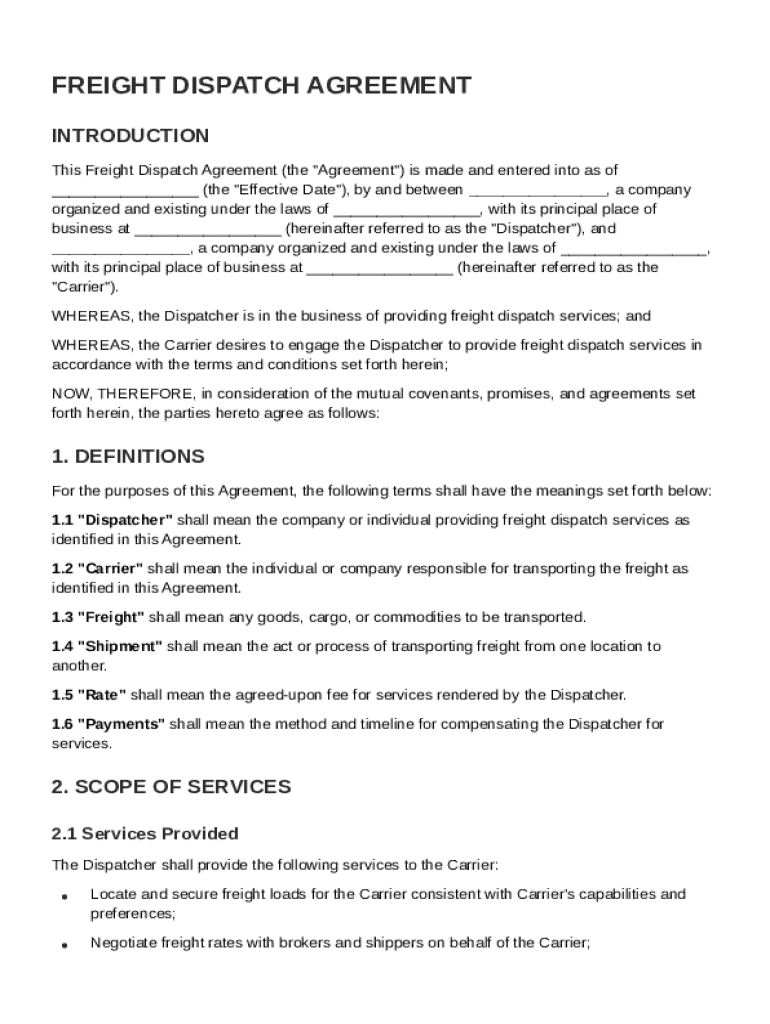







Key Elements of the Freight Dispatch Agreement Template
The Freight Dispatch Agreement Template is an essential document that outlines the fundamental components of the arrangement between a dispatcher and a carrier. It includes:
- Parties Involved: Clearly identifies the dispatcher and the carrier involved in the agreement.
- Scope of Services: Details the specific services the dispatcher will provide, such as load finding, negotiating freight rates, and coordinating pickups and deliveries.
- Compensation Structure: Describes how the dispatcher will be compensated, whether through a percentage of the shipping costs, a flat fee, or another arrangement.
- Duration and Termination Conditions: Specifies the duration of the agreement and conditions under which either party can terminate the contract.
This section ensures that both parties are aware of their obligations and the expectations of the working relationship.
Definition and Meaning
A freight dispatch agreement is a legally binding document that sets forth the terms under which a dispatcher will provide services to a carrier. This agreement establishes the framework for cooperation between the two parties, explaining each party's responsibilities, how disputes will be resolved, and the legal framework governing the agreement.
- Independent Contractor Relationship: It emphasizes that the dispatcher acts as an independent contractor and not as an employee or partner of the carrier.
- Liability and Indemnification: Covers liability issues and indemnification to protect both parties in the event of a dispute or lawsuit.
This foundational understanding helps ensure that both parties have a clear grasp of their contractual relationship's nature.
Steps to Complete the Freight Dispatch Agreement Template
- Identify and Input Parties' Information: Start by entering the legal names and contact information for both the dispatcher and the carrier.
- Define the Scope of Services: Clearly outline the dispatch services that will be provided, such as scheduling loads and managing logistics.
- Specify Compensation: State the agreed-upon method and terms for compensation, whether percentage-based or hourly.
- Set the Agreement Duration: Define how long the agreement will last and the conditions for renewal or termination.
- Review Legal Clauses: Examine important clauses related to confidentiality, indemnification, and dispute resolution.
Each step should be completed with precision to ensure clarity and prevent potential disputes.
Who Typically Uses the Freight Dispatch Agreement Template
The freight dispatch agreement template is used by various entities and individuals within the logistics and transportation industry:
- Independent Freight Dispatchers: Those who specialize in finding loads and negotiating deals for carriers.
- Carriers: Trucking companies or individual owner-operators who need assistance in managing their load schedules.
- Freight Brokerages: Organizations that facilitate carrier-dispatcher relationships and require standardized contracts to manage multiple agreements effectively.
Understanding who benefits from this agreement can help target its implementation and customization.


Legal Use of the Freight Dispatch Agreement Template
The legal enforceability of the freight dispatch agreement depends on adhering to relevant legal standards and principles:
- Compliance with Federal Laws: Ensure the agreement aligns with federal transportation regulations and any applicable state laws.
- Signature Requirements: Must be signed by both parties to be considered legally binding.
- Governing Law: Specifies which jurisdiction’s laws will govern the agreement, typically based on the location of the carrier or agreement formation.
Adhering to these legal practices strengthens the document's validity and enforceability in legal disputes.
Important Terms Related to Freight Dispatch Agreement Template
A solid understanding of the terminology used in a freight dispatch agreement is vital:
- Carrier: The trucking company or individual responsible for transporting goods.
- Dispatcher: The individual or company that organizes and coordinates shipments for the carrier.
- Bill of Lading: A detailed list of a shipment of goods in the form of a receipt given by the carrier to the shipper.
- Freight Rate: The charge paid for transporting goods.
These terms are crucial for interpreting the rights and responsibilities delineated in the agreement.
State-Specific Rules for the Freight Dispatch Agreement Template
Differences in state regulations can affect how a freight dispatch agreement is drafted and enforced:
- Licensing Requirements: Some states may require dispatchers to obtain specific licenses or permits.
- Tax Implications: Varying tax codes may affect the financial aspects of the agreement.
- Contract Execution: States may have unique rules regarding electronic versus handwritten signatures, affecting how agreements are signed and stored.
Being knowledgeable about state-specific nuances ensures compliance and minimizes legal risks.
Software Compatibility for Managing Freight Dispatch Agreements
Efficient management of freight dispatch agreements often requires digital tools:
- DocHub Integration: Supports editing, signing, and sharing of agreements, with compatibility for PDF and other file formats.
- Google Workspace Compatibility: Streamlines document management with seamless integration with Google Drive.
- Cloud Storage Services: Options like Dropbox and OneDrive facilitate easy access and storage of dispatch agreements.
Using these tools can enhance the ease and efficiency of managing agreements in a dynamic, digital work environment.
Examples of Using the Freight Dispatch Agreement Template
Real-world applications of freight dispatch agreements illustrate their utility:
- Small Trucking Company: A small carrier might use the template to formalize a relationship with an independent dispatcher to manage increased freight volume during peak seasons.
- National Freight Brokerage: Large brokerages often use such templates to standardize contracts across multiple dispatchers and carriers, ensuring uniformity and compliance.
- Owner-Operator: An independent truck owner can utilize the agreement to engage with dispatchers and expand their customer base without hiring full-time staff.
These examples demonstrate how the template facilitates operational scalability and contractual clarity in diverse scenarios.


