






Definition & Meaning
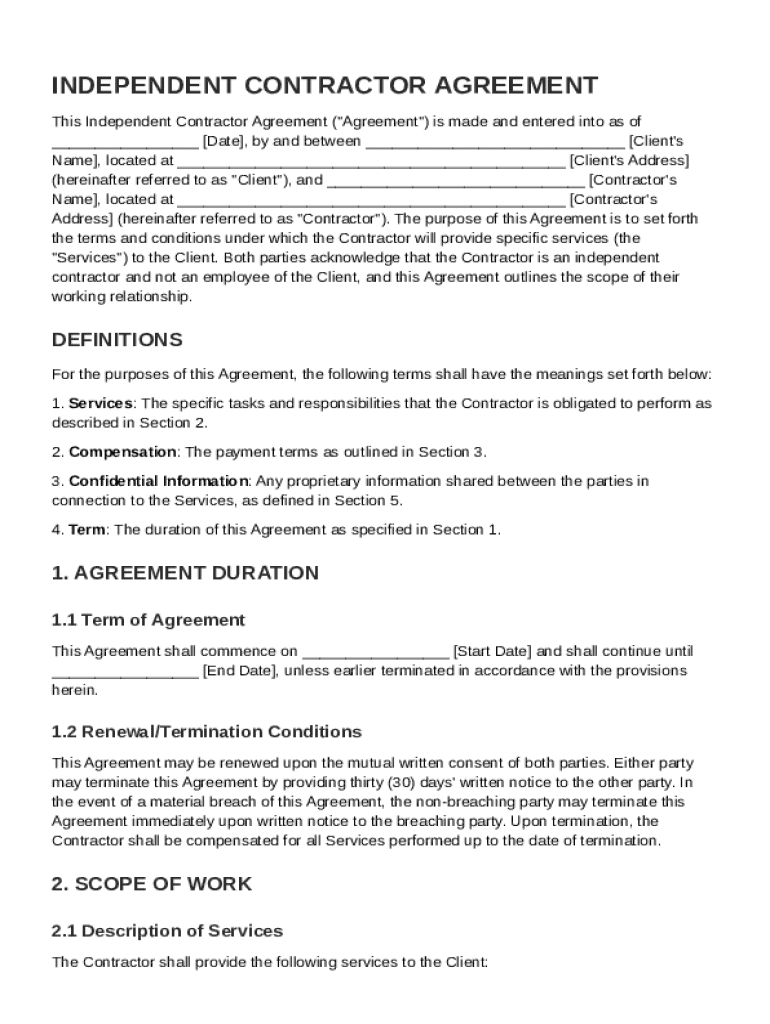
The "1099 Employment Contract Template" is a legal document that outlines the terms under which an independent contractor provides services to a client. Unlike traditional employment agreements, this template emphasizes the contractor's independent status and defines areas such as scope of work, compensation, and responsibilities. It adheres to guidelines necessary for independent contractor relationships to remain compliant with IRS regulations, particularly concerning 1099 forms, which are used for reporting miscellaneous income. The document is crucial in formalizing the contractor-client relationship and establishing clear expectations.
Key Elements of the 1099 Employment Contract Template
The 1099 Employment Contract Template comprises several critical components that clarify the working arrangement between the contractor and the client:
- Scope of Work: Details the specific services the contractor will provide, including timelines and milestones.
- Compensation Structure: Outlines how and when payments will be made, ensuring both parties are clear on financial expectations.
- Responsibilities: Defines the obligations of both the contractor and the client, ensuring mutual understanding.
- Confidentiality Obligations: Specifies the requirements for maintaining confidentiality regarding proprietary information.
- Ownership of Work Product: Addresses who retains the rights to the work products created by the contractor during the engagement.
- Liability and Indemnification: Protects both parties by defining liability limits and indemnification responsibilities.
Each section is critical for maintaining a professional and compliant independent contractor relationship.
How to Use the 1099 Employment Contract Template
Using the 1099 Employment Contract Template involves several key steps to tailor the document to specific needs:
- Identify Parties Involved: Clearly state the full names and contact details of the contractor and client.
- Customize Scope of Work: Detail the services provided, including deliverables and timelines.
- Set Compensation Terms: Clearly outline the payment terms, such as rates, schedule, and method of payment.
- Define Term and Termination Conditions: Specify the duration of the agreement and the conditions under which it can be terminated.
- Review Legal Clauses: Ensure all legal requirements are met, considering state-specific regulations where applicable.
- Secure Signatures: Both parties should sign the agreement, making it a legally binding document.
Important Terms Related to 1099 Employment Contract Template
Understanding key terms in the 1099 Employment Contract Template helps in ensuring clarity and compliance:
- Independent Contractor: An individual or entity contracted to perform services without the status of an employee.
- 1099 Form: A tax form used to report income received by an independent contractor.
- Work for Hire: A concept in which created work is owned by the contractor unless otherwise stated.
- Non-Disclosure Agreement (NDA): A legal agreement to keep shared information confidential.
- Indemnification: A clause that ensures one party compensates the other for any losses incurred under specific conditions.
Familiarity with these terms is essential for a comprehensive understanding of the contract and its legal implications.
Legal Use of the 1099 Employment Contract Template
The legal use of the 1099 Employment Contract Template is vital for compliance and protection. The template is designed to:
- Reflect the nature of an independent contractor relationship and avoid misclassification as an employee.
- Comply with IRS and state-specific tax regulations.
- Protect intellectual property rights and confidential information through appropriate clauses.
- Define the contractor’s liability, ensuring both parties understand the extent of their responsibilities.
This ensures that the contract serves its legal purpose and provides security against potential disputes.
State-Specific Rules for the 1099 Employment Contract Template
While the basic structure of the 1099 Employment Contract Template remains consistent, variations may exist depending on state laws:
- Worker Classification Criteria: Certain states have stricter definitions and tests for classifying independent contractors, such as the ABC test.
- Enforceability of Non-Compete Clauses: States differ on the legality and scope of non-compete agreements.
- Payment Terms Regulations: Some states have specific regulations regarding timely payments to contractors.
Ensuring compliance with these state-specific rules is crucial for the contract’s enforceability.
Form Submission Methods (Online / Mail / In-Person)
Completing and finalizing the 1099 Employment Contract Template typically involves sharing and signing the document through various methods:
- Online Platforms: Digital tools like DocHub support editing, signing, and sharing the contract electronically, offering convenience and efficiency.
- Mail: For traditional settings, printed and signed copies can be mailed between the parties, though this method may involve longer processing times.
- In-Person: Meeting in person allows for immediate discussion and adjustments, ensuring mutual agreement before signing.
Electronic submissions are popular for their speed and audit capabilities.
Penalties for Non-Compliance
Understanding the penalties for non-compliance with the terms laid out in a 1099 Employment Contract is crucial:
- Misclassification Penalties: Misclassifying an employee as an independent contractor can result in fines and the obligation to pay back taxes.
- Breaches of Contract: Failing to adhere to contract terms can lead to legal disputes, financial penalties, or damages.
- Tax Reporting Errors: Inaccuracies in tax reporting associated with contractor payments can incur IRS penalties.
Ensuring that the contract is accurate and complies with all legal standards mitigates these risks.