






Definition & Meaning
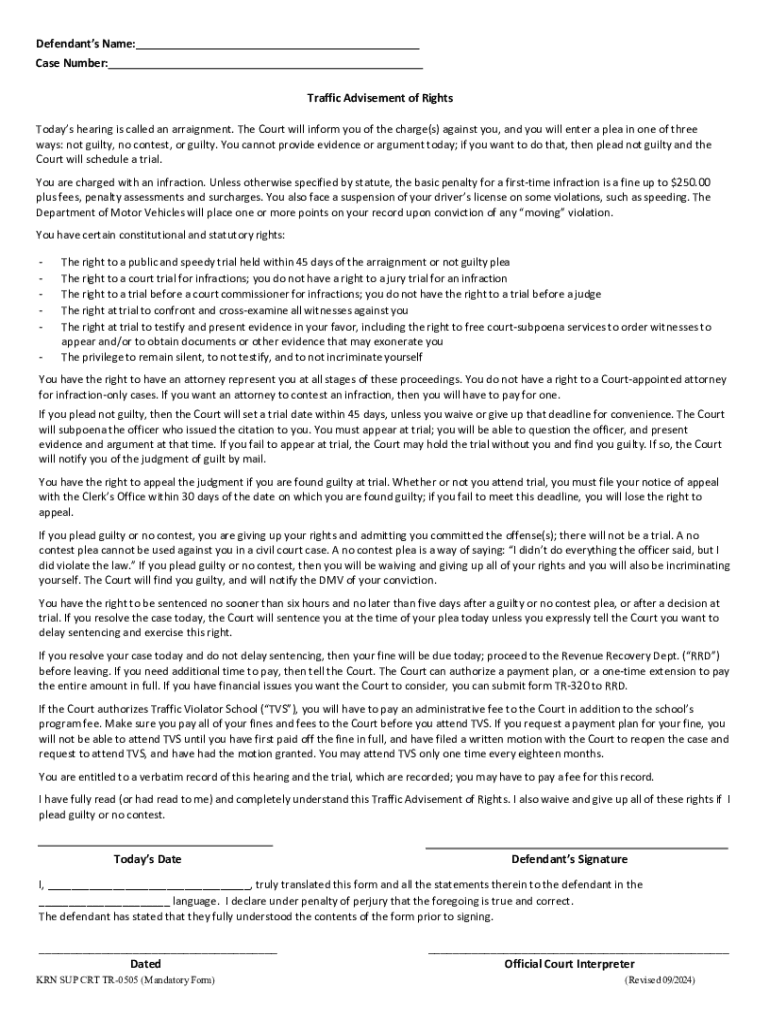
The "Traffic Advisement of Rights" form is a legal document used during traffic court proceedings to inform defendants of their rights when addressing traffic-related charges. It explains the procedural rights afforded to individuals, ensuring they are aware of legal protections and options. This form typically outlines the various pleas a defendant can enter, such as not guilty, no contest, or guilty, and educates them on the potential consequences of each plea. It further details constitutional rights, such as the right to a trial and legal representation.
Practical Implications
- Educated Decisions: Defendants are better equipped to make informed decisions about their pleas and the associated consequences.
- Legal Clarity: By detailing the procedural rights, it helps avoid potential legal missteps and ensures defendants are aware of the due processes in traffic court.
How to Use the Traffic Advisement of Rights
Using the "Traffic Advisement of Rights" form involves understanding its purpose and following specific steps during a traffic court appearance. Defendants should carefully review the information provided to make informed decisions regarding their case.
- Receive and Review: Obtain the form from the court before or during your arraignment. Review each section thoroughly.
- Understand Options: Familiarize yourself with the plea options and the rights outlined in the document.
- Consider Legal Advice: Consult an attorney if needed, to clarify complex legal terms or advice on proceeding with a plea.
- Make a Plea: Use the form to decide on a plea based on the information provided and your specific traffic charges and circumstances.
Important Considerations
- Understanding Penalties: Ensure you understand the potential penalties associated with different pleas to avoid unexpected outcomes.
- Seeking Clarification: Always seek clarification on any part of the form that is unclear to fully grasp the implications of your choices.
Steps to Complete the Traffic Advisement of Rights
Filling out the "Traffic Advisement of Rights" form requires careful consideration of each part to ensure all necessary sections are completed accurately.
- Personal Information: Fill in your personal details, such as name and contact information, where applicable.
- Read Rights and Options: Carefully read the entire document, focusing on your rights and the plea options available.
- Plea Selection: Choose your plea—guilty, not guilty, or no contest—based on your understanding and personal circumstances.
- Acknowledge Understanding: Indicate that you understand the rights explained and have no further questions regarding the document.
- Signature and Submission: Sign the form to confirm your acknowledgment and submit it to the court either in-person or as directed.
Example Scenarios
- Simple Violation: For minor traffic violations, many individuals may opt for a no contest plea to expedite resolution.
- Contest Charges: If disputing a traffic ticket, individuals may choose a not guilty plea, leading to a trial or further negotiation.
Who Typically Uses the Traffic Advisement of Rights
This form is predominantly used by defendants in traffic court proceedings in the United States. It applies to a wide range of individuals facing traffic-related charges.


Common Users
- First-Time Offenders: Individuals appearing in traffic court for the first time who need clear understanding of their rights.
- Frequent Travelers: Those who often drive interstate and might receive traffic citations in different jurisdictions.
- Commercial Drivers: Professionals whose job involves driving and who might face severe penalties affecting their license or employment if not carefully considered.

Use Cases
- Educational Purposes: Legal educators and organizations may use the form to teach individuals about their rights in traffic court settings.
- Legal Assistance Programs: Organizations offering legal aid often use the form to guide clients through initial court proceedings.
Key Elements of the Traffic Advisement of Rights
Several fundamental elements are integral to the "Traffic Advisement of Rights" form, each serving to inform and protect the defendant’s rights during the legal process.
- Right to Counsel: Information on the defendant's right to have legal representation.
- Right to a Trial: An outline of the procedural right to contest the charges in court.
- Plea Options: Detailed explanation of the available pleas and their repercussions, including potential fines or attendance at Traffic Violator School.
- Potential Consequences: An overview of the potential consequences of each plea, providing transparency to avoid uninformed decisions.
Influence on Legal Outcomes
- Informed Plea Decisions: Detailed understanding helps prevent defendants from pleading guilty without fully appreciating the outcomes.
- Prepared Defense: Provides a basis for preparing a defense or seeking legal advice where needed.
State-Specific Rules for the Traffic Advisement of Rights
While the "Traffic Advisement of Rights" provides a standardized overview of rights in traffic courts, specific states may apply unique rules or interpretations.
Variations by State
- Specific Legal Language: States might use different terminologies or emphasize certain rights over others, reflecting local legal nuances.
- Additional Procedures: Some states may require additional documentation or procedures to be followed aside from what's described in the standard form.
- Unique Penalties: Variances in penalties for specific violations might influence how the rights and plea options are detailed.
Implications
- Importance of Local Knowledge: Defenders should be familiar with their state’s particular legal requirements to ensure compliance and optimize their approach.
- Consulting Local Legal Experts: Consider consulting legal experts within the specific state for personalized advice.
Legal Use of the Traffic Advisement of Rights
The legal use of the "Traffic Advisement of Rights" form is essential to upholding judicial fairness and the defendant’s constitutional protections during traffic infractions.
Ensuring Fair Treatment
- Judicial Integrity: The form ensures that all defendants receive the same basic level of information and opportunity to respond to charges.
- Protection of Rights: By explicitly outlining rights and options, the form protects against potential violations of a defendant’s legal rights.
Legal Compliance
- Mandatory Procedures: Courts generally require this form to be completed and understood by defendants, as it constitutes an essential part of the arraignment and plea process.
- Documentation: It provides documented evidence that a defendant was made aware of their rights and informed decision-making opportunities.
Examples of Using the Traffic Advisement of Rights
Specific scenarios illustrate how individuals might interact with the "Traffic Advisement of Rights" form during their traffic court proceedings.
Case Studies
- Case Study 1: A first-time defendant charged with speeding reviews the form, acknowledges understanding of all rights, and decides to plead not guilty after assessing potential defense evidence.
- Case Study 2: A commercial driver, aware of potential job impact, uses the form to consider legal counsel rather than automatic plea decisions.
Real-World Applications
- Impact on Drivers' Licenses: Understanding rights and plea options allows defendants to make choices that might avoid license suspensions or insurance rate increases.
- Educational Tool: Provides a foundation for driving safety programs and legal literacy initiatives.
By following the precise steps and clarity outlined in this comprehensive guide, individuals facing traffic-related legal processes can better navigate the system, protect their rights, and make educated decisions.